
SEMA 2026 Builds and Reveals
Explore SEMA 2026 builds and reveals with a focus on ownership, maintenance, and usability of the wildest custom projects.
SEMA 2026 Builds and Reveals: The Wildest Projects, Compared for Ownership Reality
The quick list
- Best overall: throtl Prelude Type R, for the Honda owner who wants a believable factory-plus special with usable cooling and modern performance parts.
- Best wild-card: throtl twin-turbo Murciélago, for the experienced exotic-car owner prepared to diagnose custom systems.
- Best visual statement: TheStradman Lamborghini trio, for the collector building a SEMA display rather than a low-drama weekend driver.
- Best refresh: DailyDrivenExotics Murciélago, for the owner who wants a sharper, more personal version of a car they already know.
- Best for towing and hauling: Vin_tra’s 1990s Chevy dually, for someone who wants a period-correct support truck that can still carry a car to an event.
You are not choosing between five versions of the same idea. These builds range from a heavily re-engineered Lamborghini to a track-support truck, and the right one depends on whether you want to drive, display, tow, or troubleshoot.
The key dividing line is how much of the original vehicle survives. A body kit and paint can be reversed or repaired. A standalone ECU, transplanted drivetrain, custom intercooler plumbing, and altered wiring harness turn future ownership into a specialist project.
| Build | Base vehicle and layout | Main changes | Revealed or planned role | Size and usability trade-off | Published build price |
|---|---|---|---|---|---|
| throtl twin-turbo Murciélago | Lamborghini Murciélago, mid-engine V12 | LP640 engine, manual conversion, twin turbos, standalone ECU, air suspension, Liberty Walk kit | SEMA 2026 debut with WD-40 Brand | Exotic-car access and cooling packaging, with extensive custom systems | Not published |
| throtl Prelude Type R | 2026 Honda Prelude, front-engine coupe | Civic Type R donor parts, turbo and fuel upgrades, cooling hardware, FL5-style bodywork | SEMA 2026 debut with Eneos | Lower ride height and complex hybridized donor integration | Not published |
| TheStradman Lamborghini trio | Revuelto, Temerario, Aventador-based SVR | Colored PPF, carbon body panels, widebody conversion, wheels | SEMA 2026 and Vegas Concourse display | Very low clearance, costly bodywork, hybrid battery dependency on Revuelto | Not published |
| DailyDrivenExotics Murciélago | Lamborghini Murciélago, mid-engine V12 | Full repaint, ceramic brakes, race-derived aero pieces, custom exhaust | SEMA display at E3 Customs booth | Still a roadgoing car, but expensive bespoke components | Not published |
| Vin_tra Chevy dually | Chevrolet 454 big-block dually pickup | Air suspension, 10-inch drop, planned period-style wheels and 1990s restyle | Radwood build competition | More style than maximum towing capacity | Not published |
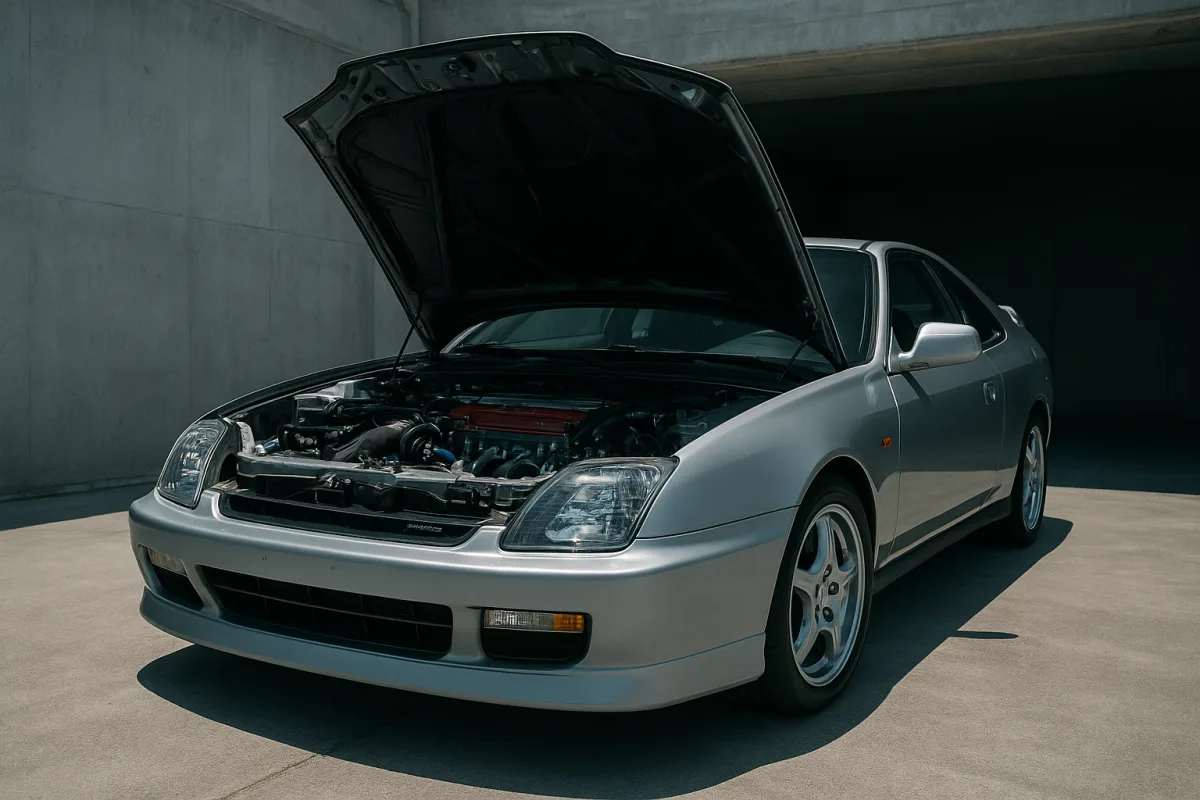
Best overall: throtl’s Honda Prelude Type R
throtl started with a stock 2026 Honda Prelude and a wrecked Type R donor, then set out to create the Prelude Type R Honda never built. It is the most convincing factory-style concept in this group.
The build uses Type R interior pieces, red rear seating, carpet, steering-column hardware, and a reworked FL5 Type R spoiler. The donor-car integration goes beyond seats and badges, which is why it looks more coherent than a cosmetic tribute.
The exterior is a carefully reshaped mix of Prelude and FL5 Civic Type R bodywork. The rear bumper retains Prelude camera, lighting, and license-plate functions, while the lower bumper design and center-exit exhaust bring the Type R identity.
Cooling was treated as a functional requirement, not an afterthought. The front bumper creates additional space for the intercooler, while the build also uses CSF radiator and oil-cooling hardware, plus vents intended to feed the oil cooler.
Its engine work is substantial: a Pure Turbo upgrade, PRL carbon-fiber intake manifold, upgraded injectors and fuel pump, PRL intercooler, and the CSF cooling hardware. Those parts move it beyond the casual bolt-on category.
There is one important reporting inconsistency. throtl initially described using a crashed FK8 Civic Type R, but later described the donor components, carpet, seating, and spoiler as FL5 items. You would want the final donor-vehicle documentation before valuing or insuring it.
This is the one we would buy, assuming the powertrain calibration and emissions compliance were documented. Honda-based parts availability, a comparatively accessible engine bay, and a cabin that still looks close to production give it the best chance of being enjoyable after show season.
Routine maintenance on a standard Prelude remains relatively modest, with oil changes estimated at $80 to $150 every 7,500 miles and major 100,000-mile service estimated at $320 to $580. [1] A turbo, fuel-system, and cooling build like this will cost more, largely because diagnosis and tuning will no longer be standard dealer work.
Best wild-card: throtl’s twin-turbo manual Murciélago
The throtl Murciélago is the build with the highest mechanical ambition. It takes a non-LP640 Murciélago, installs an LP640 V12, converts it to a gated manual, adds twin turbos, then replaces the factory engine-management wiring with a standalone ECU.
That is four major projects in one car. Any one of them would create fitment, calibration, cooling, and drivability work. Combining them under a SEMA deadline makes for a spectacular reveal, but it also establishes the ownership terms.
The water-to-air intercooler system required a front heat exchanger, pump, reservoir, and long coolant lines running between the back and front of the car. That layout can work well, but future leak tracing will not be quick.
The crew had to establish top dead center manually because they could not find factory timing marks, then create timing references for the standalone ECU. During initial firing work, they also found the turbos lacked oil restrictors and expected smoke until that was corrected.
Its appeal is obvious. A gated-manual V12 Lamborghini with twin turbos and widebody proportions is the sort of build people remember. The Liberty Walk kit, air suspension, custom wheels, and revised interior complete the SEMA brief.
But this is the one we would skip unless the builder supplied wiring diagrams, ECU maps, hose routing, parts numbers, and a clear service record. A future technician cannot fall back on Lamborghini diagnostic procedures once the original engine wiring has been discarded.
Hagerty put the base value of a 2008 Murciélago LP640 at about $513,000 in October 2026. A Liberty Walk widebody kit is estimated at roughly $20,000 to $40,000, while a twin-turbo engine conversion is estimated at $50,000 to $150,000, but modified-car resale rarely rises in direct proportion to money spent.
Insurance needs attention before delivery day. Insurify says standard policies often limit aftermarket-parts coverage to only $1,000 to $3,000, leaving a build like this badly exposed without a declared-value policy or specialist endorsement. [2]
Best visual statement: TheStradman’s Lamborghini trio
TheStradman arrived at SEMA week with three different Lamborghini projects in motion: a Revuelto with a Zac Performance soft kit and satin chrome-colored paint-protection film, a Temerario receiving a full replacement carbon-fiber widebody kit, and a carbon Aventador-based SVR.
The Temerario is the cleanest engineering proposition of the three because its Zac Performance kit uses full replacement panels. No cutting was required to install the carbon fenders and related bodywork, preserving the possibility of returning the car to stock panels later.
That reversibility is a major advantage on a new Lamborghini. The build still requires careful storage of the original panels, however, because replacement carbon parts can be expensive, vulnerable to curb damage, and hard to match after years of sun exposure.
The Revuelto was wrapped in a satin chrome-silver colored PPF developed with Inozetek, over its Viola Pasifae paint. The material is thicker than vinyl and serves as paint protection, but it is still a consumable exterior finish, not a permanent body color.
The Revuelto’s 12-volt battery went flat while doors, windows, and trunk remained open during wrapping. The car weighs about 4,800 pounds, while the temporary hydraulic scissor lift used for the reveal was rated at 5,500 pounds, leaving limited capacity headroom.
That episode is a fair warning about modern hybrid exotics. A V12 and electric motors create enormous performance, but low-voltage battery management can still stop the whole car. You need a secure charging plan before you need a jump pack.
This trio is for the owner with storage, a transporter budget, and a relationship with a Lamborghini specialist. We would choose the Temerario, because its replacement-panel bodywork is less permanent than cutting up a factory shell and its carbon structure remains visually striking even before wrapping.
Best refresh: DailyDrivenExotics’ blue Murciélago
DailyDrivenExotics took a different Murciélago route. Instead of changing its engine architecture, the team restored and sharpened the car’s visual identity with a complete Lamborghini Lambo Blue repaint, gloss-black detailing, ceramic brakes, race-derived aero, and a new exhaust.
The full color change included the surrounding headlight and fog-light covers, giving the car a much more integrated result than a quick exterior respray. The original metallic gray was replaced with a bright, non-metallic blue selected to match a Ducati V4S.
The wing uses genuine Reiter Engineering OEM Murciélago GT1 race-car parts, though the carbon blade was gloss-black painted after previous repairs left visual imperfections. That choice prioritizes a clean finished car over showing every carbon weave.
Opus supplied the replacement exhaust, including custom 3D-printed tips in a dark gunmetal shade. The tips were intentionally left proud of the rear bodywork after the prior license-plate frame had reportedly melted from exhaust flames.
The ceramic brake supplier claimed roughly 60 pounds of rotational-mass reduction on average. That is a meaningful number if verified for this exact car, but you should ask for the rotor, hat, caliper, and wheel-weight figures before treating it as a guaranteed system result.
This is the Murciélago route we would favor for a driver who already owns one. Paint, exhaust, brakes, and aero can make a familiar car feel renewed without turning every engine start into a custom-ECU troubleshooting session.
Best for towing and hauling: Vin_tra’s 1990s Chevy dually
Vin_tra’s Chevrolet dually was built for a Hagerty-backed Radwood competition, not a SEMA booth, but it belongs in this comparison because it offers the one thing the exotic builds cannot: genuine support-vehicle potential.
The starting point was unusually well prepared. It had a repaint, shaved bed rails, molded rear roll pan, relocated tailgate handle, hidden hitch, spray-in bed liner, air suspension, a 10-inch drop, and a mostly stock 454 big-block.
The truck measures 21.5 feet long, while the shop used for the build measured 24 feet deep. It is about 8 feet wide, allowing it through a 10-foot shop door, but those measurements show why storage needs deciding before purchase.
The 454 was deliberately left stock. This was not intended as a drag-race truck, but as a 1990s-style track-day support vehicle that could tow a car while retaining a reliable, uncomplicated big-block powertrain.
Its dually wheels create both visual identity and towing security. As Ron Ball explained during the build, four rear tires spread the load and leave a second tire supporting that side if one fails. A single-rear-wheel conversion loses that backup.
That makes the lowered, air-suspended dually a lifestyle truck, not a substitute for a modern heavy-duty work rig. We would keep its dual rear wheels, use it for light-duty car hauling, and avoid building it around a fantasy of gooseneck-trailer work.
Who each option suits
The throtl Prelude Type R suits the Honda enthusiast who wants power, cooling, and an OEM-style cabin without abandoning everyday usability. It is the most rounded build, provided the donor-car parts and tuning are thoroughly documented.
The twin-turbo throtl Murciélago suits the collector who enjoys commissioning specialists, studying wiring diagrams, and accepting downtime as part of ownership. It is a thrilling answer to a very narrow question, not a replacement for a stock exotic.
TheStradman Lamborghini trio suits the display-focused owner who wants current-model Lamborghini drama and has the budget for protective film, spare wheels, transport, and specialist battery support. Pick the Temerario if reversibility matters to you.
DailyDrivenExotics’ Murciélago suits someone who wants a personal, vivid version of an established V12 supercar. It carries fewer mechanical unknowns than the twin-turbo car while still offering a distinctive paint, exhaust, brake, and aero story.
Vin_tra’s Chevy dually suits the owner who brings the other cars to the show. It is the build for towing a track toy, carrying gear, and enjoying 1990s truck culture, as long as you respect its lowered stance and altered load priorities.
Frequently Asked Questions
What are the most notable SEMA 2026 builds and reveals?
The most notable builds include throtl’s twin-turbo, manual-swapped Lamborghini Murciélago, throtl’s Honda Prelude Type R with Civic Type R parts, TheStradman’s trio of Lamborghinis with widebody and carbon modifications, DailyDrivenExotics’ refreshed Murciélago, and Vin_tra’s 1990s Chevrolet dually pickup. Each build targets different uses, from extreme technical projects to practical daily driving or towing.
Which SEMA 2026 builds are best for daily ownership?
throtl’s Prelude Type R is the best choice for daily ownership due to its use of OEM Honda parts combined with performance upgrades and functional cooling. It retains a factory-like interior and exterior finish, making it more reliable and easier to maintain than more heavily modified exotic cars.
What are the maintenance challenges of SEMA 2026 custom cars?
Highly modified cars like the throtl twin-turbo Murciélago present significant maintenance challenges due to custom wiring, cooling systems, and turbo plumbing that require specialist knowledge for diagnosis and repair. Even the Prelude Type R’s turbo and fuel system upgrades increase maintenance complexity and costs beyond a standard vehicle.
How do SEMA 2026 builds compare for usability and performance?
Usability varies widely: TheStradman’s Lamborghinis prioritize visual impact but have low clearance and hybrid dependencies that limit road use, while Vin_tra’s Chevy dually offers practical towing with some style compromises. throtl’s Prelude balances performance and usability, and DailyDrivenExotics’ Murciélago refresh improves a known platform without radical mechanical changes.
What should I consider before owning a SEMA 2026 custom build?
Prospective owners should consider the extent of custom modifications, which affect maintenance difficulty, insurance, and usability. Builds with standalone ECUs, extensive wiring changes, or hybrid systems may require specialist servicing and can complicate emissions compliance or insurance. Choosing a build aligned with intended use, daily driving, display, towing, or troubleshooting, is essential.
How we researched this
This article was assembled from 5 video sources across 4 channels, 4 cited references.
Nothing here is based on hands-on testing. Where a figure or finding appears, it belongs to the source cited beside it, and the writing says so rather than implying otherwise. Every source is listed below so you can check it.
Sources
Building a Twin Turbo Lamborghini Murciélago -- IT'S COMPLETE!, throtl
My SEMA Build Full Reveal that No One has Seen., TheStradman
Revealing Our MOST Ambitious Sema Build EVER!, DailyDrivenExotics
I built the ultimate 90's hauler for a chance to win $100,000. Full build and results, Vin_ tra
Honda Prelude maintenance schedule, costs & known repairs - Carlyle
1990 Ford Mustang Value (2026): Real Market Data | Classic Cars Arena
1990 Chevrolet Corvette ZR-1 Value: $35,000 | Price History & Sales | DriveIndex
Watch SEMA 2026 Builds and Reveals on Youtube
Also from the sources
Related Articles
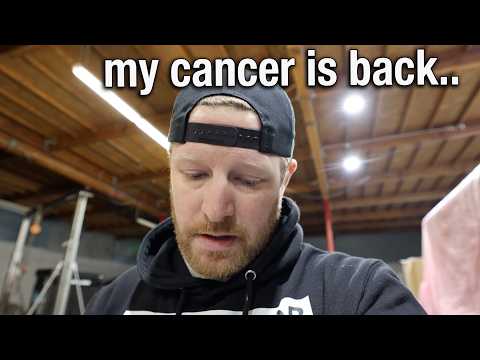
B is for Build Founder's Cancer Battle: Treatment Plan and Reflection
B is for Build founder reveals cancer spread to lymph nodes after melanoma battle. Discusses treatment plan, challenges, and importance of positive outlook. Financial strain addressed. Emotional reflection on channel's impact.

Pontoon Yacht Transformation: Powering Up with B is for Build
B is for Build transforms a dream into reality with a 44 ft pontoon yacht, complete with a hot tub. Follow their journey as they power up the vessel, facing challenges and celebrating victories along the way.

Farewell Celebration: B is for Build Honors Departing Team Member Oscar
B is for Build bids farewell to team member Oscar, celebrating his contributions with a day of reminiscing, go-kart races, and heartfelt conversations.

Transforming a Pontoon Yacht: Adding a Bathroom and Introducing Simply Safe
B is for Build transforms a pontoon yacht, adding a bathroom with a 3-in-1 unit. Follow the team's journey as they tackle construction challenges and introduce Simply Safe home security.