
2027 Audi Q7 and SQ7 Review
Explore the 2027 Audi Q7 and SQ7 review covering performance, third-row seating, cargo space, and ownership considerations.
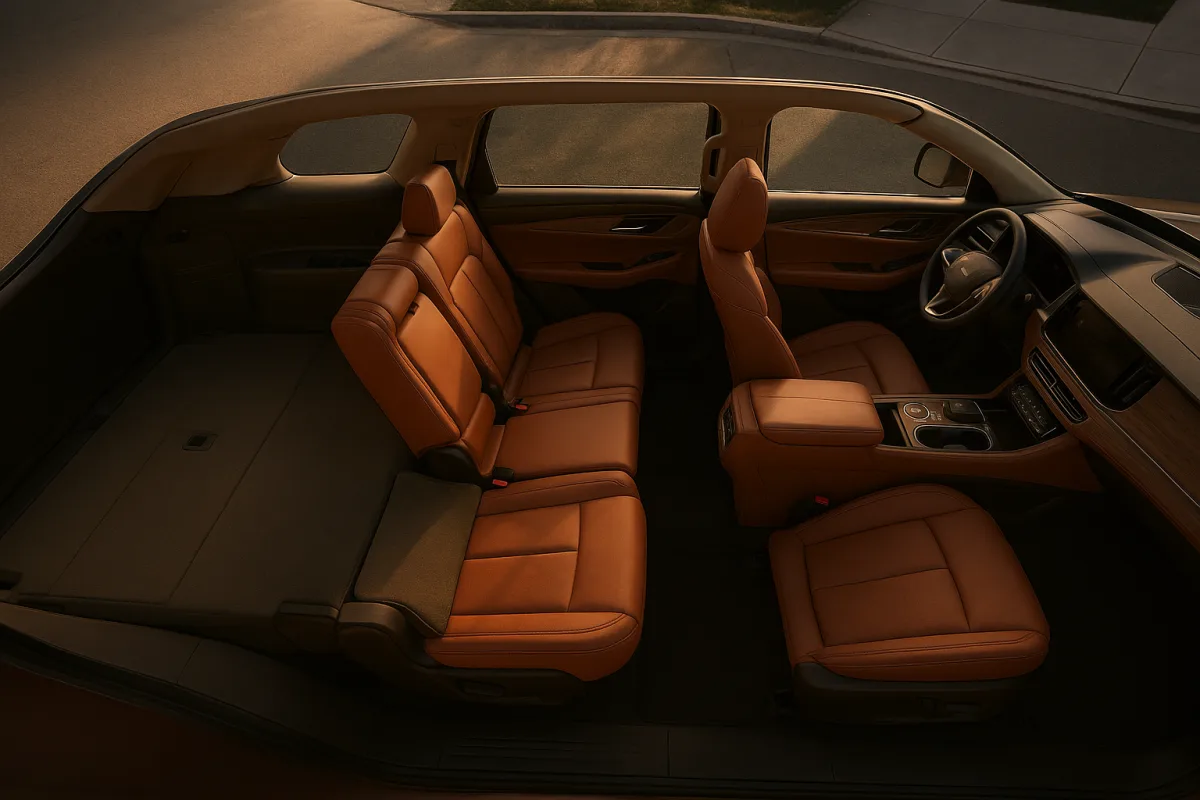
The quick list
- Best overall: 2027 Audi Q7, for families wanting a refined six- or seven-seat Audi with 429 hp, strong standard equipment, and less ownership pain than the V8.
- Best performance: 2027 Audi SQ7, for drivers who will genuinely use 591 hp and accept the gas, tire, and insurance consequences.
- Best for occasional third-row use: 2027 Audi Q7 with the seven-seat bench, for parents carrying children and needing a flat cargo floor.
- Best for more luggage: Audi Q9, for buyers who need more space behind the third row but do not expect substantially roomier third-row legroom. [13][14]
Start with the third row, not the horsepower
The important number is 15.1 cubic feet. That is the Q7’s cargo space with all three rows occupied, enough for a few soft bags or grocery runs, but not a generous vacation load. [14]
Audi calls the Q7 a three-row SUV, and it is one. Car and Driver describes the layout more accurately as a 5+2, because the back seats are cramped and best reserved for children or occasional short trips. [2]
The new Q7 is 199.1 inches long, about 0.2 inch shorter than before, but it is taller and wider. It remains a large vehicle in a parking lot, yet not a full-time eight-passenger family hauler. [2][3]
The third-row seat bottoms sit close to the floor, leaving adults with high knees. The Fast Lane Car found entry slow and awkward with the powered second-row mechanism, and judged the rearmost seats tolerable for children, not adult road trips. [1]
That makes the layout decision straightforward. If you have younger children, need occasional extra seats, and normally travel as four or five, the Q7 fits the assignment well.
If adults will occupy row three every weekend, look beyond it. The Q9 has 19.3 cubic feet behind its third row, versus 15.1 in the Q7, though both reportedly offer roughly 29.1 inches of third-row legroom. [13][14]
Q7 versus SQ7: the numbers that change the bill
| Model | Starting price | Engine | Output | Audi 0-60 mph claim | Seats | Cargo behind third row | Fuel economy |
|---|---|---|---|---|---|---|---|
| 2027 Audi Q7 | $72,295, including destination per Car and Driver | Twin-turbo 2.9-liter V6 | 429 hp, 442 lb-ft | 4.8 seconds | 6 or 7 | 15.1 cu ft | 19 mpg combined EPA [[2]](https://vehiclefactbook.com/audi/q7/2027/ "2027 Audi Q7: 19 MPG combined |
| 2027 Audi SQ7 | $98,700 MSRP before destination, or $100,095 reported by Car and Driver | Twin-turbo 4.0-liter V8 | 591 hp, 590 lb-ft | 3.7 seconds | 6 or 7 | 15.1 cu ft | EPA rating not published [[2]](https://vehiclefactbook.com/audi/q7/2027/ "2027 Audi Q7: 19 MPG combined |
| Audi Q9 | Price not published here | Not specified | Not specified | Not specified | 6 or 7 | 19.3 cu ft | Not specified [13][[14]](https://www.audisewickley.com/en/info/compare/q7-vs-q9/ "Audi Q7 vs. Q9: Which Three-Row SUV? |
The Q7 is no longer a slow entry model. Its 429-hp twin-turbocharged 2.9-liter V6 makes 442 lb-ft from 2,000 rpm, driving all four wheels through an eight-speed automatic transmission. [2]
Audi says it reaches 60 mph in 4.8 seconds. Car and Driver estimates a quicker 4.4-second result, while its listed performance range also covers the SQ7, so treat the manufacturer number as the safer expectation until instrumented testing arrives. [2]
At $72,295 including destination, the Q7 undercuts the roughly $80,000 BMW X7 but sits above mainstream luxury alternatives including the Lexus TX 350 and Volvo XC90. [2][7]
The SQ7 uses a twin-turbocharged 4.0-liter V8 with 591 hp and 590 lb-ft. It has a claimed 3.7-second sprint to 60 mph, standard air springs, and rear-biased all-wheel drive. [2]
Audi lists the SQ7 at $98,700 before destination, while Car and Driver reports a $100,095 starting figure. The difference appears to be destination treatment, so confirm the window sticker before comparing dealer inventory. [2][11]
We would take the regular Q7. It already has 97 more horsepower than the previous Q7 generation’s V6 model, and 429 hp is enough to turn a school-run SUV into a rapid highway car. [1][2]
The SQ7 earns its price with character, not need. Its V8 burble, launch-control acceleration, and rear-biased behavior give it a personality the Q7 cannot match, but they do not create additional family space.
Ride, wheels, and what the road is actually like
Both models have a reassuringly substantial feel, according to The Fast Lane Car. Its Q7 tester praised the quiet cabin, sturdy steering and brakes, and air suspension’s ability to absorb imperfect pavement. [1]
Car and Driver found the Q7 confident and predictable, with air-spring-equipped examples showing a meaningful difference among Comfort, Balanced, and Dynamic modes. The system is optional on the Q7 and standard on the SQ7. [2]
That option is worth considering if your roads are broken or your passengers notice ride quality. The Q7’s mission is covering distance quietly, and the adjustable suspension seems more aligned with that job than huge wheels.
Jalopnik’s Q7 Prestige test vehicle rode tautly and transmitted more road noise than some competitors. Its tester suspected the large wheels and tires contributed, which is a familiar trade-off on luxury SUVs. [3]
The SQ7 goes further. Its optional S Sport air suspension lowers the body by 1.2 inches in Dynamic mode, and it can be paired with 23-inch wheels carrying 285/35 front and 315/30 rear summer tires. [2][3]
Those tires look right on the SQ7, but they are not cheap consumables and offer little reassurance in cold climates. Jalopnik found the S Sport setup chattery over rough pavement, especially in Dynamic mode. [3]
The standard SQ7 suspension may be the better ownership choice if you buy the V8. Keep the smaller wheel package, use Balanced mode, and let the engine provide the drama instead of asking the suspension to do it.
Cabin, screens, and the seat choice
Every Q7 gets a panoramic sunroof, leather upholstery, natural wood inlays, three-zone climate control, a power tailgate, surround-view camera system, and power-folding third-row seats. That is a strong base specification at $72,295. [3]
The dashboard centers on three screens: an 11.9-inch driver display, a 14.5-inch central touchscreen, and a 12.3-inch passenger display. The central screen handles nearly every vehicle function, including climate settings. [1]
The Fast Lane Car found the interface responsive and liked its Google Maps integration and configurable shortcuts. It also wanted physical buttons for airflow and other commonly adjusted climate functions, and we agree. [1]
Audi’s new magnetic, cooled Qi2 phone chargers are better thought through than ordinary wireless pads. They hold compatible phones in place, a small feature that prevents a handset from sliding around during a long drive. [1][6]
The SQ7’s base price includes many Q7 upgrades: Nappa leather, ventilated and massaging front seats, heated outboard second-row seats, all-wheel steering, a Bang & Olufsen 3D stereo, and hands-free highway driving assistance. [3]
Its 24-speaker Bang & Olufsen system, sport seats, and V8 are attractive. None fix the third row, however, and none make the SQ7 a cheaper vehicle to keep after its warranty ends. [7][10]
The seven-seat bench is standard. Captain’s chairs are optional for the first time, make access between the seats easier, and reduce the sibling-contact issue, but cut capacity to six. [2]
We would buy the bench. The Fast Lane Car reports the captain’s chairs do not fold flat, while the bench gives you the better cargo-floor solution when the Q7 is pressed into airport, furniture, or home-improvement duty. [1]
Fuel, maintenance, and the unknowns of a new generation
The EPA rates the 2027 Q7 at 19 mpg combined. Audi and the EPA have not published an official 2027 SQ7 rating, despite Car and Driver listing a broad 17-to-19 mpg combined range for the pair. [2]
Real-world fuel economy is unknown for both redesigned models. Prior Q7 owner reports generally ran two to four mpg below EPA figures, but the new engine, body, tires, and software mean you should not budget from old numbers. [4][6]
Jalopnik’s SQ7 drive returned 12.5 mpg across a three-hour route including highway miles and hard back-road driving. That is not a commuting estimate, but it shows how rapidly the V8 can use fuel when driven as intended. [3]
Audi has not published meaningful long-term maintenance or repair data for the 2027 pair. The 2026 Q7 was estimated to cost about $9,065 in maintenance and repairs over five years, but that is not a forecast. [7]
Insurance is also unsettled. MoneyGeek puts a 2026 Q7 full-coverage average near $192 per month, while a newer, higher-value Q7 and especially an SQ7 may cost more depending on driver, location, deductible, and insurer. [10]
No safety recalls or recurring faults have been reported for the 2027 Q7 or SQ7 as of November 23, 2026. That is normal for a new launch, not a durability verdict, so check NHTSA and Audi recall records before purchase. [12]
Who each option suits
2027 Audi Q7
The Q7 suits the family that wants a genuinely premium cabin, quick passing power, and occasional third-row flexibility without committing to V8 fuel consumption. It is the one we would buy, preferably with the bench seat and comfort-focused wheel package.
Choose the air suspension if ride quality ranks above styling. Avoid loading it with every cosmetic option, because the standard car already includes leather, wood, panoramic roof, cameras, and the power you need. [3]
2027 Audi SQ7
The SQ7 suits the enthusiast with children, not the family looking for maximum transportation value. Its 591-hp V8, rear-biased all-wheel drive, and standard hardware make it a rare three-row SUV that can entertain on a back road. [2]
Buy it because you want the V8 every day, not because the Q7 seems underpowered. Budget for premium gas, faster tire wear if you select the 23-inch package, and a likely higher insurance premium.
Q7 with captain’s chairs
Captain’s chairs suit parents who usually carry four or five people and value the second-row experience over cargo flexibility. They look and feel more upscale, but the six-seat limit arrives precisely when friends or extended family need a ride.
They also make the Q7’s limited third row easier to approach, though not spacious once occupied. If third-row passengers are children, that convenience may be enough to justify the compromise.
Audi Q9
The Q9 suits buyers who have outgrown the Q7’s luggage area but like Audi’s current design and technology. It gives you 19.3 cubic feet behind the third row, with nearly identical cargo volume behind the second row. [13][14]
Do not assume it transforms third-row comfort. Reported legroom is similar to the Q7’s, so the Q9’s chief advantage is cargo capacity, greater overall scale, and its more luxurious available equipment. [13][15]
Frequently Asked Questions
What are the key differences between the 2027 Audi Q7 and SQ7?
The 2027 Audi Q7 features a twin-turbo 2.9-liter V6 producing 429 hp and 442 lb-ft, with a 0-60 mph time of about 4.8 seconds and an EPA combined rating of 19 mpg. The SQ7 upgrades to a twin-turbo 4.0-liter V8 with 591 hp and 590 lb-ft, accelerating to 60 mph in 3.7 seconds but with higher fuel and tire costs. The SQ7’s starting price is roughly $100,000, significantly higher than the Q7’s $72,295, reflecting its performance focus.
Is the third row in the 2027 Audi Q7 suitable for adults?
The third row in the 2027 Q7 is best reserved for children or occasional use. The seat bottoms sit low, causing adults to have cramped knees, and entry is awkward due to the powered second-row mechanism. For regular adult third-row seating, a larger model like the Audi Q9 is recommended.
How does the 2027 Audi SQ7 perform compared to the Q7?
The SQ7’s 591-hp V8 delivers a much quicker 0-60 mph time of 3.7 seconds compared to the Q7’s 4.8 seconds with its 429-hp V6. However, the SQ7 has lower fuel efficiency, with an EPA rating not yet published but expected to be less than the Q7’s 19 mpg combined. It also carries higher ownership costs due to optional large tires and insurance.
What is the cargo space behind the third row in the 2027 Audi Q7?
The 2027 Audi Q7 offers 15.1 cubic feet of cargo space behind the third row, enough for a few soft bags or groceries but limited for larger loads. This is less than the Audi Q9, which provides 19.3 cubic feet behind its third row.
What should buyers know about owning a 2027 Audi Q7 or SQ7?
Since the 2027 models represent a new generation, long-term reliability, real-world fuel economy, and depreciation patterns are not yet established. Consumer Reports notes that redesign years can bring changes in these areas. Buyers should consider that the Q7’s third row is best for children, and the SQ7’s higher price and operating costs reflect its performance orientation.
How we researched this
This article was assembled from 1 video source, 6 published articles, 15 cited references.
Nothing here is based on hands-on testing. Where a figure or finding appears, it belongs to the source cited beside it, and the writing says so rather than implying otherwise. Every source is listed below so you can check it.
Sources
The 2027 Audi Q7 Has Some Big Shoes to Fill...But Is It Actually Any Better Than Before?, The Fast Lane Car
Driven: 2027 Audi Q7 and SQ7 SUVs Muscle Up, Car and Driver
View Exterior Photos of the 2027 Audi SQ7, Car and Driver
View Exterior Photos of the 2027 Audi Q7, Car and Driver
View Interior Photos of the 2027 Audi Q7, Car and Driver
View Interior Photos of the 2027 Audi SQ7, Car and Driver
Audi Q7 MPG (incl. SQ7) - Gas Mileage & Fuel Economy of Audi Q7
Audi Q7 Real World MPG Revealed What Owners Actually See - Premium SUV
The new Audi Q9 is a flagship SUV that's betting big on scale, comfort and technology
Watch New 2027 Audi Q7 and SQ7 SUV Updates on Youtube
Related Articles
2026 Ferrari Purosangue vs 2027 Lamborghini Temerario Review
Compare the 2026 Ferrari Purosangue and 2027 Lamborghini Temerario in performance, handling, practicality, and ownership in this detailed review.
2027 Jeep Cherokee Trailhawk vs PaxPower Silverado Jackal Comparison
Compare the 2027 Jeep Cherokee Trailhawk and PaxPower Silverado Jackal off-road trucks for performance, features, and ownership costs.
BYD Yangwang Altior Review
Explore the BYD Yangwang Altior review covering its luxury, four-motor tech, performance, range, and ownership insights in this ultra-luxury electric
2027 BMW X5 Review: Performance, Ownership & Impressions
In-depth 2027 BMW X5 review covering performance, ownership costs, maintenance, and driving impressions of the new X5 and iX5 models.