
Audi $4 Billion U.S. Factory
Explore Audi's $4 billion U.S. factory plan, tariff impacts, production details, and political controversies surrounding the Georgia plant investment.
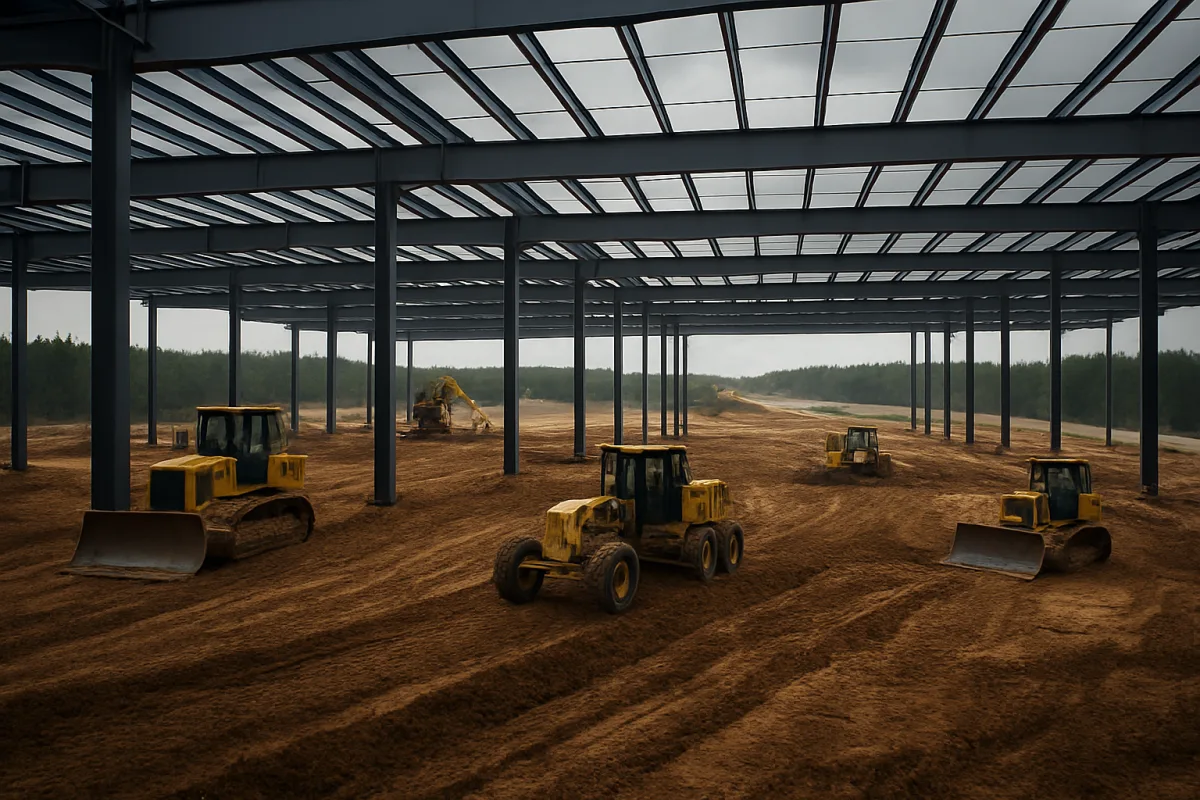
Audi’s Georgia Factory Is a Tariff Hedge First, and a Manufacturing Story Second
The shift is real: Audi is moving from import dependence to local production
Audi has spent decades selling premium vehicles in America without operating its own U.S. assembly plant. That is now changing. The company has announced a $4 billion plan for a first American production site at the Middle Georgia Mega Site in Peach County. [1]
The proposed factory is not a small final-assembly experiment or a token investment intended for a press release. Audi says it is targeting annual capacity of up to 200,000 premium SUVs and roughly 4,500 jobs. [1][6]
That capacity matters because Audi presently imports every vehicle it sells in the United States, either from Europe or Mexico. BMW has long produced SUVs in South Carolina, while Mercedes-Benz has operated a substantial Alabama manufacturing base. Audi has been the conspicuous holdout. [3][9]
The Georgia plan therefore brings Audi closer to the North American model already used by its main German rivals. It also follows Volkswagen Group’s wider effort to put more manufacturing capacity inside the market where it expects to sell vehicles.
The reported model plan is focused on large SUVs, specifically the Audi Q7, Q8 and forthcoming Q9. Those are the vehicles most likely to justify a U.S. plant because they command higher transaction prices and incur meaningful shipping, currency and tariff exposure. [3]
There is a practical distinction here for owners. This is not Audi announcing American production of every model in its catalogue. The Audi Q5 is expected to remain Mexico-built, while the Audi Q3 is expected to remain in Hungary. [3]
Tariffs, not patriotism, explain the timing
The immediate commercial reason is unusually clear. The United States still applies a 25 percent Section 232 tariff to imported vehicles and key automotive components including engines, transmissions, powertrain equipment and electrical systems. [3]
Audi reported a €1.2 billion U.S. market loss in 2025 tied to tariffs, according to reporting cited by El País. That figure explains why importing every U.S.-market car has become difficult to defend within Volkswagen Group’s balance sheet. [3]
Audi is not alone in reassessing its American footprint. The broader pattern is manufacturers locating more production near North American buyers, particularly where tariffs or changing trade rules can rapidly turn a profitable imported model into a marginal one.
That does not mean every factory announcement represents a confident prediction of booming demand. In Audi’s case, the company’s U.S. sales fell 16 percent during 2025, according to Road & Track’s reporting. The investment is partly a growth plan, but also an attempt to fix a weak business case. [1]
Audi’s own framing is unusually frank. The company says local production should reduce trade and currency risks while making its U.S. business more competitive. That is an industrial calculation, not a promise that every American buyer will receive a bargain. [1]
For anyone who has owned an aging European luxury car, this is worth separating from the usual marketing language. A factory location can improve logistics and parts availability eventually, but it does not alter the underlying complexity of a turbocharged V6, air suspension or electrically actuated cooling system.
The dates need reading carefully
There has been some loose reporting around the start date. Early coverage described construction beginning in 2027, but the more detailed project timeline distinguishes between site grading in 2027 and construction beginning in 2028. [1]
Production is expected in the early 2030s, with full capacity targeted by 2031. That means this is not a near-term answer for someone shopping a Q7 or Q8 in the next couple of model years. [1]
Audi has disclosed the headline $4 billion figure, capacity target and job count. It has not published a detailed breakdown showing how much goes to land preparation, buildings, production equipment, battery-related infrastructure, suppliers or worker training. [1]
That lack of detail is important because factory investment totals can sound more precise than they are. There is no Audi-specific public estimate for cost overruns, and no reliable basis for claiming the Georgia project will exceed its budget.
The plant itself also requires more than a building and a ribbon-cutting ceremony. Audi needs suppliers, transport links, energy capacity, quality systems and thousands of trained workers operating to the same standard as its established European plants.
Georgia has attracted major vehicle and battery investments, but Audi still faces the difficult work of establishing a premium-SUV production system from scratch. A modern factory is only as local as its parts supply, engineering support and ability to resolve quality issues quickly.
Why the political appearance became the bigger story
The announcement did not arrive through the usual corporate press conference alone. Audi chief executive Gernot Döllner appeared at a Trump campaign rally in Perry, Georgia, on October 24, 2026, where President Trump presented the factory as a manufacturing victory. [4][5]
That decision made commercial sense in one narrow way. Audi is seeking tariff relief, regulatory certainty and support for a vast investment in a politically important state. A public appearance can be part of the negotiation, whether executives like the optics or not.
But the optics were not neutral. The event took place shortly before midterm elections, and Trump could present a German automaker’s investment as evidence that his tariff policy was working. Audi, intentionally or otherwise, became part of that political message.
According to AFP, IG Metall president Christiane Benner called Döllner’s appearance extremely embarrassing, politically unacceptable and unworthy of the company. Volkswagen works council head Daniela Cavallo raised similar objections. [4]
The criticism was not simply that Audi is building in the United States. German labor representatives are concerned about the appearance of political endorsement, the possible impact on European production and whether company neutrality rules were breached. [4][5]
Audi responded that it remains politically neutral and that the appearance was made solely to advance a long-term American investment. The company argues that a factory expected to operate for decades cannot be planned around a single electoral cycle. [5]
That explanation is commercially understandable, but it does not erase the internal problem. Volkswagen Group is already managing cost-cutting pressures and tense labor relations in Germany, so moving a potentially important SUV program abroad has consequences beyond public relations.
The European production question is not settled
The potential shift of Q7 and Q8 output is especially sensitive because Volkswagen’s Bratislava plant in Slovakia built 93,106 examples of those models during 2025. [3] Production volume is not the whole employment picture, but it shows the scale involved.
Audi has not published a final, detailed allocation of future Q7, Q8 and Q9 production between Georgia and Europe. Buyers should therefore resist treating every report of a model transfer as a confirmed end date for Slovak-built vehicles.
For employees and suppliers in Europe, the concern is more immediate. A new American plant may protect Audi’s margins in the United States, yet it could reduce future investment, model allocation or staffing needs at existing European facilities.
This is where the political controversy and the industrial strategy meet. A U.S. plant can be rational on tariff grounds while still being painful for workers who see production, supplier orders and technical expertise moving away from established factories.
What it means for prospective owners
The first rule is not to wait for a mythical cheap American-made Audi. There is no announced retail-pricing plan, no public estimate of lower lease payments and no evidence that Georgia production will automatically reduce service costs. [1]
Local assembly may eventually reduce tariff exposure and shipping costs. It may also make parts availability more resilient, particularly for body, trim and model-specific components. Those potential benefits are plausible, but Audi has not quantified them.
They could also be offset by American labor costs, a newly developing supplier base and the normal expense of launching a fresh production line. The sticker price of a luxury SUV has more inputs than its final assembly location.
Resale value is another area where certainty is thin. Some buyers may like the idea of a U.S.-built Audi, while others may prefer established European production. There is no meaningful public data comparing long-term depreciation of Georgia-built Audis with imported equivalents.
For a buyer planning to keep a vehicle past warranty, the useful questions remain mundane. Which engine is fitted? Is it a first-year drivetrain? What does the scheduled maintenance plan cost? Is the dealer competent with that particular platform?
A Georgia-built Q7 or Q8 may eventually be easier to source after a collision or faster to obtain in dealer inventory. It will not become inherently low-risk merely because the VIN begins with U.S. assembly rather than European production.
The sensible move is to judge the first Georgia-built models as first-year products. Let the plant, local supplier network and quality-control process establish a record before assuming they are better or worse than the imported vehicles they replace.
Audi’s factory plan is a significant trend because several pressures point in the same direction: tariffs remain costly, premium SUV demand is strategically important, and local manufacturing gives companies more leverage in an unstable trade environment. [1][3]
What remains unproven is the part that matters most to owners. Until production begins and real cars reach independent workshops, there is no evidence on build quality, parts pricing, depreciation or long-term durability. Those answers will arrive in mileage, invoices and recall notices, not at a campaign rally.
Frequently Asked Questions
Why is Audi building a $4 billion factory in the U.S.?
Audi is building the Georgia factory primarily to avoid the 25 percent U.S. tariffs on imported vehicles and key automotive parts, which caused the company a €1.2 billion loss in the U.S. market in 2025. The investment is a strategic move to shift from import dependence to local production and improve pricing and profitability in the U.S. market.
How do U.S. tariffs affect Audi's manufacturing decisions?
The 25 percent Section 232 tariffs on imported vehicles and parts significantly increased costs for Audi, prompting the company to establish a U.S. production site. By producing SUVs locally in Georgia, Audi aims to circumvent these tariffs and reduce the financial impact on its U.S. sales.
What models will Audi produce at its Georgia factory?
The Georgia factory is planned to produce up to 200,000 large premium SUVs annually, specifically the Audi Q7, Q8, and the forthcoming Q9. Smaller models like the Q5 and Q3 will continue to be produced outside the U.S., in Mexico and Hungary respectively.
What political controversies surround Audi's U.S. factory?
Audi’s CEO Gernot Döllner’s appearance at a Trump campaign rally in Georgia, where the factory investment was announced, drew strong criticism from German labor unions. Union leaders condemned the event as politically unacceptable and damaging to Audi’s neutrality, highlighting tensions between corporate political engagement and labor expectations.
When will Audi's Georgia factory start production?
Site grading for the factory is scheduled for 2027, with construction beginning in 2028. Production is expected to start in the early 2030s, reaching full capacity by around 2031.
How we researched this
This article was assembled from 6 published articles, 9 cited references.
Nothing here is based on hands-on testing. Where a figure or finding appears, it belongs to the source cited beside it, and the writing says so rather than implying otherwise. Every source is listed below so you can check it.
Sources
Audi Will Invest $4 Billion into Its First U.S. Factory in Georgia — Car and Driver
Audi Announces Plans for 1st U.S. Production Facility in Georgia — Road & Track
Audi Announced a $4 Billion Georgia ‘Mega Site’ for SUVs at a Trump Rally: TDS — The Drive
Audi Aligns With Trump For New U.S. Factory — Jalopnik
Audi CEO's Trump Rally Appearance Leaves Volkswagen Union Boss 'Ashamed' — Motor1
Audi Will Invest $4 Billion To Build A Factory In Georgia — CarScoops
Audi Plans $4 Billion Georgia Factory, Its First U.S. Production Site
German union slams Audi boss's appearance at Trump rally | AFP.com
Audi boss under fire in Germany for Trump rally appearance | Germany | The Guardian
GM Not Planning to Raise Car Prices Despite Tariff Hit, CFO Says
How EV Manufacturing Shapes Your Purchase: Costs, Quality & Where Cars Are Built | AutoEdgeView
Audi Commits $4 Billion To Its First U.S. Factory In Georgia | en.wheelz.me
Related Articles
Land Rover Defender Pickup Collaboration Details and Impact
Explore the Land Rover Defender pickup collaboration with Stellantis, production plans, tariff impact, and platform choices in this detailed update.
Volkswagen Group Restructuring
Explore Volkswagen Group restructuring impact on ownership, model cuts, maintenance, and driving experience in this detailed analysis.

Tesla Roadster Performance Reality Check and Cultural Impact
Explore the Tesla Roadster's true performance, thruster tech, ownership realities, and its cultural impact beyond the hype.

Car Maintenance and Repair Insights for Smart Ownership
Get practical car maintenance and repair insights including fuel economy, windshield care, and air-cooled VW belt tips for better ownership.