
Audi Full-Size SUVs Expansion: Q9, SQ9 and Off-Road Plans
Explore Audi's expansion into full-size SUVs with the Q9, SQ9 specs, pricing, and potential off-road models in this detailed overview.
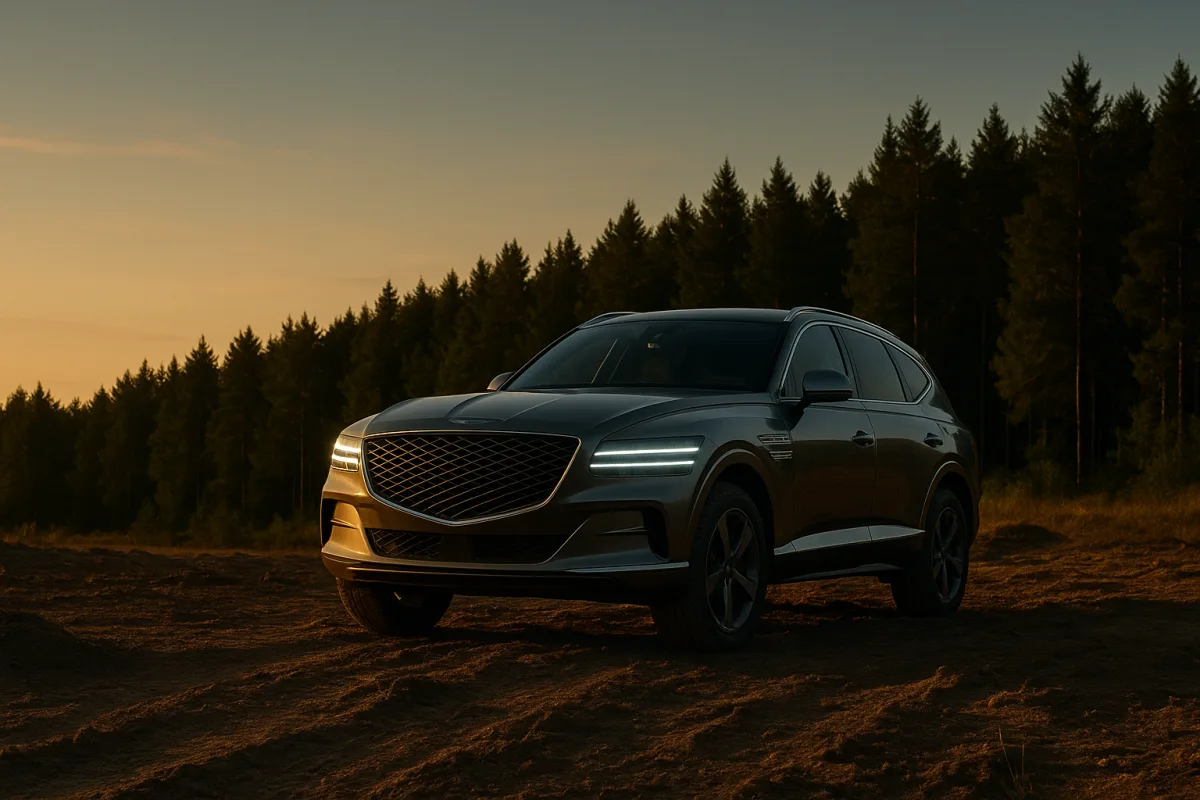
Audi is moving upward, and possibly outward
Audi is shifting toward bigger, more expensive and more specialised SUVs. The confirmed 2027 Q9 puts the brand into the proper full-size luxury-SUV market, while credible reports point to an even more rugged, Scout-related model beyond it. [1][13]
That is not merely Audi stretching the existing Q7 by a few centimetres and adding another options package. The Q9 is positioned above it in price, space, equipment and powertrain ambition, including a V8 SQ9. [1][7]
The possible off-roader matters because it would take Audi in a different direction again. The Q9 remains a unibody luxury SUV, intended to spend most of its life on roads, school runs, airport runs and long interstate journeys.
A Scout-based model, if it happens, would give Audi access to a body-on-frame layout it does not currently offer. That is the basic hardware customers expect when comparing a vehicle with the Land Rover Defender or Mercedes-Benz G-Class. [13]
I have not driven the Q9, and neither has anyone had the chance to report on one at 60,000 miles. That distinction matters more than usual here, because this is a new flagship with new electronics, new lighting hardware and very expensive mechanical options.
The Q9 is Audi’s answer to the X7 and GLS
Audi’s official U.S. Q9 structure starts with the Q9 Premium at $87,700, followed by the $93,300 Premium Plus and $102,400 Prestige. The SQ9 sits at $118,000 before destination charges, options, taxes, insurance or financing. [1]
All regular Q9 versions use a 2.9-litre twin-turbo V6 rated at 429 horsepower, while the SQ9 receives a 4.0-litre twin-turbo V8 rated at 591 horsepower. Audi has not published engine codes in the material available, so buyers should not assume parts interchangeability from displacement alone. [1][7]
That price ladder puts the Q9 directly into familiar territory. Car and Driver’s comparison places the BMW X7 M60i and Mercedes-Benz GLS580 at roughly $100,000 starting points, while the more powerful SQ9 begins around $119,395 depending on quoted configuration. [7]
The BMW X7 M60i suits the buyer who wants a three-row luxury SUV that still feels like it has been engineered by BMW’s chassis department. The Mercedes-Benz GLS580 suits the buyer prioritising comfort and established flagship-SUV status over a newer model’s novelty. [7]
The Audi Q9 suits someone who wants the newest interior architecture, a less flamboyant exterior than some American rivals, and Audi’s particular mix of quattro branding and screen-led luxury. That does not automatically make it the sensible long-term ownership choice.
The SQ9 suits a narrower customer again. It is for someone who genuinely wants V8 power in a three-row Audi and accepts that 23-inch wheels, air suspension, large brakes and a twin-turbo V8 will not be cheap outside warranty.
Size creates costs that the brochure will not show
The Q9 is about 209 inches long, according to coverage of the launch, placing it beyond the BMW X7 and Mercedes-Benz GLS in overall length. That extra metal should mean more useful third-row and luggage space, but it also affects daily ownership. [7]
A vehicle this large needs more garage room, more care in older parking structures and more patience at tyre shops. Four-wheel steering can reduce the turning circle, but it does not make the body narrower or easier to park. [7]
The Q9 can be specified with wheels up to 23 inches, the largest fitted to an Audi. That may look appropriate on a vehicle of this scale, but large low-profile tyres are usually a running-cost decision before they are a styling decision. [7]
For a buyer planning to keep one past the finance term, I would choose the smallest wheel that clears the desired brakes and still looks acceptable. A slightly softer sidewall is useful protection against potholes, bent rims and unnecessary suspension wear.
Audi has not yet published credible real-world fuel consumption data for the SQ9 V8. Manufacturer figures, when they arrive, will be useful for tax and comparison purposes, but they are not a substitute for a winter of commuting, towing and short trips. [7]
Nor is there a published Audi-specific maintenance-cost record for the Q9. The BMW X7 has enough age in the market for independent maintenance-schedule and repair guides to exist, but that is only a proxy, not evidence that an Audi Q9 will cost the same. [8]
That gap should make early buyers cautious, not fearful. The sensible assumption is simply that a first-year flagship luxury SUV will have expensive consumables, complicated diagnostic requirements and limited independent repair familiarity for a while.
The technology is impressive, but not maintenance-free
The most substantive technical advance is Audi’s Digital Matrix LED headlight system. The Q9 is Audi’s first U.S.-market vehicle to use the system, which employs 25,600 micro-LEDs to shape the beam around other traffic. [4]
Adaptive driving beams can keep more of the road illuminated while avoiding glare for oncoming drivers or vehicles ahead. That is a useful safety feature on rural roads, particularly for owners who regularly travel after dark rather than just commuting under streetlights. [4]
It is also an example of why the Q9 is not merely a larger Q7. Audi had to create a U.S.-specific solution after the 2022 revision to Federal Motor Vehicle Safety Standard 108 opened a route for adaptive beams. [4]
Road & Track reports that U.S. rules still require a larger dark area around other vehicles than the European system uses. In practical terms, the American Q9 gets the technology, but not necessarily its full European capability. [4]
That is worth remembering when Audi talks about lighting innovation. The system is a genuine improvement over fixed high beams, but it remains partly constrained by regulation, and there is no long-term repair-cost evidence for these lamp units.
The Q9 also brings curved digital OLED rear-light technology, another first for the brand. It creates configurable lighting signatures and can display warning-related patterns, but it is another complex exterior component that will matter more after a minor collision than on a showroom walkaround. [5][6]
The cabin follows the industry trend toward screens and touch-operated functions. The launch coverage notes physical climate controls have been replaced by screen interaction, which may be acceptable when stationary but is less convincing on a wet, bumpy road.
That is the sort of thing I would examine carefully before ordering. A good luxury car should still be easy to demist, adjust and operate when the novelty has gone, the screen is covered in fingerprints and the driver is wearing gloves.
Why Audi is doing this now
The commercial case is straightforward. Large luxury SUVs deliver much higher transaction values than conventional premium crossovers, and Audi has lacked a direct answer to the Mercedes-Benz GLS and BMW X7 at the upper end of the market. [7]
The Q9 also reflects a broader industry reality: traditional flagship sedans no longer carry the same influence they once did. Buyers who once moved into an A8-class car increasingly want elevated seating, three rows and towing capacity instead.
Audi is not abandoning luxury-car features to get there. The Q9 combines six- or seven-seat layouts, air suspension, large displays and advanced lighting, with SQ9 performance positioned as a halo product rather than a mass-market trim. [1][4]
The more interesting strategic move may be the reported Scout connection. Motor1 reports that Audi is exploring production of about 25,000 vehicles annually at Scout Motors’ Blythewood, South Carolina plant, potentially beginning in late 2027. [13]
Volkswagen Group is investing $2 billion in the Scout facility, which is being developed for body-on-frame vehicles. Scout’s planned Traveler SUV and Terra pickup have been presented with both battery-electric and Harvester range-extender options. [13]
Audi has not confirmed that it will build an SUV there, has not confirmed a production volume, and has not released specifications, pricing or a name. The report is meaningful, but it is still a report, not an order guide. [13]
What a Scout-based Audi could mean
If Audi does use Scout architecture, it would likely be a more serious off-road tool than the Q9. Body-on-frame construction, more rugged suspension requirements and range-extender availability would address a very different customer than the typical Prestige-trim Q9 buyer. [13]
That vehicle would be aimed at customers considering a Land Rover Defender or Mercedes-Benz G-Class, both of which sell in relatively small volumes but command substantial prices and margins. Audi chief executive Gernot Döllner has identified those vehicles as benchmarks. [13]
For a project buyer, that means resisting the temptation to call the rumoured Audi a future bargain. If it appears, it is more likely to be an expensive niche product, with new powertrain hardware and uncertain early ownership costs.
It may suit someone who genuinely needs a rugged vehicle but still wants Audi dealer support, a refined cabin and an electrified drivetrain. It will not necessarily suit the owner who wants simple field repairs, cheap aftermarket parts or proven overlanding hardware.
A conventional used Toyota Land Cruiser, older Defender or established pickup-based SUV may still make more sense for a travel build. Those vehicles have known tyre fitments, suspension options, repair communities and parts pipelines, none of which Audi has established for this proposed model.
Buying and financing the Q9 sensibly
The first question is not whether the Q9 Premium is cheaper than an SQ9. It is whether a buyer needs the V8, the largest wheels and every electronic option after the warranty ends, when the vehicle becomes their responsibility.
Audi’s launch finance offers include 4.99 percent APR for 60 months and 5.99 percent for 72 months on the Q9. Those are not unusual numbers in the luxury-SUV market, but the purchase price makes the interest paid significant. [10]
By comparison, Toyota has advertised 5.99 percent for 60 months on some Highlander finance offers, while Mazda-style lower-rate promotions can change the monthly-payment equation on less expensive SUVs. Finance incentives are temporary, so check the actual offer date. [11]
A larger down payment is useful here, not because it makes an expensive SUV cheap, but because it reduces the risk of owing more than the vehicle is worth. Large luxury SUVs can depreciate quickly once newer technology and facelifts arrive.
For buyers choosing between trims, the Q9 Premium suits the person who wants the space and basic powertrain without turning the car into a six-figure options exercise. Premium Plus and Prestige suit buyers who place genuine value on equipment, not simply badge hierarchy. [1]
The SQ9 suits the committed buyer who wants the V8 and accepts the likely fuel, tyre and brake bills. It does not yet suit the spreadsheet-driven long-term owner, because the data needed for that decision simply does not exist. [7]
Audi’s expansion is real in the Q9 and credible, though unconfirmed, in the Scout-related off-roader. The sensible response is to separate the confirmed vehicle from the interesting rumour, then buy according to actual needs rather than an anticipated future lineup.
Frequently Asked Questions
What are the key features of Audi's full-size SUVs like the Q9 and SQ9?
The 2027 Audi Q9 is a full-size luxury SUV with a starting price of $87,700 for the Premium trim and up to $118,000 for the SQ9. Regular Q9 models use a 2.9-liter twin-turbo V6 with 429 horsepower, while the SQ9 features a 4.0-liter twin-turbo V8 producing 591 horsepower. The Q9 offers advanced technology such as Audi's Digital Matrix LED adaptive headlights and a spacious interior with three rows of seating.
How does the Audi Q9 compare to BMW X7 and Mercedes GLS?
The Audi Q9 is positioned similarly in price and size to the BMW X7 M60i and Mercedes-Benz GLS580, with the Q9 starting around $87,700 and the SQ9 at about $118,000. The Q9 is longer than both competitors, offering more third-row and cargo space. It appeals to buyers seeking newer interior architecture, a less flashy exterior, and Audi’s quattro all-wheel-drive system, while the BMW emphasizes driving dynamics and the Mercedes prioritizes comfort and flagship status.
What are the expected maintenance costs for Audi's full-size SUVs?
There is currently no reliable data on fuel economy, maintenance costs, or high-mileage repairs for the 2027 Audi Q9, especially the SQ9 with its V8 engine. Buyers should anticipate higher servicing costs due to the vehicle’s size, complex electronics, and performance parts, but specific figures have not been published. It is recommended to budget for tyres, servicing, depreciation, and financing rather than relying solely on the advertised monthly payment.
Is Audi planning to release a body-on-frame off-road SUV?
Audi has not officially confirmed production of a body-on-frame off-road SUV based on the Scout platform, although credible reports suggest the company is exploring manufacturing such a vehicle at a new South Carolina plant starting in late 2027. This potential model would be an electric SUV with a range-extending gasoline engine, aimed at competing with the Land Rover Defender and Mercedes G-Class, but no official announcement has been made.
What technology does the 2027 Audi Q9 offer?
The 2027 Audi Q9 is the first U.S. Audi to feature Digital Matrix LED adaptive driving beam headlights, enabled by a 2022 revision of FMVSS 108. This system uses 25,600 micro-LEDs to provide precise glare reduction and improved illumination. However, U.S. regulations still limit the full effectiveness of this technology compared to similar systems used in Europe.
How we researched this
This article was assembled from 2 video sources across 2 channels, 3 published articles, 14 cited references.
Nothing here is based on hands-on testing. Where a figure or finding appears, it belongs to the source cited beside it, and the writing says so rather than implying otherwise. Every source is listed below so you can check it.
Sources
NEW SQ9 is the BIGGEST Audi EVER! — carwow
2027 Audi Q9 Review: The Biggest, Craziest Audi Luxury SUV Ever — Doug DeMuro
Pay to Play: 2026 Audi A6 Tested — Car and Driver
How Audi’s Digital Matrix LED Lights Bring Adaptive Driving Beams to the U.S. — Road & Track
Audi Reportedly Exploring A New Off-Road SUV Based On Scout — Motor1
2027 Audi Q9 Trim Levels: Premium, Premium Plus, Prestige & SQ9 | Audi Elk Grove
Audi trasladará a su futura planta en EE UU toda la producción europea de grandes todocaminos
The 2027 Audi Q9 Finally Brings Adaptive Matrix Headlights to the U.S. - AudiWorld
A world first on the Audi Q9: digital OLED panel with a curved design | audi.com
How the 2027 Audi Q9 Stacks up to the BMW X7 and Mercedes GLS
BMW X7 maintenance schedule, costs & known repairs - Carlyle
Auto Loan Rates for New & Used Cars | Navy Federal Credit Union
2027 Audi Q9 Launches With 4.99% APR, Loyalty Discount - CarsDirect
Watch Audi's Expansion into Full-Size SUVs and Off-Road Models on Youtube
Also from the sources
Related Articles
Mercedes-AMG GT SUV vs Porsche Mission S
Compare the Mercedes-AMG GT SUV and Porsche Mission S for luxury, performance, and ownership insights on these 2026 electric and petrol supercars.
Acura 2028 Off-Road and Large SUVs: What to Expect
Explore Acura's 2028 off-road and large SUVs, including hybrid tech, release timelines, and how they fit into Acura's future lineup.
Military-Inspired Off-Road SUVs
Explore military-inspired off-road SUVs like the Ford Bronco Filson, Defender Wolf II, and Land Cruiser with insights on ownership and performance.
Plug-in Hybrid Pickup Truck Comparison
Compare the Ford Ranger PHEV and BYD Shark plug-in hybrid pickups on performance, towing, off-road ability, and ownership considerations.