
High-Performance Car Builds
Explore high-performance car builds, comparing drift setups, exotic mods, costs, and ownership challenges in this detailed guide.
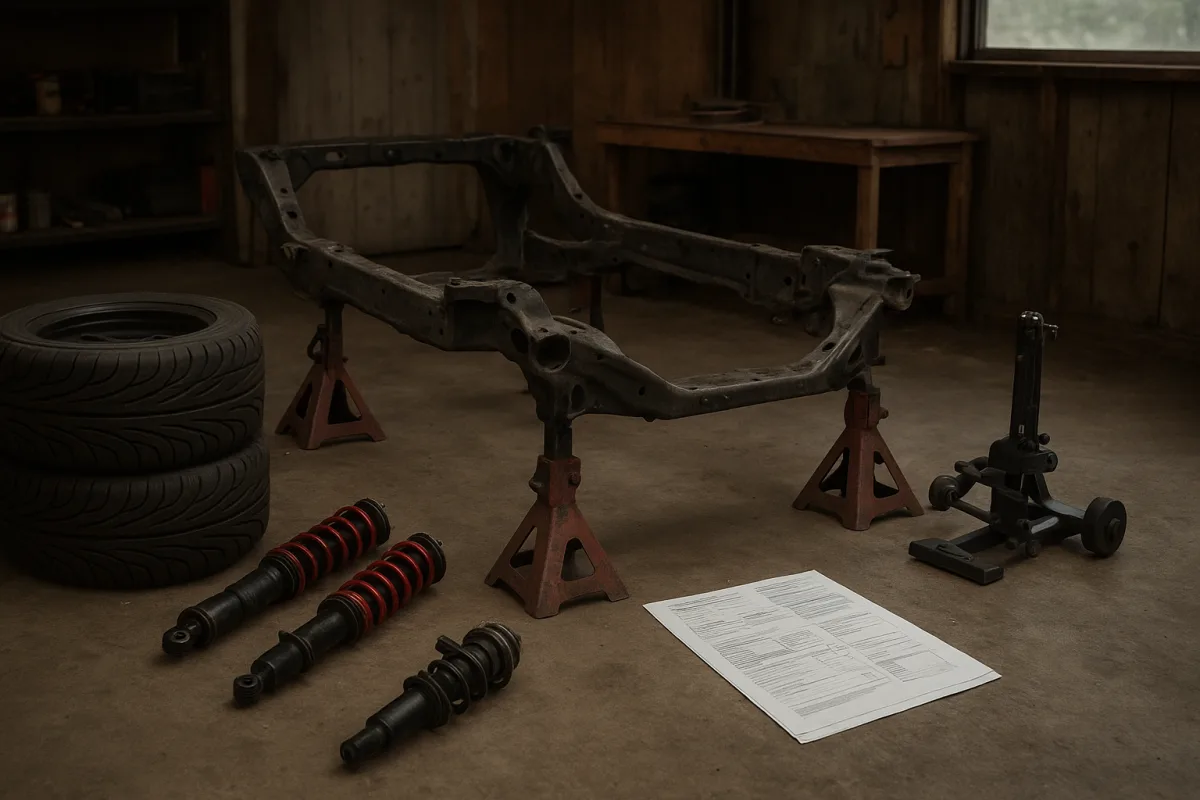
Extreme Performance Builds Compared: What the Power Figure Does Not Tell You
The quick list
- Best overall: RTR Twerk Horse Mustang, for drivers wanting near-Formula Drift hardware with a comparatively durable Coyote V8 package.
- Best value: Front Street SR22 S-chassis, for drivers who want a simple, repairable grassroots drift car rather than an online showpiece.
- Best for small budgets: Donut’s low-cost drift-mod recipe, for builders accepting the road compromises of a welded differential.
- Best for engineering obsession: Adam LZ’s four-rotor Supra, for experienced teams prepared to monitor and rebuild a specialist racing engine.
- Best for big-power style: TJ Hunt’s 2JZ Supra, for enthusiasts who value a highly developed modern drift build, while accepting that its power figure is unverified.
- Best for visual impact: Damon’s GT1-style Murcielago, for collectors with specialist bodywork, paint and brake budgets.
- Best for competition hardware: Donut’s high-cost drift-mod recipe, for track users who need adjustability and fewer compromises than a budget setup.
What you are really deciding
The question is not which build has the biggest claimed number. It is whether you want a car to learn in, compete in, create content with, display, or maintain as a serious mechanical project.
Those aims lead to radically different spending. A welded-diff S-chassis can be made to slide on a modest budget. A bespoke Lamborghini repaint can consume more money before it has gained a single horsepower.
None of these are conventional ownership propositions. The comparisons below rest on the cited creators’ descriptions and available research, not hands-on testing. Exact total build costs are unavailable for most cars, which matters because labour, transport, tyres, engine refreshes and crash damage usually overwhelm headline parts prices.
Comparison table
| Build or approach | Layout and character | Published price or spend | Power information | Main trade-off | Best use |
|---|---|---|---|---|---|
| TJ Hunt 2JZ Supra | Front-engine, rear-drive Supra drift build | Not disclosed | Claimed as 900HP in the title, but no verified public dyno figure | Serious drift-car setup, unclear true output and total spend | High-output event and content build |
| Adam LZ four-rotor Supra | Front-engine, rear-drive, four-rotor race-style drift car | Not disclosed | No figure supplied in the source | Specialist engine requires close oil-pressure and temperature management | Demonstration and competition drifting |
| Damon’s GT1-style Murcielago | Mid-engine Lamborghini with extensive bodywork and brake upgrades | Not disclosed | Not supplied | Bespoke paint and fabrication make repairs costly | Collector-grade visual and engineering build |
| Front Street SR22 S-chassis | Front-engine, rear-drive Nissan with SR22 and CD009 transmission | Not disclosed | Up to 560 hp, reportedly quickest around 415 hp | Less peak power, but still needs drift-car maintenance | Grassroots tandem and team drifting |
| Donut low-cost drift setup | Budget suspension, welded differential, bolt-on angle parts | $2,700 | Not supplied | Chatter, tyre scrub and poorer street manners | Entry-level drift project |
| Donut high-cost drift setup | Adjustable arms, upgraded coilovers, clutch-type differential and angle hardware | $10,000 | Not supplied | Large upfront spend and setup complexity | Track-focused drift car |
| RTR Twerk Horse Mustang | Formula Drift-derived Mustang chassis with Coyote V8 | Not disclosed | Estimated 910 hp at the wheels, not dyno-verified | Heavier engine and some geometry compromise for appearance | Professional-grade exhibition drifting |
The high-power Supuras: different engines, same reality
TJ Hunt’s 2JZ Supra and Adam LZ’s four-rotor Supra look similar from a distance because both are wide-bodied, event-focused Toyota drift cars. Mechanically, they represent opposite paths to the same problem: making power that remains controllable lap after lap.
TJ Hunt’s car is referred to as a 900HP 2JZ Supra by the Tj Hunt channel, but there is no verified public horsepower or torque result for the current build. That does not mean it is slow. It means buyers should not turn a title-card number into a parts-shopping list.
The useful detail is its setup direction. The car runs at drift events alongside significantly different power levels, and the conversation around it centres on ride height, side bite, suspension pickup points and how the chassis behaves, not just engine output.
That is the grown-up part of a high-power build. More torque does not automatically mean more usable speed. A car that cannot generate front grip, maintain cooling or put power down will be tiring rather than quick.
Adam LZ’s four-rotor Supra demonstrates the other side. At the Canadian event, its team traced an earlier failure to a set screw backing out, which allowed a main bearing to move, restrict an oil passage and spin a bearing.
The engine was repaired before major damage occurred, but the problem returned in a different form. Oil pressure reportedly fell from roughly 70 psi at 8,000 rpm to 40 psi at 10,000 rpm, leading the team to reduce the rev limit to around 8,500 rpm.
That is not a minor inconvenience. It is a practical lesson in owning a specialist engine: bearing clearance, oil weight, oil temperature and pump capacity may determine whether the car completes the weekend. The team considered thicker oil, a lower limiter and potentially an external oil pump.
For a normal enthusiast, the 2JZ route is easier to understand and source. The four-rotor route is for someone who accepts that rebuilding and data logging are part of the experience, not a failure of the build.
The Lamborghini: restoration standards applied to a modified car
DailyDrivenExotics’ GT1-style Murcielago sits outside the usual drift-car value equation. It is a mid-engined Lamborghini that has already been transformed visually, then torn down again for body correction, a colour change and braking upgrades.
The important part is the teardown method. The shop removes adjoining panels so paint can wrap around panel edges, rather than leaving masking lines where components meet. It also sands the whole body so the new coatings can mechanically adhere.
That labour is why a paint job cannot be judged by a social-media before-and-after image. Fibreglass and carbon-fibre panels can show ripples, dents and old repair work beneath clearcoat. The more extreme the body conversion, the more preparation determines whether it looks convincing.
The source does not publish a total repaint or bodywork price, and there is no verified evidence of a standardised DTM Autolock body-and-paint package. Research instead points to the reality of Murcielago ownership: older Lamborghini body parts often require custom work, and comparable aftermarket kit components can range from $1,100 to $11,000 before paint, fitting or shipping.
The brake conversion is equally telling. Opus fitted carbon-ceramic rotors with aluminium-lithium hats, describing a long-fibre construction intended to be stronger than older chopped-fibre ceramic designs. That is meaningful engineering, but it is not cheap consumable-car logic.
Choose this route only if the car itself is the point. A Murcielago build can be a remarkable long-term project, but a parking scrape, paint defect or unavailable panel becomes a specialist repair rather than a weekend parts order.
Grassroots drift cars: simple is not the same as cheap
The Front Street S-chassis shown by Tj Hunt is arguably the most instructive car here. It uses an SR22 engine, a Garrett G25-660 turbocharger and a Nissan CD009 six-speed transmission, but its owner says it is fastest at around 415 hp despite being capable of roughly 560 hp.
That is a more useful target than chasing peak dyno output. The car retains a recognisable interior, including rear-seat space and carpet, while using common drift upgrades such as GKTech arms, a G-knuckle setup and Stance suspension.
Its appeal is not luxury or a polished finish. It is a known community recipe, shared parts knowledge and a setup designed around tandem driving. If something bends, breaks or needs geometry adjustment, the S-chassis world has answers.
Donut’s HiLow comparison puts numbers around the same decision. The budget drift setup cost $2,700, while the more expensive configuration reached $10,000. The difference was not simply branding, it was adjustability, differential behaviour and component scope.
The budget car used a welded differential. It locks both rear wheels together, which is effective for initiating and sustaining a drift. On the street, however, it causes tyre chatter in tight turns and can promote understeer on corner entry.
The expensive car used a clutch-type differential, adjustable arms, substantial angle hardware and more sophisticated coilovers. Its differential can lock when needed instead of being permanently locked, making transitions more predictable and ordinary driving less unpleasant.
Donut also quoted approximately $989 for the Megan Racing coilovers in the lower-cost build and roughly $2,600 for the HKS coilovers in the higher-cost build. Neither figure includes installation, alignment, tyres, brake work or repairs after track use.
That last point is crucial. Lower-cost parts may get a beginner on track faster, but the car still needs competent alignment. Incorrect toe, caster, bump steer or wheel clearance can make a large-angle setup unpredictable and can destroy tyres rapidly.
The RTR Mustang: race-car structure with a durability plan
Larry Chen’s feature on the RTR Twerk Horse Mustang shows a more developed formula. The car uses the company’s Formula Drift-style chassis architecture, including purpose-built arms, electric power steering, a quick-change rear end and competition-derived suspension geometry.
Its Coyote V8 is estimated at 910 hp at the wheels based on airflow calculations. The builders state that it has not been dyno tested, so that estimate should not be reported as a confirmed result.
The key distinction is service strategy. RTR deliberately chose the Coyote because it wanted a car that could largely be run with tyre changes, oil changes and fuel, rather than the scheduled rebuild burden of a highly stressed race engine.
That does not make it cheap. It means the expensive work is directed toward a durable chassis and drivetrain base. The build also makes a conscious compromise, using a previous-generation rear-wheel arrangement that looks better but gives away some ultimate rear geometry.
That is a sensible reminder that even top-tier builds are compromises. The owner wanted a car that felt personal and looked right. A theoretical three-percent performance improvement was less important than delivering the intended driving and visual character.
Insurance, legality and the costs people leave out
The cheapest-looking drift project can become expensive when insurers enter the picture. Suspension modifications may raise premiums by 20 to 50 percent, and specialist modified-car cover can cost 40 to 60 percent more than standard insurance. [3]
Standard policies may provide only about $1,500 of aftermarket-parts protection. Custom Parts and Equipment endorsements can extend coverage beyond $50,000, but the modifications must be declared and documented, ideally with invoices, photographs and an agreed valuation. [1]
Undeclared modifications are not a clever saving. Insurers may reject claims, cancel cover or refuse to insure extensively altered cars, particularly where modifications affect safety, power or road legality. [2]
For Canadian builds, the legal picture is provincial as well as federal. Quebec’s SAAQ requires modified vehicles to remain safe and may require inspection, while changes affecting emissions equipment can create separate compliance issues. [7]
A car built for closed-course drifting should be treated as exactly that unless its road legality has been confirmed. Event organisers also impose their own technical inspections, which can be stricter than what is needed merely to register a road car.
Who each option suits
TJ Hunt’s 2JZ Supra suits the enthusiast who wants a modern, aggressive drift-car template and understands that an unverified horsepower claim is not enough information to replicate the build responsibly.
Adam LZ’s four-rotor Supra suits a well-funded team that enjoys engineering development, carries spares and sees oil analysis, data logging and periodic engine work as normal ownership.
Damon’s GT1-style Murcielago suits a collector or established builder who values craftsmanship and visual identity over running-cost restraint. It is unsuitable as a first serious modified-car project.
The Front Street SR22 S-chassis suits the driver who wants to progress in grassroots tandem drifting with a familiar, repairable platform and a power level chosen for responsiveness rather than bragging rights.
Donut’s $2,700 drift setup suits the builder starting with a limited budget and a track-only expectation. It offers a direct route into drifting, but its welded differential makes it a poor choice for comfortable street use.
Donut’s $10,000 drift setup suits the driver who already knows they will attend track days regularly and wants proper adjustability, a more civil differential and more scope to tune the car around their driving.
RTR’s Twerk Horse Mustang suits the driver or brand with serious funds who wants a near-professional drift platform built around repeatable use. It is the most developed package here, but it is not a shortcut around tyre, fuel and crash-repair bills.
Frequently Asked Questions
What are the best high-performance car builds for drifting?
The best builds vary by purpose and budget. For near-Formula Drift hardware with durability, the RTR Twerk Horse Mustang with a Coyote V8 is recommended. For grassroots drifting on a modest budget, the Front Street SR22 S-chassis offers a simple, repairable platform. High-power drift builds like TJ Hunt’s 2JZ Supra and Adam LZ’s four-rotor Supra showcase different engineering approaches but require more maintenance and expertise.
What should I consider when modifying a car for high power output?
High power alone does not guarantee better performance; factors like chassis setup, suspension geometry, cooling, and front grip are critical. Specialist engines, such as Adam LZ’s four-rotor, demand careful oil pressure management, bearing clearances, and heat control to avoid failures. Owners should balance power goals with reliability and drivability for consistent lap times.
How does ownership of an exotic modified car differ from grassroots builds?
Exotic builds, like Damon’s GT1-style Lamborghini Murcielago, involve extensive bespoke bodywork, paint preparation, and brake upgrades, leading to much higher costs and complex maintenance. These cars are collector-grade and not typical drift cars. In contrast, grassroots builds such as welded-diff S-chassis drift cars have lower financial exposure and simpler repair needs but still require budgeting for tyres, alignment, and insurance.
What are the insurance implications of high-performance car modifications?
Modified-car insurance typically costs 40 to 60 percent more than standard policies. Standard insurance often limits aftermarket parts coverage to about $1,500 unless a custom-parts endorsement is purchased, which can increase coverage up to $50,000 or more. Suspension and turbo modifications can raise premiums by 20–50% and 25–40%, respectively. Full disclosure and detailed documentation of modifications are essential to avoid claim denials.
How we researched this
This article was assembled from 5 video sources across 5 channels, 7 cited references.
Nothing here is based on hands-on testing. Where a figure or finding appears, it belongs to the source cited beside it, and the writing says so rather than implying otherwise. Every source is listed below so you can check it.
Sources
Why Damon Tore Apart His GT1 Murcielago! — DailyDrivenExotics
900HP 2JZ Supra Vs. Canadian Police — Tj Hunt
Hert's Twerkstallion Lives on in The All New RTR Twerk Horse — Larry Chen
Custom Parts & Equipment (CPE) Coverage: Insuring Your Car Modifications | Penny Pincher
Insurance Companies Blacklisting Modified Cars: Coverage Crisis Explained | ThreePiece.us
Modified Car Insurance: Coverage, Costs, and Requirements | Compare.com
How to Finance a Hypercar or Seven-Figure Car (2026) | Digital AutoFi
Exotic Car Financing - How Lenders Price a Six-Figure Car | Studio Motors
Performance Parts Financing – Affirm & Shop Pay | Lethal Performance
Watch High-Performance Car Builds and Modifications on Youtube
Also from the sources
Related Articles
Exotic Car Ownership and Modifications
Explore exotic car ownership and modifications, including costs, challenges, and real-world examples of high-performance exotic cars.
High-Performance Exotic Car Ownership
Explore high-performance exotic car ownership costs, maintenance, modifications, and financing to make informed decisions about your dream vehicle.
Exotic Car Restoration Stories and Ownership Insights
Explore exotic car restoration stories, ownership challenges, and costs for high-performance rebuild projects like Ferrari and Lamborghini.
Supercar Drag Race Comparison and Ownership Insights
Compare top supercars in drag races with insights on performance, quarter mile times, and ownership costs for informed buying decisions.