
Hypercar Ownership Challenges
Explore hypercar ownership challenges, costs, and maintenance insights for McLaren P1, SSC Tuatara, and Lamborghini Gallardo owners.
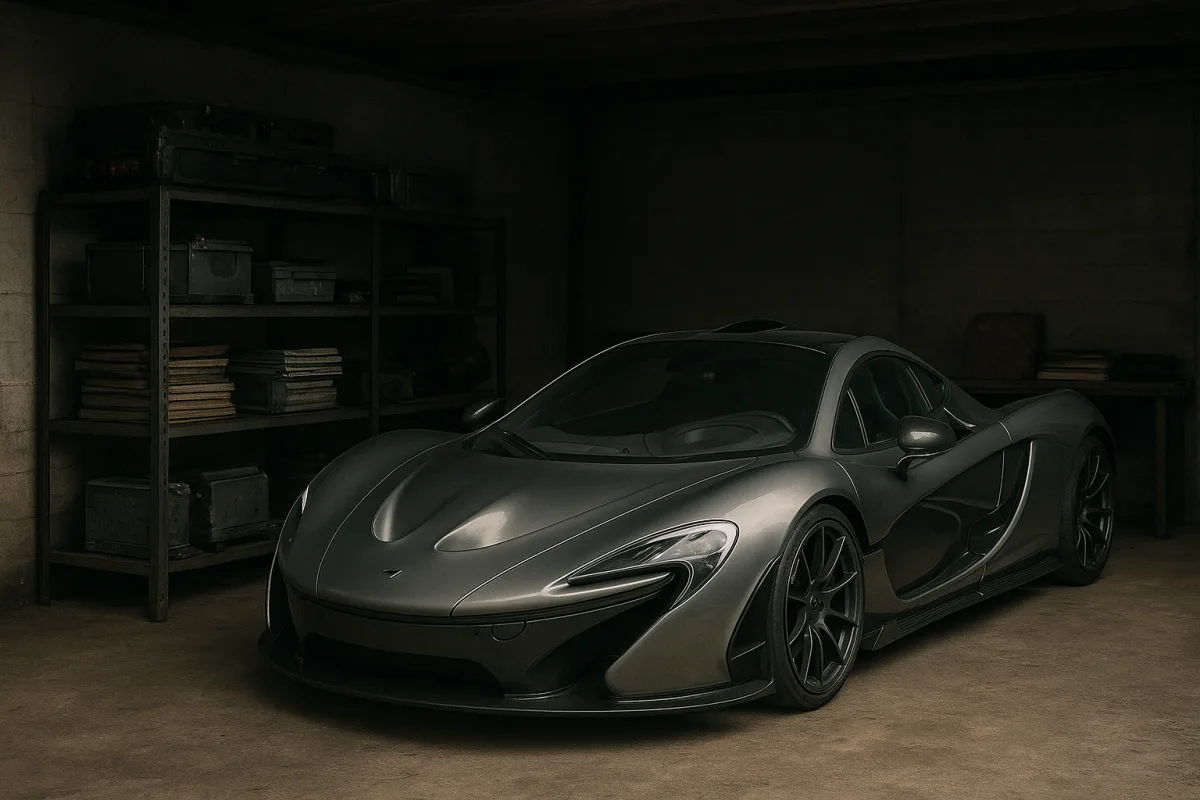
The real choice is not speed, it is exposure
If you are choosing between a modern hypercar, an older analogue supercar, a limited-run track special or an electric luxury performance car, the question is rarely which one is quickest. The meaningful decision is how much complexity, downtime and financial uncertainty you are prepared to own.
A McLaren P1, an SSC Tuatara and a Lamborghini Centenario are all seven-figure statements, but they create very different ownership problems. A 2006 Lamborghini Gallardo looks modest beside them, yet may be the car most likely to be immobilised by one obsolete hose. A Lucid Air is not in the same social category at all, but its 2026 recalls are a useful reminder that a car with cutting-edge propulsion still depends on basic engineering details being correct.
The common thread in the examples shown by Mark McCann, TheStradman, The Hamilton Collection, Hoonigan and Supercars of London is this: rare cars are easy to admire as static objects. The difficult part is keeping them usable without turning every outing into a calculation about parts availability, insurance, storage, values and the consequences of one small incident.
McLaren P1: the strongest investment case, with a six-figure battery caveat
The 2014 McLaren P1 is arguably the most rounded hypercar in this group if the buyer wants something that is genuinely collectible but still credible for road use. It is a mid-engined hybrid with a 3.8-litre twin-turbo V8 and electric assistance, rather than an old-school V12 special, and that matters. The P1’s performance remains extraordinary, but its appeal at this point is its place among the early hybrid hypercars, alongside the Ferrari LaFerrari and Porsche 918 Spyder.
Mark McCann’s P1, featured on the Mark McCann channel, was bought for £1.2 million and had spent nine months in storage before its health check. That is the ownership reality manufacturers do not put in brochures. A P1 needs appropriate storage, a maintained battery charger and people who understand the car. Leaving it unused is not necessarily cheap or safe simply because the mileage is low.
The financial upside is real. DriveIndex reports P1 values in the $3.26 million to $3.49 million range by model year, while the broader 2026 market includes a $3,575,000 sale for a 3,124-mile example and a $2,887,500 sale for a 1,254-mile car. Mileage, provenance, service history and factory specification all matter heavily. [1] The P1 is one of the rare cars where a low-mile, original car can make a fairly convincing case as an appreciating asset rather than merely an expensive toy.
That is why cosmetic modifications are not automatically harmless. Mark McCann’s channel documents changing the appearance of its P1 after criticism from viewers. The independent market picture supports the cautious view: original factory specification tends to be worth more, while aftermarket changes can narrow the future buyer pool. A wrap and reversible wheels are less concerning than irreversible bodywork, but anyone buying at this level should keep original parts and document everything.
Routine servicing is not cheap, but it is not necessarily the most frightening line item. Mark McCann was quoted about £8,000 by McLaren for a service, while a specialist completed inspection, oil, filters and a battery check for £700 using original-equipment parts. That does not prove every independent can service every P1 to the same standard, nor does it make a dealer history irrelevant on a £3 million collector car. It does show that the official network is not the only route once a car is out of warranty.
The big risk is the hybrid battery. Mark McCann’s channel referred to a £120,000 replacement concern, but the more current figure is McLaren’s $156,700 price for its second-generation replacement battery. [3] That pack reportedly improves performance but reduces electric-only range. V Engineering plans a 12.4 kWh aftermarket upgrade for installations from 2027, but that is a future option, not a proven low-cost answer for a buyer today. [3]
Insurance alone is commonly estimated at $12,000 to $18,000 annually, before secure storage, premium fuel, tyres, transport and specialist labour. [2] A routine-maintenance budget of $5,000 to $10,000 a year is plausible, but it should be treated as the easy year, not the ownership average. [2]
The P1 suits the buyer who wants a historically important hybrid hypercar, can preserve originality, and has enough reserve cash that a battery does not become an emergency. It does not suit someone whose plan is to buy the cheapest example and hope low annual mileage means low annual risk.
SSC Tuatara: the $2 million wildcard
The SSC Tuatara, featured by The Hamilton Collection, is a different proposition. The channel describes a $2 million order completed in roughly eight months from specification to delivery. That makes it strikingly direct compared with the years-long allocation and build processes often associated with established European hypercar marques.
Its layout is conventional by hypercar standards, a mid-mounted twin-turbo V8, but the ownership context is not. SSC is a very small-volume American manufacturer, and the Tuatara’s appeal is precisely that it is not another P1, Bugatti or Koenigsegg. The Hamilton Collection cites the company’s verified two-way top-speed record of 282.9 mph, while SSC’s stated target remains a two-way 300 mph run. Those claims may appeal to a buyer who values engineering ambition and rarity more than auction-house familiarity.
The trade-off is market depth. There is no comparable body of public data for Tuatara servicing, insurance, financing or long-term parts support. Hypercar insurance estimates of roughly $10,000 to $20,000 per year are reasonable planning territory, but they are not a documented Tuatara-specific quote. [5] That uncertainty should be priced into the purchase, even if the initial $2 million headline is manageable.
The Tuatara’s compact, low-slung architecture and its very low headlamps, as shown by The Hamilton Collection, make it a more intense road car than the P1 in practical terms. It has height adjustment, which helps, but a front-lift system does not make a hypercar convenient in car parks, ferry ramps or poor urban road surfaces. The channel also highlights the automatic door-closing function, a small but sensible detail on a car where slammed doors and damaged carbon are expensive problems.
The SSC Tuatara suits a collector who wants an American-built, ultra-low-volume hypercar and is comfortable being closer to the manufacturer and specialist network. It does not suit the buyer who needs transparent residual values, predictable service costs or a large independent repair ecosystem.
Lamborghini: the Gallardo is cheaper to buy, not automatically cheaper to own
The 2006 Lamborghini Gallardo shown by TheStradman is perhaps the most useful cautionary example in the whole group. It is neither new nor exotic in the same way as a P1 or Tuatara, but it demonstrates how a relatively ordinary consumable can stop an entire restoration.
TheStradman’s car needed a fuel line running from the fuel pump to the filter. The original fitting had melted, and starting the car without replacing it risked another fuel leak and fire. Lamborghini had the part on back order, while the owner was searching Europe, eBay and specialist contacts. This is familiar territory with twenty-year-old low-volume Italian cars: the issue is not always the engineering complexity, it is supply.
For a 2003 to 2008 Gallardo, ageing rubber fuel-system components are a known concern because they become brittle and can leak. OEM availability can be limited, while aftermarket replacements vary in quality. [2] On an e-gear Gallardo, a clutch replacement can run from $12,000 to $18,000. [2] So the old Gallardo’s lower purchase price, not stated in TheStradman’s report, should never be confused with cheap motoring.
The Huracán Sterrato featured on TheStradman’s channel is the more usable modern Lamborghini alternative. Its raised suspension and rally-inspired position make it better suited to uneven roads than a normal low Huracán, although the channel still records it scraping. That is the useful distinction between marketing and reality. A Sterrato is more tolerant, not invulnerable.
No purchase price is stated for that specific Sterrato in the source material. What it suits is clear, though: an owner who wants a naturally aspirated V10 Lamborghini to drive on imperfect roads, not preserve as a concours object. It is the practical choice among the Lamborghinis here, which remains a very relative term.
The Lamborghini Centenario seen at Lamborghini Salt Lake City on TheStradman’s channel sits at the opposite end of the spectrum. Just 20 were mentioned in the report, with an estimated value of $3 million to $5 million. That is an estimate from the channel, not a confirmed transaction figure. At that money, its special paint, carbon and rarity make it much closer to the P1 ownership model: preserve it, insure it properly, and assume a minor cosmetic repair can be a major financial event.
The Gallardo suits the hands-on owner with a specialist, patience and a contingency fund. The Huracán Sterrato suits the person who actually wants to use a V10 Lamborghini away from pristine roads. The Centenario suits the established collector for whom scarcity is the point.
Track specials and custom builds: the least forgiving cars are not always the most valuable
Supercars of London’s visit to German dealer SM Automotive illustrates the difference between rarity and usability. The collection included a Pagani Zonda C12 Roadster, a Porsche Carrera GT, a Bugatti Chiron Super Sport, a Koenigsegg CCX, a Koenigsegg Jesko Attack, an Apollo Intensa Emozione, a Ferrari F40, an AMG GT R Pro and an Audi R8 V10 RWS.
Not every one of those cars has a price disclosed in the report. The clearest figure is the Zonda C12, estimated by SM Automotive at around £9 million to £10 million. The Apollo IE is limited to 10 examples, according to the dealer, and the Chiron is specifically identified as a Super Sport rather than a standard Chiron. Those details matter because the badge alone is not enough to value a hypercar accurately.
The Pagani Zonda C12 suits the collector who values analogue theatre, manual interaction and long-term provenance. The Porsche Carrera GT suits someone seeking a similarly analogue, high-value V10 experience. The Bugatti Chiron Super Sport and Koenigsegg Jesko Attack suit buyers focused on technical extremity and rarity, but both demand a manufacturer-level support relationship. The Apollo IE suits the track-event collector, not someone seeking a discreet road car. The AMG GT R Pro and Audi R8 V10 RWS suit the buyer wanting a more recognisable service path and substantially less anxiety around use.
Hoonigan’s 632-cubic-inch Camaro project is the outlier, but it makes an important point. The source does not disclose a total build price. Its proposed naturally aspirated engine target is more than 1,200 hp on an engine dyno and around 1,000 rear-wheel horsepower, with custom equal-length headers, oval exhaust tubing and individually fitted primary tubes. That means serviceability becomes a design problem. The headers cannot simply be removed like an off-the-shelf system, and future work requires a process.
The Camaro suits a committed builder who accepts fabrication, tuning and inspection as part of ownership. It does not suit anyone looking for factory-like reliability or straightforward roadside repairs.
Lucid Air: the sensible alternative still needs recall discipline
The Lucid Air is the practical outlier here, but it deserves mention because its problems are far more relevant to ordinary performance-car ownership than a P1 battery bill. There are no documented 2026 lawsuits or other legal actions in the available research, despite the suggestion of “legal issues.” The confirmed issue is recalls.
A May 2026 recall affects 2024 and 2025 rear-wheel-drive Lucid Air models over a Gen 4 inverter friction risk that can cause loss of drive power. Lucid planned an over-the-air update and free inverter replacement. A March 2026 recall covered improperly secured bolts on 2024 to 2026 Air Pure RWD cars, with a risk of half-shaft disconnection. A January 2026 recall addressed rear-view-camera software on 2022 to 2026 AD02-package cars through an OTA update. [4]
No price is supplied in the research for the Lucid Air, so it would be misleading to invent one. It suits the driver who wants fast, quiet long-distance electric performance and is willing to check the VIN, recall status and completed repair records before buying.
The P1 suits the preservation-minded collector with serious reserves. The Tuatara suits the buyer who wants rarity and American hypercar character over predictable resale evidence. The Gallardo suits the patient specialist-owner, the Sterrato the driver, and the Centenario the collector. The Zonda, Carrera GT, Chiron Super Sport, Jesko Attack and Apollo IE are for collectors who understand that use can affect value. The Lucid Air suits the real-world performance buyer, provided recall work is treated as essential maintenance rather than an administrative detail.
Frequently Asked Questions
What are the main challenges of owning a hypercar?
Owning a hypercar involves managing complexity, downtime, and financial uncertainty. Rare cars often require careful storage, specialist maintenance, and can be immobilised by scarce or obsolete parts. Owners must also consider insurance, storage, and the risk that a small incident can have significant consequences.
How costly is maintaining a McLaren P1?
Routine servicing for a McLaren P1 can cost around £8,000 at a dealer, while specialist independent inspections may be done for about £700. Annual maintenance budgets of $5,000 to $10,000 are plausible but should be considered optimistic. The most significant potential expense is the hybrid battery replacement, which McLaren prices at $156,700.
What risks come with owning an SSC Tuatara?
The SSC Tuatara faces risks related to limited market data on servicing, insurance, financing, and parts support due to its small-volume production. Insurance estimates range from $10,000 to $20,000 annually, but no specific quotes are documented. Buyers should factor in uncertainty around long-term ownership costs and support.
Why can older supercars like the Lamborghini Gallardo be hard to maintain?
Older supercars such as the 2006 Lamborghini Gallardo can be difficult to maintain because key rubber components like fuel lines degrade and become brittle over time, making parts scarce or obsolete. OEM parts are often discontinued or limited, and clutch replacements can be very expensive, ranging from $12,000 to $18,000. Specialized knowledge and equipment are also necessary for repairs.
How does hybrid technology affect hypercar ownership costs?
Hybrid hypercars like the McLaren P1 introduce additional costs and complexities, particularly related to the high price and maintenance of the hybrid battery pack. For example, the P1’s battery replacement can cost over $150,000, a figure far exceeding typical hybrid battery replacements in standard vehicles. Proper storage and battery management are essential to avoid unexpected expenses.
Sources
TRANSFORMING MY MCLAREN P1 TO SILENCE HATERS! — Mark McCann
Utah Typhoon Fries my Most Expensive Supercar — TheStradman
TAKING DELIVERY OF THE FASTEST CAR IN THE WORLD! — The Hamilton Collection
Did We Build the Ultimate Exhaust for our Big Block Camaro? — Hoonigan
Inside Germany's SECRET £100M Supercar Collection — SOL - Supercars of London
McLaren P1 Values: $3,260,848–$3,494,160 by Year | DriveIndex
McLaren Wants $156,700 To Fix The P1’s Battery. V Engineering Has A Better Answer | Carscoops
The Real Running Costs of a Modern Supercar, Explained | Cool Supercars
Watch Supercar and Hypercar Highlights and Incidents on Youtube
Also from the sources
Related Articles
Exotic Car Ownership and Modifications
Explore exotic car ownership and modifications, including costs, challenges, and real-world examples of high-performance exotic cars.
High-Performance Exotic Car Ownership
Explore high-performance exotic car ownership costs, maintenance, modifications, and financing to make informed decisions about your dream vehicle.

Exotic Car Ownership Experience: Challenges and Insights
Explore the exotic car ownership experience, including maintenance, modifications, insurance, and financing for high-performance vehicles.
Exotic Car Restoration Stories and Ownership Insights
Explore exotic car restoration stories, ownership challenges, and costs for high-performance rebuild projects like Ferrari and Lamborghini.