
Polestar US Sales Ban Explained
Learn why Polestar faces a US sales ban starting 2027 due to connected vehicle rules and how it differs from Volvo's approval.
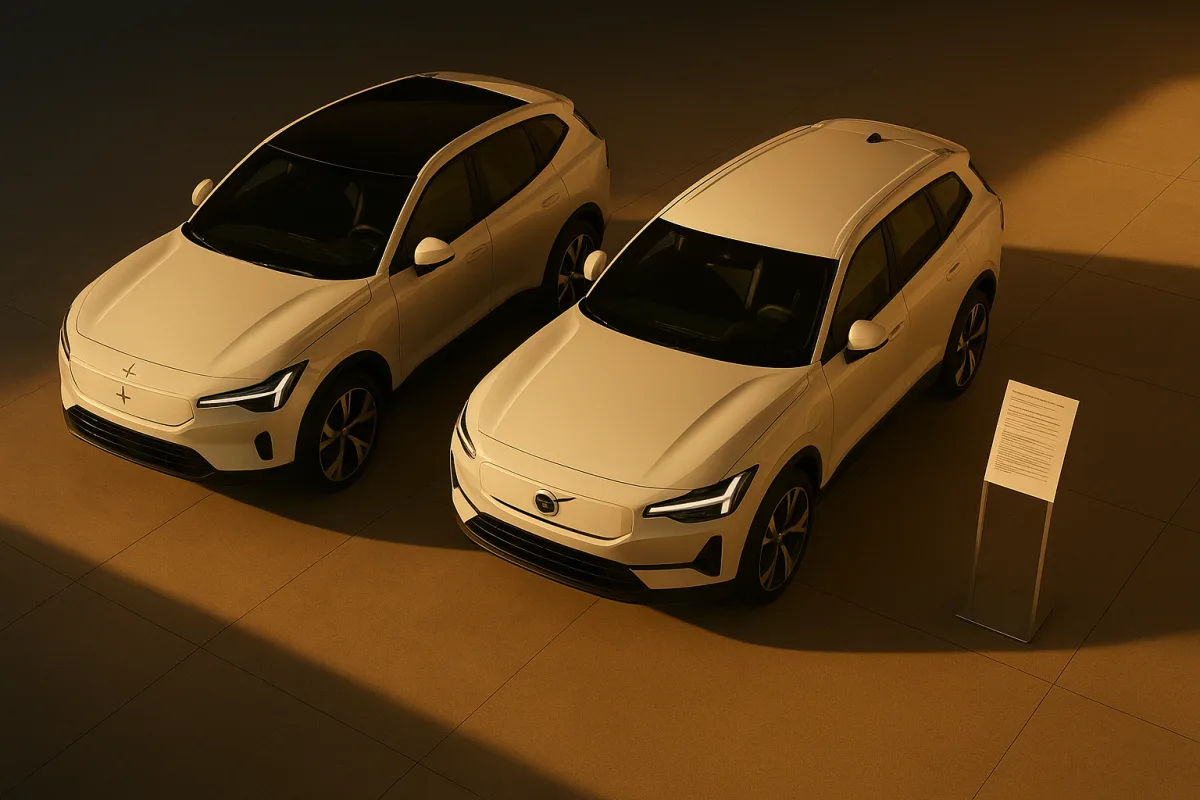
Polestar’s U.S. Ban Is About the Connected-Car System, Not Where the Car Is Built
The confusing part is not the badge, it is the approval process
Polestar’s U.S. exit has been described as a Chinese-car ban, which is understandable shorthand but not quite accurate. It is more useful to think of it as a regulatory decision about connected-vehicle technology, ownership, and who can potentially access the information moving between a car and the outside world.
That distinction explains why a Polestar 3 assembled in South Carolina can be barred from sale while a Volvo EX90, assembled on the same site and closely related underneath, can remain on sale. It does not make the outcome look consistent. It does explain why American assembly was never enough to settle the question.
From the 2027 model year, Polestar is not authorized to sell new vehicles in the United States under the Department of Commerce’s Connected Vehicle Rule. The decision was announced in June 2026, after a review that Polestar says lasted 13 months and involved repeated questions from the Commerce Department’s Bureau of Industry and Security, or BIS. [2] [4] The company may sell its remaining 2026-model-year inventory, and it says existing owners will continue to receive parts, repairs, warranty work, and software support. [9]
The controversy is that Volvo Cars, also controlled by Zhejiang Geely Holding Group, was approved. This is not a case of an unrelated American carmaker getting a different result. Polestar and Volvo share an owner, engineering resources, suppliers, vehicle architectures, and elements of their software environment. The Polestar 3 and Volvo EX90 are the uncomfortable example because they are closely related electric SUVs produced in South Carolina. Reporting cited by Jalopnik notes that Polestar described the EX90 as essentially the same vehicle in terms of hardware relationship and software stack. [3]
No public explanation has yet set out the technical, organizational, or data-management distinction that persuaded BIS to approve Volvo and deny Polestar. That gap is the entire story.
What the Connected Vehicle Rule actually regulates
A modern EV is not simply a battery car with an internet connection. It is a collection of electronic control units, sensors, communications modules, cloud services, mobile-app links, over-the-air update systems, driver-assistance computers, and supplier software. Some data is fairly mundane, such as charge state and service reminders. Some can be more sensitive: precise vehicle location, camera and sensor outputs, cabin information, microphone data, account credentials, and records of where and when the car travels.
The government’s concern is not that every Chinese-owned car is automatically transmitting this material to Beijing. It is that software or communications hardware subject to Chinese or Russian direction could, in theory, collect sensitive data at scale or be used to influence vehicle functions remotely. The Connected Vehicle Rule was created to restrict the import and sale of connected-vehicle systems linked to China or Russia on national-security grounds. [11]
The rule therefore reaches beyond a car’s final assembly plant.
A Polestar 3 made in Ridgeville, South Carolina, is still a connected vehicle sold by a company with Chinese ownership and international technology links. The Polestar 4 is built in South Korea, which also does not by itself resolve the concern. What matters under this framework is the connected-vehicle supply chain and the parties with actual or potential influence over software, data storage, data access, updates, and communications hardware. [4] [6]
That is the first point many buyers miss when they hear “Chinese vehicle ban.” Country of manufacture and country of corporate control are different things. So are the country where a software team sits, the jurisdiction governing a cloud provider, and the party entitled to access diagnostic or customer data.
A car can be American-built while its digital chain crosses several countries. Conversely, a foreign-built vehicle might be allowed if the regulator concludes that its relevant connected systems are separated sufficiently from a prohibited foreign nexus. The public does not know how BIS reached that conclusion in Volvo’s case.
Approval is not a simple pass-fail test on a spec sheet
The important system here is BIS authorization. Polestar was not simply caught importing a prohibited part. It applied for permission to continue selling connected vehicles in the U.S., beginning in May 2025, and says it answered detailed questions throughout the following year. [6]
That application process appears to have involved a regulatory examination of how the company handles vehicle data and connected systems. Polestar says it offered mitigation measures, including limitations on where data would be stored and who could access it, auditing and reporting requirements, and independent cybersecurity assessments. [3] It also says it has internal cybersecurity and privacy policies. [7]
But there is a major limit to what is publicly known: neither Polestar’s full submission nor BIS’s reasoning has been released. We do not know which proposal Polestar made, whether BIS rejected a particular data-access arrangement, whether a corporate-governance issue was decisive, or whether Volvo offered safeguards that Polestar did not.
That means confident explanations such as “Volvo is Swedish and Polestar is Chinese” are too neat. Volvo is also Geely-owned. Equally, “they use the same software, so the ruling is obviously irrational” goes further than the public evidence allows. Similar platforms and Google-developed software do not prove identical contracts, cloud architecture, cybersecurity controls, update authority, supplier relationships, or corporate access rights.
They do, however, make the absence of an explanation difficult to defend.
Polestar says Commerce officials indicated in January 2026 that they had sufficient information and were preparing to recommend approval. The company also says that in April, it was told approval would be reasonable to expect if Volvo were approved. Volvo was authorized in May, while Polestar was denied the following month. [6] In an August letter to dealers, Polestar called the differing treatment “contrary to law” and said it was still trying to obtain the basis for the decision. [2] [3]
That is not proof that the government acted unlawfully. It is evidence that the regulated company believes the process failed to explain materially different treatment of closely related businesses.
Why the March 2026 software deadline matters
The rule’s software requirements came into force on March 17, 2026, while some hardware restrictions are phased in later, through 2029 and 2030. [11] That sequencing matters because software is where a connected car is most easily changed after production.
A physical communications module can be identified by supplier and part number. Software is more complicated. It can be updated over the air. It can route data differently after a server-side change. A vehicle owner may see a routine message about an infotainment update, but the manufacturer and its suppliers may be altering security controls, telemetry, app functions, diagnostic reporting, or access arrangements behind the scenes.
This is why an offer of an independent cybersecurity audit, while sensible, may not have been sufficient on its own. An audit can assess a system at a given time. A regulator may also want binding controls over future code changes, data handling, personnel access, supplier substitution, and legal authority inside the corporate group.
Again, this is not a claim that Polestar’s cars were insecure. No public finding says that. It is an explanation of why the government could treat a connected-vehicle authorization as more than a one-time inspection.
The proposed bipartisan Connected Vehicle Security Act of 2026 would go further, seeking to prohibit the import, sale, and use of vehicles and connected technology from China and other countries of concern. Senate legislation was introduced in April 2026 and a House bill followed in May. [1] Whether that legislation progresses or not, it shows that this is not a short-lived argument about one niche EV marque.
What this means for Polestar owners and dealers
For owners, a ban on new-car sales is not the same as an order to stop driving the car. Polestar says it will support existing U.S. vehicles with service, parts, repairs, warranties, and updates. [9] That is the practical position today.
The longer-term ownership problem is not necessarily whether a Polestar 2, 3, or 4 can be serviced next month. It is whether a shrinking U.S. dealer network and an exiting brand can maintain the same parts depth, body-repair support, software development, and resale confidence five or seven years from now.
There are 32 U.S. Polestar dealers clearing remaining inventory, with reports of substantial discounts on Polestar 3 and Polestar 4 stock. [9] That can make a new vehicle look like a bargain, but the discount is not free money. It needs to be weighed against uncertain used values, possibly less attractive financing, and a smaller future buyer pool. There is no solid public evidence yet showing precisely how lending terms have changed, so claims that financing has already collapsed should be treated cautiously.
The more credible concern is residual value. Commentators have drawn comparisons with Fisker’s U.S. collapse, where uncertainty around service, software, and support badly affected used-car confidence. [10] Polestar is not Fisker, and Polestar has explicitly promised continuing support. Still, the market does not price promises as highly as a healthy pipeline of new cars, dealers, and future products.
The shopping comparison buyers are really making
The relevant cars are not interchangeable, even where regulation makes Polestar and Volvo look like corporate cousins.
The Polestar 2 Long Range Single Motor starts at $49,900 and is quoted with up to 320 miles of EPA range. It suits a buyer wanting a lower, fastback-style EV rather than an SUV, with an emphasis on design and driving position. [14]
The Polestar 3 Long Range Dual Motor starts at $73,400, with up to 315 miles of EPA range. It suits someone after a premium performance-oriented electric SUV, but buyers should price in the potential resale and support risk created by Polestar’s U.S. sales exit. [14]
The Polestar 4 Long Range Single Motor starts at $56,400 and has a claimed range of more than 300 miles. Its missing rear window and camera-based rearward view make it a distinctly different proposition, best suited to buyers who actively want that design rather than those looking for conventional SUV visibility. [12]
Volvo’s $40,345 EX30 is the more affordable compact electric SUV option. The $56,545 EX40 suits buyers seeking a conventional electric SUV, while the $51,095 XC60 is the practical midsize choice for buyers who do not require a full EV. [13] At the top end, the three-row Volvo EX90 starts at $78,090 and suits families needing more seats and a larger electric SUV layout. [13]
Those are starting prices, not drive-away costs. Options, destination charges, taxes, registration, insurance, finance interest, charging equipment, and any depreciation loss are extra. In Polestar’s case, the bigger cost question is not the sticker. It is how much confidence the next used-car buyer will have when you come to sell.
Polestar’s U.S. business was already relatively small, accounting for 6% of its first-quarter 2026 volume, with 94% sold elsewhere. [7] The company can rationally focus on Europe. American owners and dealers are left with a less rational outcome: two sister brands, closely related cars, one regulator, and no public account of why one was approved while the other was shown the door.
Frequently Asked Questions
Why is Polestar banned from selling cars in the US starting 2027?
Polestar is banned from selling new vehicles in the US starting with the 2027 model year because the Department of Commerce’s Bureau of Industry and Security (BIS) denied its authorization under the Connected Vehicle Rule. This rule restricts the import and sale of connected vehicles with technology linked to China or Russia due to national security concerns, and Polestar’s Chinese ownership and connected-vehicle technology were factors in the denial.
What is the US connected vehicle rule affecting Polestar?
The Connected Vehicle Rule regulates the import and sale of vehicles with connected technology that could potentially transmit sensitive data to or be influenced by entities in China or Russia. It covers not only the vehicle’s assembly location but also the ownership, software, data storage, and communication systems involved in the vehicle’s connected technology.
How does Polestar's US sales ban differ from Volvo's approval?
Although both Polestar and Volvo share ownership by Geely, engineering resources, suppliers, and software platforms, Volvo was approved to continue selling vehicles in the US while Polestar was not. The specific technical or organizational distinctions that led to Volvo’s approval and Polestar’s denial have not been publicly disclosed, making the rationale unclear.
What data and cybersecurity concerns led to Polestar's US ban?
The US government is concerned that connected vehicle systems under Chinese or Russian influence could collect sensitive data such as vehicle location, sensor outputs, and user information, or remotely influence vehicle functions. Polestar’s application involved scrutiny of how it manages data storage, access, and cybersecurity, but the mitigation measures it proposed were deemed insufficient by BIS.
Will existing Polestar owners in the US still get support after the ban?
Yes, existing Polestar owners in the US will continue to receive parts, repairs, warranty work, and software support despite the sales ban starting in 2027. Dealerships are also selling remaining inventory and providing ongoing service to current customers.
Sources
Polestar Claims Feds Hinted Carmaker Would Be Approved to Sell in U.S. Before Sales Ban: Report — Road & Track
Polestar Still Wants to Know Why It Was Banned and Volvo Wasn’t: TDS — The Drive
Polestar Wants Answers After Being Banned In The US — Motor1
Moreno, Slotkin Bill to Ban Chinese Vehicles, Connected Components From U.S. Market - Senator Moreno
Polestar not authorised to sell vehicles in the US from 2027
U.S. Bans Polestar Sales Starting in 2027 - Kelley Blue Book
Polestar Exits US Market: Chinese Ownership Triggers Connected Vehicle Rule Ban
Polestar faces US sales ban for new models from 2027 - electrive.com
Trump administration bars Polestar from selling its new EVs in the US | TechCrunch
Polestar Owners Fear A Fisker-Style Resale Collapse After US Ban | Carscoops
US to Ban Connected Vehicle Tech From China, Russia? Rule Explained
Volvo Cars Models and Prices - Complete 2026 Volvo Model Lineup
Related Articles

Automotive Legal and Regulatory Issues Affecting Ownership
Explore key automotive legal and regulatory issues, recalls, lawsuits, and maintenance rules impacting vehicle ownership and buyer decisions.
Fuel Economy Regulation Rollback and Its Impact
Explore how the 2026 fuel economy regulation rollback affects automakers, vehicle design, and regulatory compliance.
Automotive CEO Leadership Changes
Explore key automotive CEO leadership changes, focusing on Volvo's new CEO Klaus Zellmer and what this means for the car industry.

Automaker Challenges and Market Shifts Explained
Explore key automaker challenges and market shifts, including fixed costs, factory capacity, and dealer network impacts on profitability.