
Porsche 911 Challenge vs Modified Turbo S
Compare the 2027 Porsche 911 Challenge and BBI-modified Turbo S for track use, price, features, and ownership to find the best Porsche 911 option.
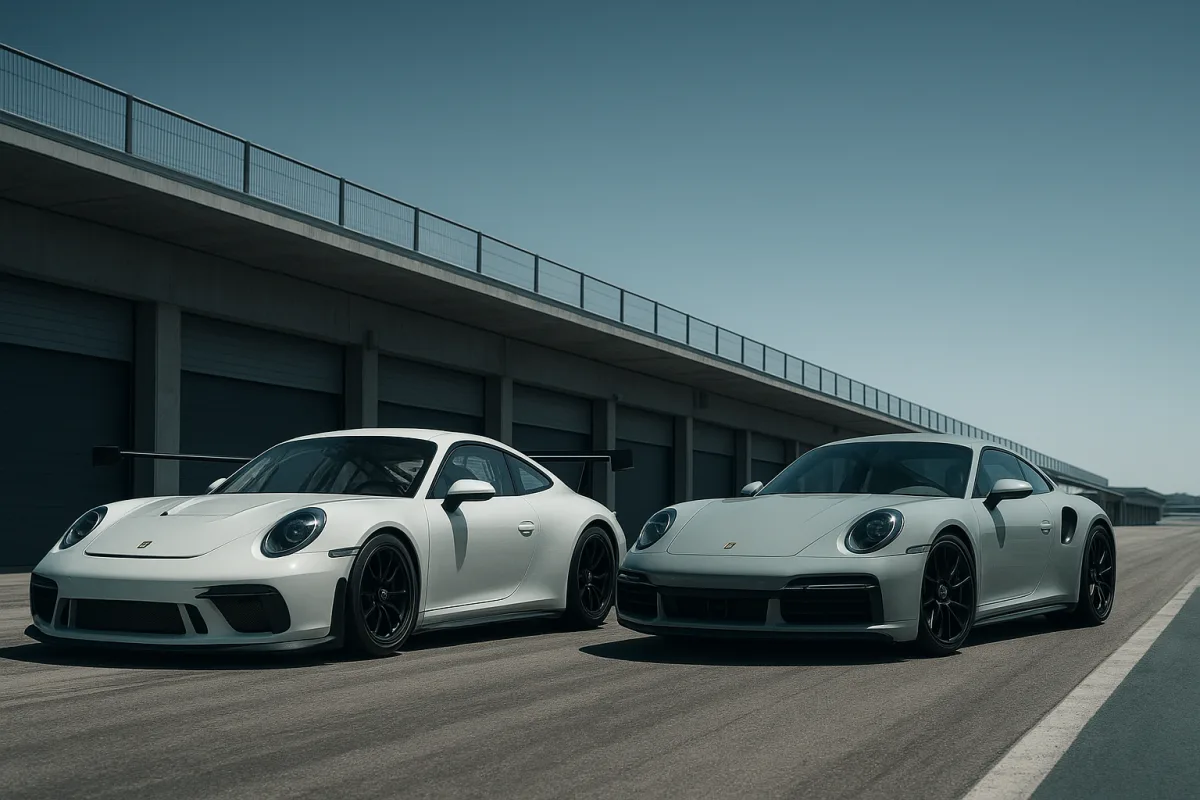
The choice: factory race car or modified road car?
The sensible head-to-head here is the new 2027 Porsche 911 Challenge against a current 911 Turbo S modified in the restrained BBI Autosport style shown by TheSmokingTire. Both promise a faster, more serious Porsche experience, but they answer entirely different ownership questions.
The 911 Challenge is Porsche Motorsport’s replacement for the lower rung formerly occupied by the 718 Cayman-based GT4 Clubsport. It is intended for one-make racing and track work, not for pretending a road car is a race car. [9]
The BBI-style Turbo S route starts with an already extreme, street-legal 911 and adds selected hardware: springs, alignment, exhaust, intake plenum, ECU calibration and wheels. TheSmokingTire’s example was described as an OEM-plus build, preserving adjustable damping and normal road manners.
Neither route has been physically tested for this article. The judgements below rest on Porsche’s published Challenge specification, reporting from Car and Driver, Road & Track and Motor1, plus the ownership-oriented details in TheSmokingTire and Adam LZ’s Porsche modification videos.
Price and what the initial cheque really buys
Porsche Motorsport North America lists the 2027 911 Challenge at $275,000 delivered in the United States, including import and delivery. Because it is a non-road-legal competition car sold through Porsche Motorsport, the research brief says typical dealer fees, road registration charges and taxes do not apply in the usual way. [9]
That figure needs context. A 2027 Porsche 911 Carrera starts at $135,500 before taxes and fees, while the Challenge costs more than twice that because it includes a properly prepared racing chassis rather than leather, infotainment and daily-driver concessions. [1]
Porsche’s $275,000 also positions the Challenge below the 911 GT4 R, which Motor1 reports at $375,500. The GT4 R suits buyers stepping further into dedicated customer racing, while the Challenge is intended as the more accessible series and track-day machine. [12]
A BBI-modified Turbo S has no equivalent all-in price. TheSmokingTire featured a 640-hp Turbo S receiving TechArt springs, an aggressive alignment, Akrapovič titanium cat-back exhaust, IPD intake plenum, M Engineering tune and HRE wheels. That is a parts-and-labour menu, not a fixed model.
That uncertainty matters. A buyer may already own the Turbo S, in which case modifying it can look far cheaper than buying a Challenge. Starting from scratch is another matter, particularly once options, local tax, insurance and the cost of the donor car enter the calculation.
The modified Turbo S falls down here because no two builds are quite alike. The Challenge is expensive but clear: one published price, one factory configuration, one known baseline. A custom road car is only “better value” after the owner has defined the actual use case.
| Criteria | 2027 Porsche 911 Challenge | BBI-style modified Porsche 911 Turbo S |
|---|---|---|
| Initial price | $275,000 delivered in the U.S., including import and delivery. [9] | No fixed price, it depends on donor car, chosen parts, labour and local taxes. |
| What it is | Factory-built, track-only customer race car. [9] | Street-legal 911 modified for greater response, sound and track composure. |
| Engine and output | Naturally aspirated 4.0-litre flat-six, 515 hp in Porsche’s current specification. [9] | TheSmokingTire’s 91-octane tuned example was quoted at about 700 hp. |
| Transmission | Seven-speed PDK. [9] | PDK retained, with factory road-car drivability. |
| Road use | Not street legal. [9] | The central advantage, it remains usable on public roads. |
| Track hardware | Cage, fire suppression, six-point harness, FIA fuel cell, air jacks and slick tyres. [9] | Lowered springs, alignment and performance tuning, but not a factory race-car safety package. |
| Daily comfort | Air conditioning remains, but no sound deadening, normal trim or passenger accommodation. [10] | Retains the Turbo S cabin, adaptive chassis controls and touring ability. |
| Running-cost certainty | Porsche claims lower operating costs than higher-level race cars, but has not published meaningful owner figures. [9] | Street-car maintenance is easier to estimate, but modified-car repairs and consumables vary greatly. |
| Resale risk | No transaction history exists yet for this new model. | Strong GT-car demand helps Porsche values, but aftermarket modifications can narrow the buyer pool. |
| Best use | One-make racing, repeatable track work and testing. | Fast road driving, road trips and occasional circuit days. |
Power is not the useful comparison
The published output figures are already muddy. Car and Driver, Road & Track and Motor1 initially reported 508 hp for the Challenge, derived from the GT3’s naturally aspirated 4.0-litre engine. Porsche’s newer research briefing specifies 515 hp, so that is the figure to use rather than repeating early reports. [9]
The key fact is not the seven-horsepower discrepancy. It is the kind of power. The Challenge’s high-revving naturally aspirated engine is paired with a fixed competition purpose. It has a seven-speed PDK and a 9,000-rpm redline, but no claim should be made about lap-time superiority without comparable testing. [9]
TheSmokingTire’s Turbo S build was said to make around 700 hp on 91-octane fuel after the intake and M Engineering calibration. That sounds decisive until the intended roads are considered. Seven hundred horsepower in a road car is rarely limited by engine output.
It is limited by tyre temperature, road surface, sightlines, police attention and how quickly the fuel gauge moves. TheSmokingTire noted the tuned car consumed fuel rapidly when driven hard, which is predictable but worth remembering before calling a tune a free performance upgrade.
The Turbo S does have a real advantage for the owner who wants outrageous overtaking performance. Turbocharging gives torque immediately, and all-wheel drive makes that usable more often than rear-wheel drive. But it is also a larger, heavier-feeling 911 than the GT3-derived Challenge.
The Challenge should feel more direct and repeatable around a circuit because it was built around that job. It has GT3-derived mechanicals, Cup-car chassis elements, retuned dampers, racing slicks, a four-way adjustable rear wing and a lower-complexity five-lug wheel arrangement. [10]
That five-bolt wheel detail is not glamorous, but it tells the right story. Centre-lock wheels look serious in a showroom, while conventional fasteners can make wheel changes and spare-wheel ownership less painful at a circuit. Porsche has designed the Challenge around operation, not posing.
The road-versus-track divide is bigger than a number plate
The Challenge is not merely a GT3 with a cage. Porsche removes airbags, carpets, trim, sound insulation, the passenger seat and floor mats. It then adds a welded cage, adjustable racing bucket, six-point harness, fire-extinguishing system, 29-gallon FIA FT3 fuel cell and integrated air-jack system. [9]
It retains air conditioning, which is sensible rather than luxurious. A hot, tired driver loses consistency, and a race car without cabin cooling is not automatically more authentic. But air conditioning does not turn a fixed-back racing seat and cage into a viable road-trip environment.
The BBI-style Turbo S takes the opposite approach. The spring and alignment package featured by TheSmokingTire retained Porsche Dynamic Chassis Control and the factory damper settings. The intention was sharper turn-in and more rear support without the nervous motorway behaviour of an extreme alignment.
That is the mature modification route for a road 911. It targets the parts a driver notices at legal speeds: steering response, brake confidence, ride height, wheel fitment and exhaust character. It does not confuse an occasional track day with a racing programme.
Adam LZ’s modified Porsche 964 is a useful older-car counterpoint. His channel measured an 11-pound reduction from one rear wheel-and-tyre assembly and six pounds from each front assembly after fitting BBS E88 wheels, a meaningful reduction in unsprung and rotational mass.
Yet the same owner later admitted that the lighter wheels made little obvious difference in normal driving, beyond a slightly lighter steering feel. He also encountered tyre-bead air leaks and recognised that polished wheel lips demand more upkeep. That is modding culture in one ownership lesson.
The spec-sheet gain can be real while the practical gain is modest. The extra maintenance can be immediate. A perfect fitment, a particular wheel design or a preferred exhaust note can still justify the work, but the owner should not invent a lap-time benefit they have not measured.
Maintenance, consumables and the costs nobody posts about
Porsche says the Challenge is designed to minimise operating and spare-parts costs relative to cars such as the GT4 R and 911 Cup. That is a relative claim, not a budget forecast. [9]
There are no public, defensible figures for Challenge insurance, engine rebuild intervals, brake life, slick consumption, transport, entry fees or crash repairs. Anyone providing a precise annual total today is guessing. Race cars tend to turn small incidents into large invoices.
The stock 2026 911 GT3 provides only a loose street-car reference. The research brief puts typical annual maintenance at roughly $2,000 to $5,000 for road use, potentially rising to $7,000 to $15,000 with track activity. Tyres are estimated at $1,500 to $2,500 a set. [3]
Those GT3 figures should not be pasted onto the Challenge. Slicks, competition brake use, track mileage, transport and event support make it a different ownership model. The Challenge may be cheaper to operate than a Cup car, while still being dramatically more expensive than a road 911.
The Turbo S is easier to insure and service in the conventional sense because it remains a registered road car. Still, tuning changes the ownership conversation. A dealer cannot be assumed to welcome an ECU calibration when diagnosing a drivetrain, emissions or electronic fault.
The Akrapovič system shown by TheSmokingTire retained the original catalytic converters, making it a cat-back installation rather than a wholesale emissions deletion. That is the right direction for a street car, but local legality remains the owner’s responsibility, especially where sound enforcement is strict.
For a modified Turbo S, keep the original parts, retain invoices, use a tuner willing to support its calibration and be realistic about tyres and brakes. The factory car is already brutally quick, so modifications should earn their place through reliability and use, not internet approval.
Resale and the danger of assuming every Porsche is an investment
High-performance 911s have held value unusually well, but that does not make the new Challenge an investment case. There is no resale history for this model, no established production-run data and no evidence yet of how race mileage or accident history will affect values.
Related models show why buyers are tempted. The research brief notes that 991.2 GT3 RS values have risen substantially versus launch pricing, while the 992 GT3 market has remained strong. Those are road-legal collector cars, however, not a direct proxy for a raced Challenge. [5]
A standard road car usually has a broader resale audience than a competition car. A modified Turbo S can narrow that audience further, particularly if the alterations are irreversible, visually loud or poorly documented. A clean, reversible OEM-plus build is the safer approach.
The Challenge’s likely buyer is less concerned with resale purity because they need a legal car for a recognised championship. Porsche says it will be eligible for Porsche Sprint and Endurance Challenge North America, Porsche Club of America Sprint Trophy and Porsche Owners Club competition. [9]
That makes it easier to understand than a heavily modified street car at a racing event. Scrutineering, spares, safety equipment and class eligibility are already baked in. For the driver who intends to race, this is worth more than an extra hundred horsepower.
Who each option suits
Porsche 911 Challenge
The Challenge suits the buyer entering Porsche one-make racing, running regular track events or needing a consistent test car. It is the correct choice for someone who values a cage, fuel cell, slicks, air jacks, factory preparation and series eligibility over street convenience.
It falls down completely as a one-car Porsche. It cannot legally drive to the circuit, take a weekend trip or be used on a quiet Sunday without a trailer and support plan. Its running costs are also unknown, not low simply because Porsche calls it entry-level.
BBI-style modified 911 Turbo S
The modified Turbo S suits the owner who wants one Porsche to cover long journeys, fast road use and occasional track days. The BBI-style formula is especially sensible when it preserves factory chassis adjustability, catalytic converters and the ability to return parts to stock.
It falls down for serious wheel-to-wheel racing. It lacks the Challenge’s factory competition safety structure, fuel system, slick-tyre setup and defined series role. It can be incredibly fast, but it remains a road car carrying the compromises that make road cars pleasant.
For most enthusiasts, the Turbo S route is the more usable answer. For the smaller group actually committing to a race calendar, the 911 Challenge is not merely better, it is the only honest tool for the job.
Frequently Asked Questions
What are the differences between the Porsche 911 Challenge and a modified Turbo S?
The Porsche 911 Challenge is a factory-built, track-only race car with a naturally aspirated 4.0-litre flat-six engine producing 515 hp, a welded roll cage, racing seat, and other competition equipment. In contrast, a BBI Autosport-modified Turbo S starts as a street-legal 911 and receives selected performance upgrades like suspension, exhaust, intake, and ECU tuning while retaining normal road functionality. The Challenge is a turnkey race car, whereas the modified Turbo S is a street car sharpened for occasional track use.
Is the Porsche 911 Challenge street legal?
No, the 2027 Porsche 911 Challenge is not street legal. It is designed exclusively for track use and competition, equipped with racing-specific safety gear and lacking the features required for road registration.
How much does the 2027 Porsche 911 Challenge cost?
The Porsche 911 Challenge is priced at $275,000 delivered in the United States, including import and delivery fees. This price covers a fully prepared race car but excludes typical dealer fees, taxes, and registration costs since it is a track-only vehicle.
What modifications does BBI Autosport make to the Porsche 911 Turbo S?
BBI Autosport’s modifications to the 911 Turbo S include upgraded springs, aggressive alignment, a titanium cat-back exhaust, an intake plenum, ECU calibration, and upgraded wheels. These changes enhance performance and track capability while preserving the car’s street legality and adjustable damping for normal road use.
Which is better for track days: Porsche 911 Challenge or modified Turbo S?
Choosing between the two depends on the intended use. The 911 Challenge is ideal for serious competition and one-make racing, offering a fully race-prepared package. The modified Turbo S is better suited for drivers who want a street-legal car that can also perform well on track days and handle everyday driving. They serve different purposes rather than being direct substitutes.
How we researched this
This article was assembled from 2 video sources across 2 channels, 3 published articles, 12 cited references.
Nothing here is based on hands-on testing. Where a figure or finding appears, it belongs to the source cited beside it, and the writing says so rather than implying otherwise. Every source is listed below so you can check it.
Sources
Ruining My Perfect 4.0L Porsche 964 — Adam LZ
Did We Improve Or Ruin Our $275k Porsche Turbo S Giveaway Car by Tuning It? - TheSmokingTire — TheSmokingTire
Porsche Debuts a 911 GT3-Based ‘Entry-Level’ Race Car — Car and Driver
Porsche’s New 911 Challenge Aims to Open Up Track Fun to More People, Courtesy of the 911 GT3’s Powerplant — Road & Track
The Porsche 911 Challenge Is An Entry-Level $275,000 Race Car — Motor1
Is a Porsche 911 GT3 Worth Buying? The Honest Answer in 2026 | Automonitor
Porsche 911 GT3 (992) CPO Market Report 2026: Price Drops | CPO Wizard
Porsche 911 GT3 (992) Price Guide 2026 — Values, Prices & Market Data | CarSearch.Pro
Which Porsche 911 Models Hold Value Best? Data & Market Analysis | Drivin911
The new 911 Challenge – for professional motorsport without compromise - Porsche Newsroom USA
The new 911 Challenge – for professional motorsport without compromise - Porsche Newsroom USA
Porsche Maintenance Costs in Greenville, SC (2026 Guide & Pricing Table) | Porsche Greenville
One platform. Endless possibilities. The new Porsche 911 Challenge
Watch Porsche 911 Challenge and Modding Culture on Youtube
Also from the sources
Related Articles
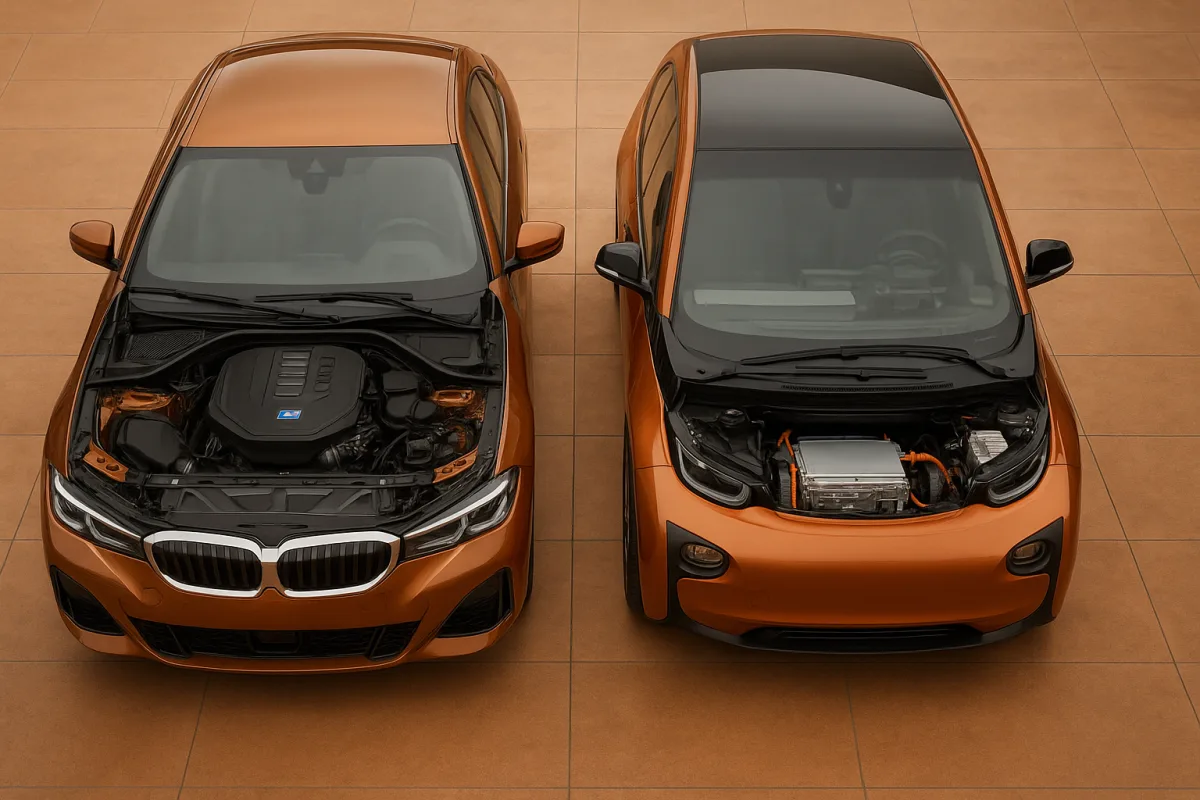
2027 BMW 3 Series M350 vs i3
Compare the 2027 BMW 3 Series M350 and i3 models on performance, ownership costs, and market challenges to find which suits your needs best.
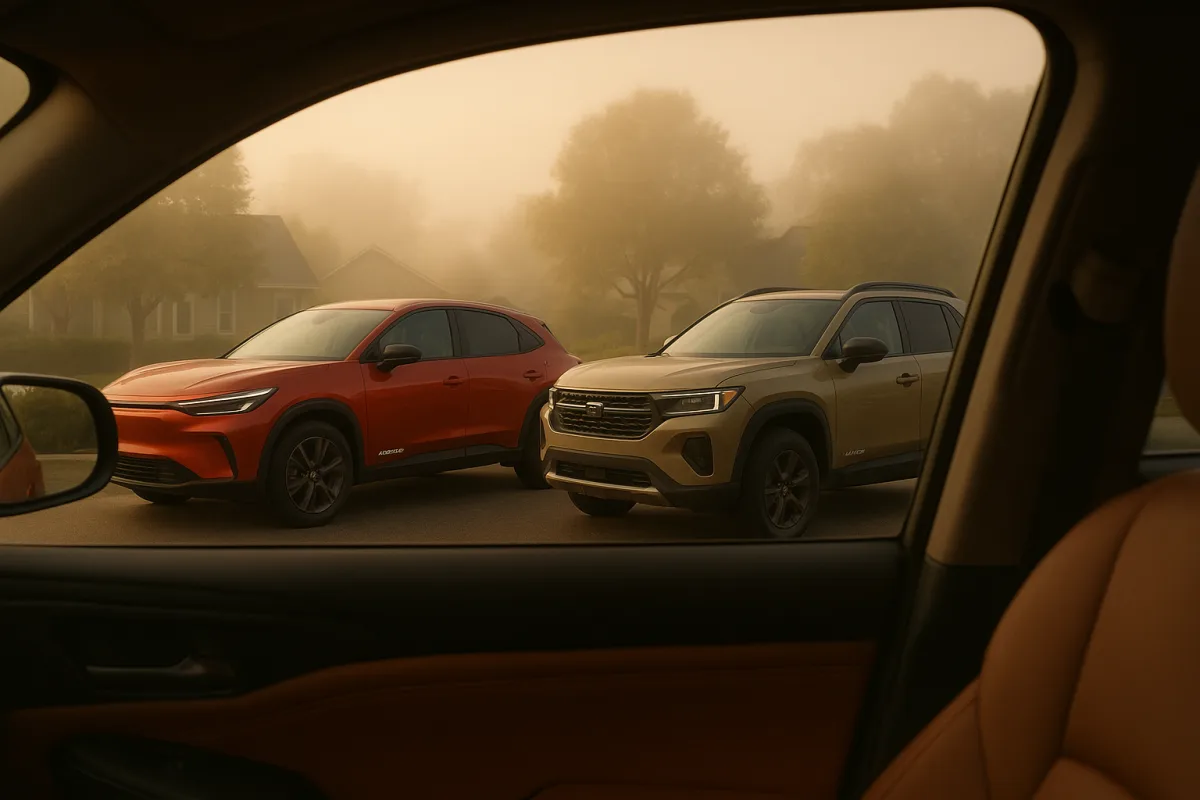
2027 Nissan Rogue Hybrid vs Toyota RAV4 Hybrid
Compare the 2027 Nissan Rogue Hybrid and Toyota RAV4 Hybrid on price, fuel economy, features, and ownership risks to find the right hybrid SUV for you.
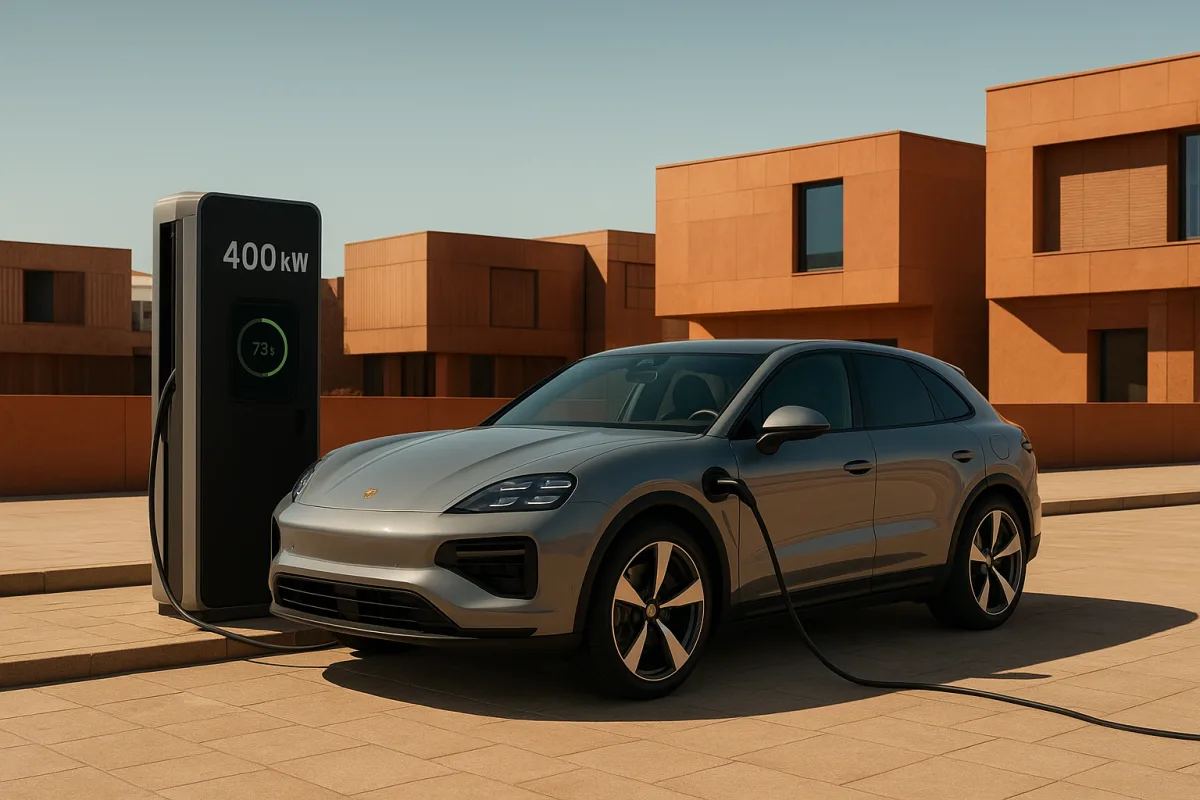
2027 Porsche Cayenne Electric Charging and Performance EVs
Explore the 2027 Porsche Cayenne Electric's 400 kW charging, performance specs, and what it means for real-world EV ownership and driving.

2027 Electric SUVs: Volvo EX60, Porsche Cayenne & EV Tech
Explore 2027 electric SUVs like the Volvo EX60 and Porsche Cayenne, plus key EV tech advances and ownership insights.