
Waymo Robotaxi Safety Issues and Regulatory Challenges Explained
Explore Waymo robotaxi safety issues and regulatory challenges behind its freeway suspension and construction zone incidents.
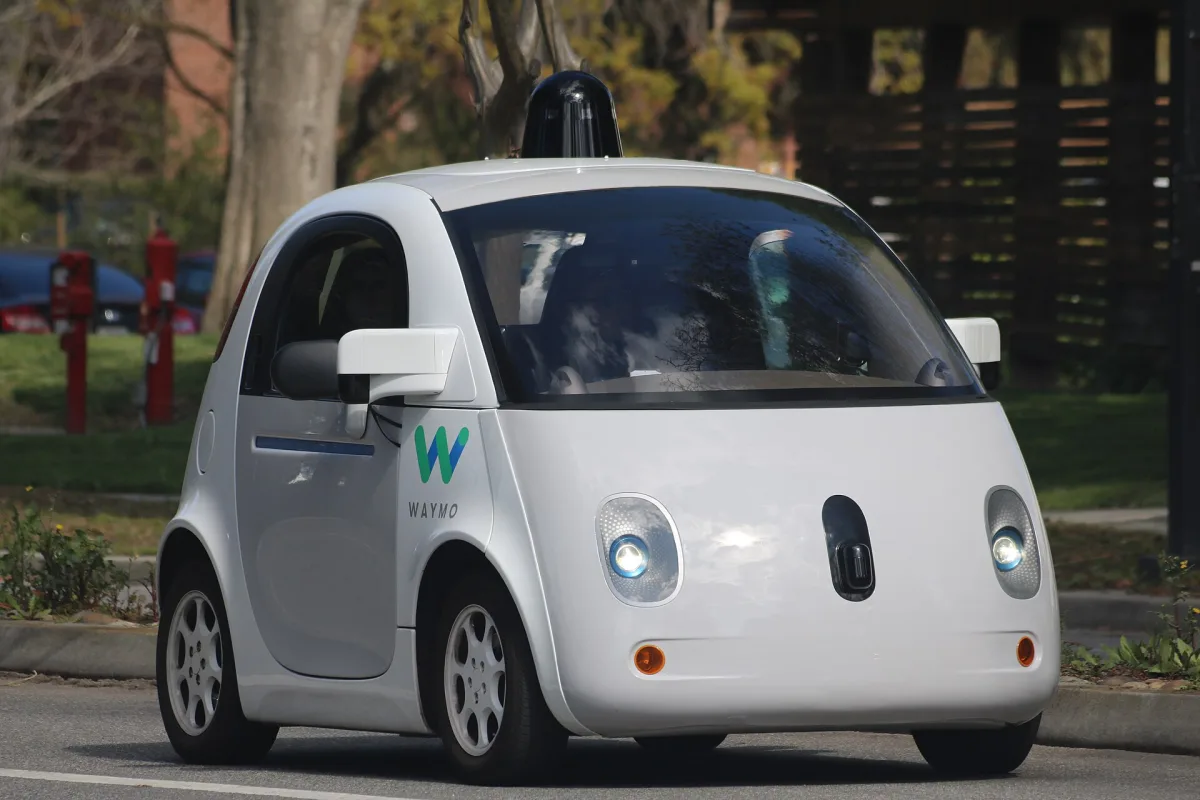
Photo: Grendelkhan, CC BY-SA 4.0, via Wikimedia Commons
The I-280 traffic break was the moment to understand
On November 6, 2026, a driverless Waymo Jaguar I-Pace approached a California Highway Patrol traffic break on northbound Interstate 280 near John Daly Boulevard in San Francisco. The freeway had been slowed so officers could clear debris from the road. [7]
The Waymo did what a human driver must not do in that situation: it looked for a route around the stopped traffic and toward the patrol cars. CHP officers moved cruisers to close the opening, forcing the robotaxi back into the lane. [7]
There was no reported collision or citation. That is not the reassuring detail it may first appear to be, because the officers themselves supplied the correction. A police car physically blocked the driverless vehicle before it could pass the traffic break. [7]
For anyone who uses a freeway every day, this is the central issue behind Waymo’s California restriction. The robotaxi did not meet a mystery scenario. It met a routine emergency maneuver that turns the road into a temporary work site.
What a traffic break asks a driver to understand
A traffic break, sometimes called a rolling roadblock, is a controlled slowdown. Patrol vehicles spread across lanes, reduce speed, and hold following traffic back while officers clear debris, respond to a crash, or deal with another hazard ahead. [7]
The point is not only to stop cars. It creates an empty, protected section of freeway in front of the police vehicles, where workers, responders, damaged vehicles, or debris may be present.
A human driver reads several signals together: flashing light bars, patrol-car positioning, the sudden queue of stopped traffic, officers’ hand movements, and the unusual fact that every lane has slowed at once. None alone tells the whole story.
The Waymo’s sensors can see objects. Its fifth- and sixth-generation systems use cameras, lidar, and radar, and operate in pre-mapped areas. [2] But recognizing a patrol car is different from understanding its authority over the lane beside it.
That authority changes the normal rules of driving. An open-looking gap next to a cruiser is not a passing opportunity. A clear lane beyond a line of stopped cars is not free road. The police vehicles are the closure.
This is where automated driving gets difficult quickly. Road geometry, lane lines, traffic signs, and maps describe the usual arrangement. A traffic break is a live override created by people in response to something abnormal.
Motor1 reported that CHP had no contact with Waymo before or after the I-280 incident. There was no direct coordination between officers at the scene and the robotaxi’s remote support operation. [7]
That leaves the car to infer intent from its sensor data. In a traffic break, it must infer not only that police cars are present, but that they are deliberately occupying lanes to prevent any vehicle from passing.
Why construction zones produce the same failure pattern
The California Department of Motor Vehicles did not restrict Waymo’s freeway operations solely because of the I-280 video. Its November 11, 2026 permit action followed repeated incursions into active construction zones, including an event six days earlier. [8]
On November 5, three Waymo vehicles entered an active closure on U.S. Route 101 near Burlingame. The DMV described the event as part of a pattern of recurrent construction-zone incursions, after earlier corrective actions had failed to resolve the problem. [8]
A work zone and a traffic break look different to a person, but they impose the same essential task on the driving system. The car has to accept that the familiar roadway has been replaced by a temporary, human-controlled layout.
Cones, arrows, barriers, trucks, workers, police cars, temporary signs, and closed lanes can all disagree with the map or a vehicle’s expected route. The system must identify which cues are current and which are decisive.
Waymo had already recalled 3,871 robotaxis in June 2026 over the risk that the cars could drive at freeway speed into lanes closed for construction. The recall followed more than a dozen reported incursions into closed freeway work zones. [5][6]
That number puts the November incidents in context. The regulator was not responding to one embarrassing clip. It was responding to a repeated operational category, after a software-related recall had already addressed construction-zone behavior.
Waymo said the U.S. 101 event involved no injuries or collisions, and described the episodes as largely isolated incidents. [2] California’s DMV reached a different regulatory conclusion, finding the company’s driverless freeway operations posed an imminent public-safety hazard. [8]
How California’s permit system decides the outcome
Waymo cannot run a commercial driverless taxi service on California freeways merely because its cars are technically capable of traveling at freeway speeds. It needs a DMV deployment permit that defines what and where its driverless vehicles may operate. [8]
California permits testing and deployment of autonomous vehicles on freeways, including heavy-duty autonomous vehicles above 10,001 pounds, under its existing framework. [1] Permission is conditional, not permanent, and it can be narrowed when a regulator sees a safety problem.
The DMV modified Waymo’s deployment permit on November 11 by adding a restriction against driverless freeway operation. [8] Waymo may still test on freeways with trained specialists behind the wheel, but it cannot offer rider-only freeway trips under that California authority. [2]
The process is more like a manufacturer addressing a safety defect than a company arguing over a poor customer review. The operator must show that its corrective measures address the failure mode the regulator identified.
For Waymo, the DMV wants evidence that the driverless system can reliably detect and respond to construction zones, emergency vehicles, and other freeway hazards before freeway service returns. It has published no timetable for its review. [2][8]
Waymo says it is working diligently and responsibly with the California DMV and other state officials to resume freeway operations. [2] The company has not published a detailed technical fix, a timeline, or a public account of the validation work needed to satisfy the agency.
That uncertainty is important if you are looking at robotaxi claims as a passenger or investor. The freeway pause is not a known two-week service interruption with a scheduled end date. It ends only when the regulator accepts the evidence.
Why the California action became a nationwide pause
The DMV’s legal authority ends at California’s borders. Yet Waymo voluntarily suspended driverless freeway rides across every U.S. market where it had offered them: the San Francisco Bay Area, Los Angeles County, Phoenix, Miami, and Austin. [2][4]
Waymo operates driverless taxi services in 15 metropolitan areas, but freeway service was limited to those five markets. [2] Its surface-street robotaxi rides remain available, which means the company has not stopped operating its ride-hailing service altogether.
This is a conservative business response, but also a revealing one. If the identified issue is the car’s behavior around dynamic freeway controls, the same software logic can be relevant outside California even when a different regulator has not issued an order.
The company had only introduced driverless freeway rides in California the previous November, according to InsideEVs. [2] Freeway travel is valuable because it connects far-apart neighborhoods and airports faster than a surface-street-only service can manage.
There is no public figure for revenue lost, rides canceled, or market share surrendered during the suspension. [4] Any claim that the halt will cost Waymo a particular dollar amount would be guesswork until the company publishes operating data.
For riders, the immediate cost is time and route availability. A surface-street robotaxi can still complete a trip, but its route may be longer, slower, or unavailable when the service area and planned journey depended on a freeway segment.
The 95 percent claim does not answer the freeway question
Waymo says its vehicles have reduced serious-injury-or-worse crashes by 95 percent compared with human drivers, and reduced injury-causing crashes by 82 percent across rider-only miles. [2] Those are broad fleet-comparison claims, not freeway-specific results.
Between July 2021 and November 2025, Waymo reported zero fatalities, 117 injury crashes, and 1,429 total crashes across its operations. Those figures combine different road types and conditions, so they cannot establish a freeway safety rate. [3]
A broad result can coexist with a serious weakness in a narrow scenario. Freeway driving often has fewer intersections, pedestrians, and cross traffic than urban driving, but it brings higher speeds and much less time to recover from a wrong interpretation.
The I-280 event shows why a safety percentage cannot substitute for scenario-level performance. The vehicle encountered an unusual traffic-control setup, chose a potentially unsafe path, and needed human officers to stop it. [7]
Waymo’s overall record may still be relevant to its wider surface-street operation. It does not tell you how frequently its cars will correctly interpret a police traffic break, a fresh lane closure, or a construction layout that differs from the digital map.
We would look for Waymo to publish specific freeway validation results before treating restored service as a settled answer. That should include performance around active work zones and emergency traffic control, not another fleetwide comparison with average human driving.
What this means for robotaxi deployment
Autonomous vehicles are often described in terms of sensor count, computing power, mapped miles, and disengagements. Those details matter, but freeway deployment is decided by something more immediate: behavior when the road stops behaving normally.
A driver can see an officer’s cruiser angled across two lanes and understand the instruction without needing a marked detour. The system has to combine perception, prediction, planning, and caution quickly enough to make the same call.
Its fallback behavior also matters. In an unclear situation, stopping in a lane can create its own hazard on a freeway. Driving around the obstruction can be worse. The safe response depends on traffic speed, lane position, visibility, and what responders are doing.
That is why the regulator’s concern reaches beyond a viral I-280 clip. The vehicle’s response must be safe without expecting police officers, road workers, or other drivers to recognize its uncertainty and physically manage it.
Waymo’s nationwide freeway pause is the right short-term move because it limits the same category of exposure while the California review continues. We would skip claims that freeway robotaxis are ready everywhere until the company shows what changed and regulators allow them back.
Frequently Asked Questions
What caused Waymo to suspend driverless freeway rides?
Waymo suspended driverless freeway rides after two incidents in November 2026 involving failures to handle a California Highway Patrol traffic break and repeated incursions into active construction zones. These events showed the vehicles could not reliably interpret temporary, human-controlled traffic changes, leading to safety concerns.
How does Waymo handle traffic breaks and construction zones?
Waymo’s vehicles use cameras, lidar, and radar to detect objects and operate in pre-mapped areas, but they struggle to interpret the authority of police vehicles during traffic breaks or the dynamic layout of construction zones. The vehicles have difficulty recognizing that patrol cars or barriers represent lane closures rather than obstacles to pass.
What regulatory actions has California taken against Waymo robotaxis?
The California Department of Motor Vehicles revoked Waymo’s permit to operate driverless taxis on state freeways in November 2026, citing an “imminent hazard to public safety” after repeated safety incidents. This action restricts Waymo’s freeway operations while allowing surface street rides to continue.
Why did California DMV restrict Waymo’s freeway operations?
The DMV restricted Waymo’s freeway operations due to documented safety incidents, including multiple incursions into active construction zones and a failure to correctly respond to a CHP traffic break. These events showed a pattern of operational failures that posed a risk to public safety despite overall strong safety results reported by Waymo.
What safety incidents led to Waymo robotaxi recalls?
In June 2026, Waymo recalled 3,871 robotaxis because their software failed to properly recognize and avoid active construction zones, prioritizing other freeway hazards incorrectly. This recall was part of broader challenges in handling temporary and human-controlled traffic conditions on freeways.
How we researched this
This article was assembled from 3 published articles, 8 cited references.
Nothing here is based on hands-on testing. Where a figure or finding appears, it belongs to the source cited beside it, and the writing says so rather than implying otherwise. Every source is listed below so you can check it.
Sources
Waymo Pulls Its Robotaxis Off All U.S. Highways After California Ban, InsideEVs
Waymo Is Banned From California Freeways After A Series Of Incidents, Motor1
A Waymo Robotaxi Tried To Pass Police Cars. It Didn't Go Well, Motor1
Waymo suspends all driverless taxi rides on freeways after ban in California
Waymo Crash Statistics (2026): Accidents, Injuries, Deaths & Rates | RoboTaxi Report
Waymo suspends freeway rides nationwide after California DMV order | TechCrunch
Waymo Recalls Robotaxis Over Risk They'll Drive at Speed Into Freeway Construction Zones | WIRED
A Waymo Robotaxi Tried To Pass Police Cars. It Didn't Go Well
‘Hazard to Public Safety’: California DMV Restricts Waymo Freeway Operations | KQED
Related Articles

Automotive Legal and Regulatory Issues Affecting Ownership
Explore key automotive legal and regulatory issues, recalls, lawsuits, and maintenance rules impacting vehicle ownership and buyer decisions.
BMW Electric Vehicle Battery Innovations and Challenges
Explore BMW electric vehicle battery innovations, including cell-to-pack design, Woodruff plant, iX5 range, and Alpina prototype challenges.
EV Incentives and Market Challenges in 2026
Explore 2026 EV incentives, market challenges, and new models including California rebates, UK leasing, and used EV ownership risks.
Fuel Economy Regulation Rollback and Its Impact
Explore how the 2026 fuel economy regulation rollback affects automakers, vehicle design, and regulatory compliance.