
2027 Electric and Hybrid SUVs: Trends, Costs, and Ownership
Explore 2027 electric and hybrid SUV trends, ownership costs, and maintenance insights to help you choose the right SUV for your needs.
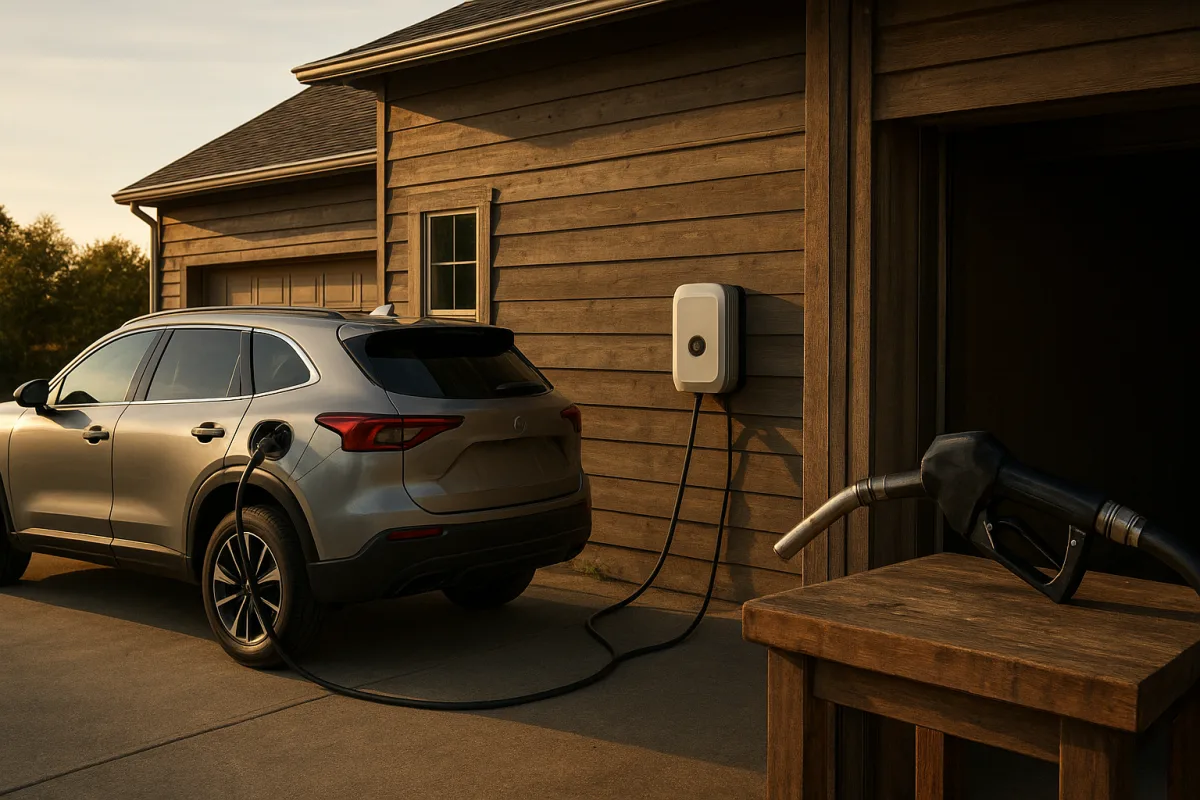
The 2027 SUV market is being pulled from both directions
In 2025, the Toyota RAV4, Honda CR-V, and Tesla Model Y accounted for roughly 1.2 million U.S. sales combined. Their successors point to the 2027 market clearly: mainstream SUVs are becoming hybrid-only, while EV makers are chasing the same compact crossover buyer.
Toyota made the 2026 RAV4 hybrid-only. Honda has confirmed its next-generation CR-V, expected as a 2028 model and likely revealed during 2027, will also abandon a conventional gas-only version in the U.S.
That is not a niche-brand experiment. It is the volume end of the market moving first, where buyers care about back-seat room, a low-effort commute, and whether the car still makes financial sense after the warranty expires.
Hybrids reached 16 percent of the U.S. light-duty market in the third quarter of 2026, according to InsideEVs. Consumer Reports estimates that the average hybrid costs about $1,700 more than its gas equivalent but commonly repays that premium through fuel savings within four years.
The timing reflects a less friendly EV incentive environment. Federal new and used clean-vehicle credits expired September 30, 2025, while the federal credit for home charging equipment expired June 30, 2026.[1][3]
That changes the spreadsheet. A hybrid’s extra purchase price is still visible, but its savings arrive at every gas stop without requiring charger installation, a reliable overnight parking space, or a route planned around charging stops.
Honda makes the hybrid the default family SUV
Honda’s current CR-V is already a strong indication of where compact SUVs are headed. The 2027 CR-V Hybrid Sport Touring starts at $42,950, plus a $1,550 destination charge, for a suggested total of $44,500 before tax, registration, accessories, or dealer pricing.[9]
That is expensive for a two-row Honda. It also shows how the compact-SUV market has changed, as refinement, active safety hardware, all-wheel drive, heated equipment, and hybrid power have migrated from optional extras toward expected equipment.
Savagegeese bought a 2026 CR-V Hybrid Touring for a long-term Illinois test and praised its ride quality, quietness, outward visibility, seat comfort, and unusually refined two-motor hybrid system. Those are traits that become more valuable after the showroom novelty is gone.
Their criticism is equally relevant. The CR-V’s wireless phone charger is poor, it lacks a 360-degree camera available from competitors, and its interior technology and material choices now feel behind newer Hyundai, Toyota, and Volkswagen alternatives.
For a buyer keeping a vehicle through 60,000 miles and beyond, Honda’s restraint may still be an advantage. Physical climate controls, a low dashboard, and good sightlines are daily-use features, not brochure filler, and fewer complicated functions can mean fewer irritations.
The 2028 redesign is the bigger story. Honda says it will use a new two-motor hybrid system, a direct-injection 2.0-liter Atkinson-cycle four-cylinder, updated electric motors, and an available electric all-wheel-drive system.
Honda claims more than a 10 percent fuel-economy improvement and a 30 percent production-cost reduction compared with its current hybrid arrangement. The company has not yet published EPA mileage figures, trim prices, cargo dimensions, or a full maintenance schedule for the next-generation CR-V.
Its new midsize platform is claimed to save 198 pounds and share more than 60 percent of its parts across future models. Those numbers sound promising, but platform weight loss only becomes meaningful to you when Honda publishes curb weights and real EPA ratings.
Production will occur in Ohio, Indiana, and Canada, with hybrid components built in Ohio. Honda expects to sell more than 400,000 next-generation CR-Vs in its first full year, a scale that should help parts availability and resale values if the model lands well.
For ownership planning, the existing CR-V Hybrid remains easier to budget. CarEdge estimates five-year maintenance at about $2,425, or $1,405 below the average SUV, although that is an estimate rather than a guarantee for any individual owner.[4]
Honda’s regular service pattern calls for inspections, tire rotations, and oil-and-filter service at roughly 7,500-mile intervals, with the maintenance minder determining other work by condition and mileage.[5] Hybrid components and the battery carry an eight-year, 100,000-mile warranty.[9]
We would not pay extra for the non-hybrid CR-V. Savagegeese’s view is right here: the hybrid drivetrain is the reason to buy this Honda, while the gas model gives up its smoothest, quietest, and most distinctive mechanical feature.
The R2 is the EV industry’s attempt at a normal SUV
Rivian’s 2027 R2 takes a different route. It is a compact, two-row electric SUV, roughly Honda CR-V-sized and about 15 inches shorter than Rivian’s three-row R1S, intended to bring the brand below its $84,000-and-up larger SUV.
Doug DeMuro found the production R2’s cabin notably upscale for its price, with good materials, useful cargo storage, a front trunk, recovery hooks, and a power rear window that drops into the tailgate. It looks like a scaled-down R1S because, functionally, that is its job.
The screen-heavy interior also illustrates a risk of the new EV SUV. DeMuro found the central display quick and generally intuitive, but mirror adjustment was buried in the driver-profile menu, exactly the kind of simple task that should not require hunting through software.
Current R2 pricing is still moving. DeMuro quoted about $55,000 for a 450-horsepower all-wheel-drive Premium and about $60,000 for the 650-plus-horsepower Performance, while the lower-output Standard model had not received final timing or pricing.
Rivian has since positioned a base R2 around $45,000, reflecting production costs and the loss of federal credits. That price is for the vehicle itself, before sales tax, registration, insurance, financing interest, a home charger, and any electrical work needed to install one.[8]
Rivian claims up to 345 miles for the Performance model, 330 for Premium, and 275 for Standard. EPA ratings list 330 miles for the Performance AWD on 21-inch wheels and 307 miles with 20-inch all-terrain tires.[8]
The range you use should be lower. Edmunds covered 304 miles in an R2 on 21-inch wheels, 26 miles short of its EPA rating, while MotorTrend recorded 263 miles at a steady 70 mph, roughly 20 percent below EPA.
That gap is familiar to experienced EV owners, but it carries extra weight in a compact SUV meant to replace a gas family car. Cold weather, speed, cargo, elevation, and aggressive all-terrain tires can turn a nominal 330-mile vehicle into one needing much more frequent planning.
There is not yet meaningful public evidence on 2027 R2 battery degradation, repair frequency, insurance costs, or five-year ownership costs. Rivian may need less routine drivetrain maintenance than a hybrid, but no published R2 cost record yet supports a hard dollar comparison.[7]
Tesla’s Model Y remains the obvious pressure point. Its EPA range reaches 357 miles in the competing configuration, while the Rivian’s appeal is its more conventional SUV shape, off-road cues, front recovery hooks, and a cabin that does not feel quite so stripped down.[2]
EVs are spreading beyond private driveways
The 2027 SUV trend is not limited to retail buyers. Volkswagen’s ID. Buzz has struggled as a private-owner EV because its high price and middling range weaken the case for a family van, but those same limitations matter less in a controlled commercial fleet.
May Mobility plans to integrate its autonomous-driving system into the ID. Buzz, begin road testing in 2027, deliver fleet vehicles in 2028, and target 10,000 autonomous Buzzes by 2031. The roomy cabin and easy minivan entry are better suited to shuttle work than a long-distance family vacation.
Honda is also broadening hybrid availability below the CR-V. In Japan, its 2027 Vezel, the small crossover sold elsewhere as the HR-V, gains hybrid-only TrailSport and RS versions with a 1.5-liter e:HEV system rated at 129 horsepower.
Those Japanese-market trims use simulated shifts and sound effects to make the hybrid feel more conventionally sporty. They are not confirmed for America, but they show manufacturers now using hybrid systems as a foundation for rugged and performance-themed trims, not merely economy models.
What to do with your own SUV plan
Start with where the vehicle sleeps. If it can charge at home every night and your regular routes have reliable fast chargers, the R2 makes a credible case as a compact electric SUV, provided you budget using highway range instead of the largest dashboard number.
If you park on the street, live in an apartment, tow occasionally, or make unpredictable interstate trips, the CR-V Hybrid is the lower-drama answer. It burns gas, but it keeps the familiar five-minute refuel and gives you hybrid efficiency without charging dependence.
Do not let an old tax-credit calculator decide the purchase. There is no current federal clean-vehicle credit to offset the R2, and no federal home-charger installation credit either, though state and local programs vary sharply by location.[1][3]
A charger quote can include the hardware and basic labor while excluding a panel upgrade, trenching, permits, utility work, or repairs to an older garage circuit. Get an electrician to inspect the actual parking location before treating home charging as a fixed, small expense.
For a buyer who keeps cars, we would take the current CR-V Hybrid if replacement is needed now. Its established service cadence, broad dealer network, predictable resale, and proven basic layout outweigh the Rivian’s stronger novelty factor and faster straight-line performance.
The R2 is the more interesting long-term bet, especially for a household with home charging and a second gas or hybrid vehicle. We would wait until it has accumulated real winter mileage, body-repair pricing, parts availability, and several years of depreciation evidence before calling it the safer purchase.
Frequently Asked Questions
What are the key trends for electric and hybrid SUVs in 2027?
Mainstream SUVs are shifting toward hybrid-only powertrains, with brands like Toyota and Honda moving away from conventional gas-only models. Electric vehicle makers are targeting compact crossover buyers, but federal EV tax credits have expired, reducing incentives. Hybrids now make up a growing share of the market, offering predictable fuel and maintenance costs without the need for home charging infrastructure.
Should I buy a hybrid or electric SUV in 2027?
If you cannot charge at home or often drive beyond fast-charging corridors, a hybrid SUV is generally easier to budget for due to predictable fuel and maintenance expenses. For one-car households, the Honda CR-V Hybrid is a low-risk choice with proven reliability. Electric SUVs like the Rivian R2 offer upscale features but require careful planning around real-world range and charging availability.
How do 2027 electric and hybrid SUVs compare in ownership costs?
The Honda CR-V Hybrid has an estimated five-year maintenance cost of about $2,425, which is significantly below the average SUV. Electric SUVs typically have fewer moving parts, suggesting potentially lower maintenance, but specific long-term cost data for models like the Rivian R2 is not yet available. Without federal tax credits, electric SUVs must be priced without those incentives, affecting overall cost comparisons.
What maintenance considerations are there for 2027 electric and hybrid SUVs?
The Honda CR-V Hybrid follows a maintenance schedule of inspections, tire rotations, and oil-and-filter changes roughly every 7,500 miles, with hybrid components and battery covered by an eight-year, 100,000-mile warranty. Electric SUVs generally require less routine maintenance due to fewer mechanical parts, but detailed maintenance costs and schedules for 2027 models like the Rivian R2 are not yet published.
How reliable are the 2027 Honda CR-V Hybrid and Rivian R2 electric SUV?
The Honda CR-V Hybrid is considered low-risk for high-mileage family use, supported by an established maintenance schedule and warranty coverage. The Rivian R2 is a newer model with promising features but lacks several years of ownership data, so its long-term reliability remains uncertain. We recommend waiting for more real-world experience before fully committing to the Rivian R2.
How we researched this
This article was assembled from 2 video sources across 2 channels, 7 published articles, 9 cited references.
Nothing here is based on hands-on testing. Where a figure or finding appears, it belongs to the source cited beside it, and the writing says so rather than implying otherwise. Every source is listed below so you can check it.
Sources
The Rivian R2 Is Going to Be a Smash Hit, Doug DeMuro
2027 Honda CR-V Hybrid | Long Term Test Begins, savagegeese
Honda Element Reboot Rumors Persist, CR-V Going Hybrid-Only, Hagerty
Honda Updates CBR1000RR-R Fireblade With Exposed Titanium Tank And Racing Performance, CarScoops
The VW ID. Buzz Is Getting A New Job As A Robotaxi, InsideEVs
Someone Just Bought A Brand-New 2005 VW Golf For Half Its Original Price, CarScoops
America's 3 Most Popular SUVs Are About To Be Hybrid Or Electric, InsideEVs
Honda Vezel Gains Rugged TrailSport And Sporty RS Trims With Fake Gear Shifts, CarScoops
Honda Previews All-New CR-V As It Transitions To 100% Hybrid Power, CarScoops
Rivian R2 vs. Tesla Model Y, an Edmunds electric SUV showdown
2027 Honda CR-V Maintenance, Costs & Ownership | Burleson Honda
Watch Electric and Hybrid SUV Trends for 2027 on Youtube
Also from the sources
Related Articles
Electric and Hybrid SUV Comparison
Compare electric and hybrid SUVs with a detailed look at Tesla Model Y and Toyota RAV4 PHEV performance, ownership, maintenance, and driving experience.
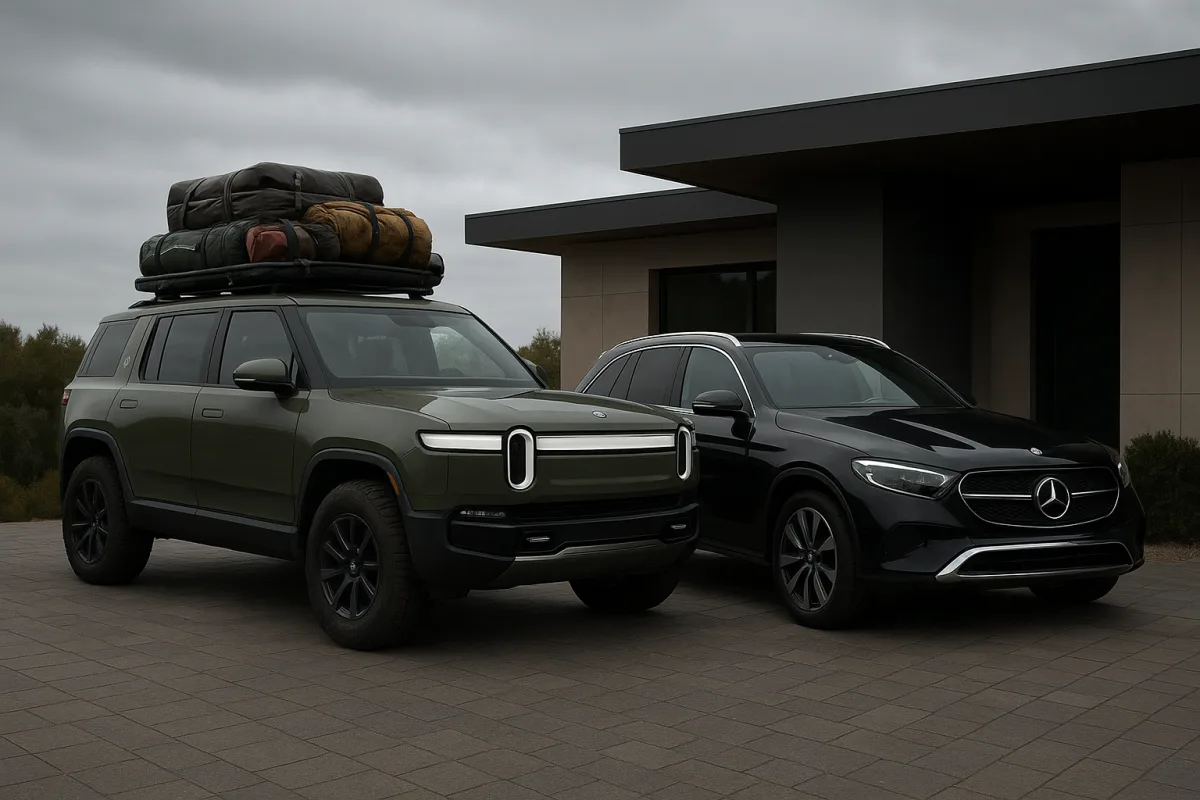
Luxury Performance SUV Comparison
Compare the Rivian R2 Performance and Mercedes-Benz GLC EV on price, performance, range, and ownership for 2026 luxury electric SUVs.
Hybrid Large SUVs: GM’s Plans and What Buyers Should Know
Explore GM’s hybrid large SUVs plans, costs, and ownership insights for 2027. Learn what buyers need to know before choosing a hybrid large SUV.
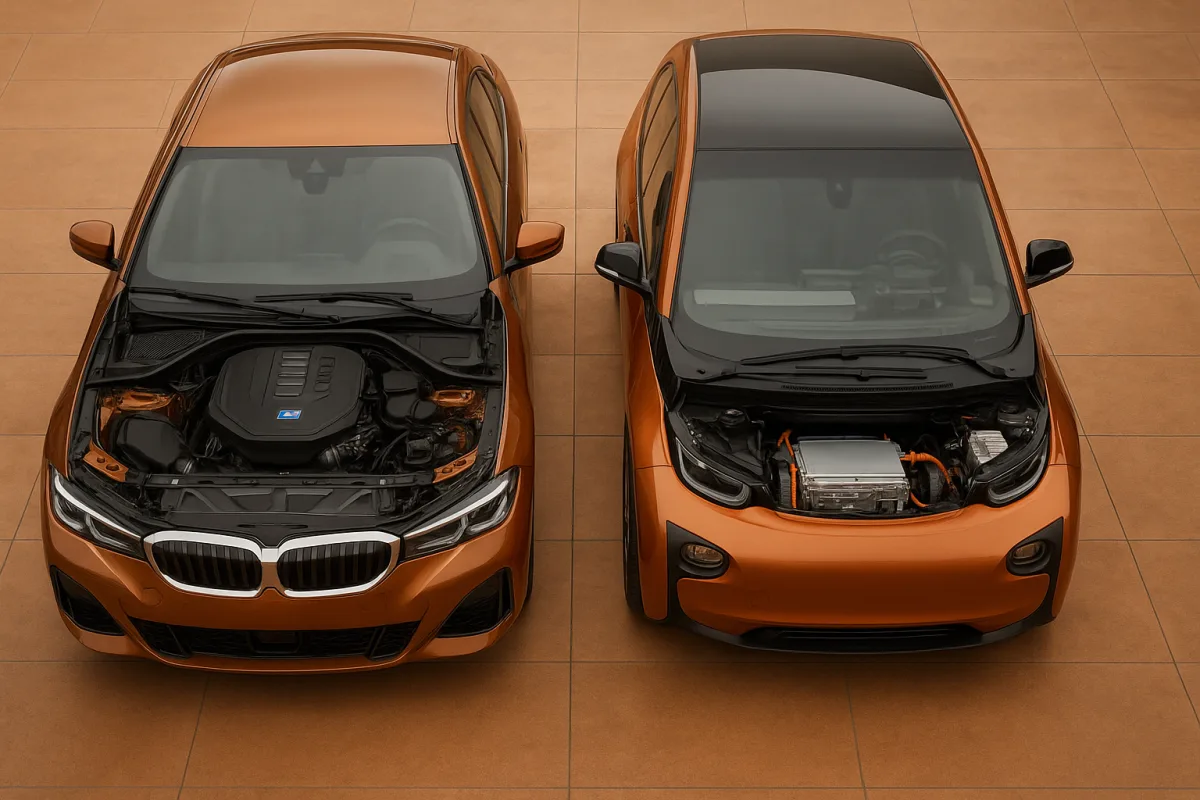
2027 BMW 3 Series M350 vs i3
Compare the 2027 BMW 3 Series M350 and i3 models on performance, ownership costs, and market challenges to find which suits your needs best.