
2027 Porsche 718 Boxster EV Review
Explore the 2027 Porsche 718 Boxster EV prototype's performance, handling, and design insights in this detailed review.
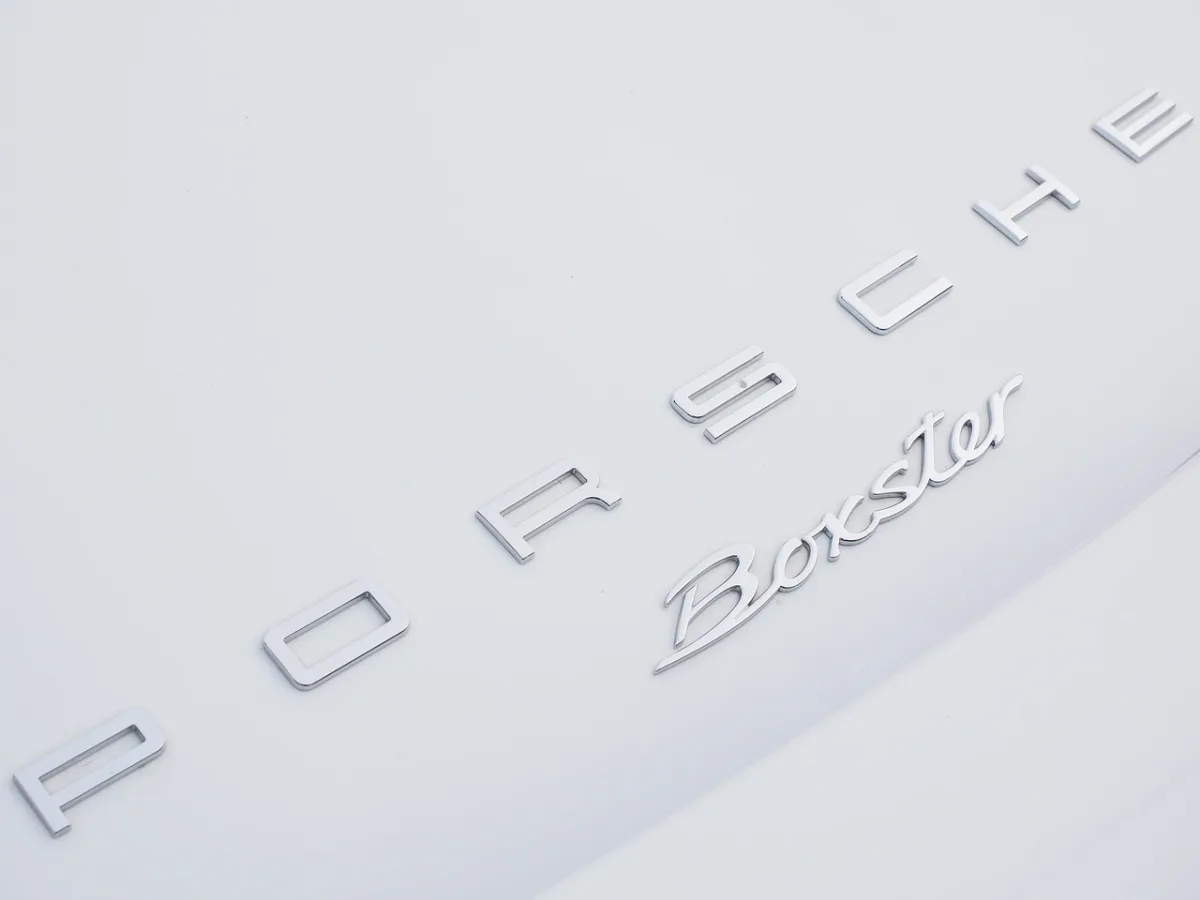
Photo: Hans via Pixabay
The quick list
Best overall: 2027 Porsche 718 Boxster EV, for the driver who wants a new roadster with serious pace, modern charging, and handling that still rotates like a mid-engine Porsche.
Best for the old-school owner: 718 Boxster GTS 4.0, for the person who keeps cars for the engine, manual gearbox, lower weight, and established service knowledge.
Best long-distance grand tourer: 911 GTS Cabriolet, for the buyer who wants Porsche speed and open-air motoring but needs more established specifications and a less experimental ownership proposition.
The battery behind your shoulders is the whole point
The black-and-red camouflage hides the production bodywork, but the defining feature sits beneath it. Porsche has put the 718 Boxster EV’s 800-volt battery pack behind the passenger compartment, roughly where the gas Boxster’s engine used to live. [10]
That is a costly, space-hungry answer to a familiar EV problem. Most electric cars place their battery beneath the floor, which raises the seating position and commonly creates a near-50/50 weight split. Porsche wanted the 718 to feel rear-engined from the driver’s seat, even though it is conceptually closer to a mid-engine car.
The result is a claimed 40/60 front-to-rear weight distribution, compared with roughly 45/55 for the gas-powered 718. [8] The pack’s placement also allows the seats to sit as low as they do in the combustion Boxster, preserving the view over the short hood and the low, legs-forward driving position.
Car and Driver found that architecture comes through at the limit. Its prototype test car could be rotated with a throttle lift, and its rear end would step outward in a way that felt recognizably Boxster, not like a conventional heavy electric coupe. [10]
That matters more than a drag-race number. A rear-biased chassis can feel alive at normal road speeds, particularly when you trail-brake into a bend or feed in power early on the exit. The electric 718 appears designed to preserve that conversation between steering wheel, rear tires, and throttle.
The comparison: EV Boxster versus the cars it replaces and borrows from
Porsche has not released final dimensions, cargo measurements, power figures, or price. The table therefore concentrates on what is known, and on the trade-offs visible in Porsche’s prototype program.
| Model | Powertrain and drive | Weight and balance | Performance | Roadster layout | What you gain | What you give up |
|---|---|---|---|---|---|---|
| 2027 718 Boxster EV prototype | Single rear electric motor, rear-wheel drive | Porsche says weight is in the current 911 range; 40/60 front/rear distribution | Faster version targets 0-60 mph in under 3.0 seconds; 155-mph top speed reported by The Drive | Soft top, front trunk and rear trunk, low seating position | Instant response, 800-volt architecture, likely much quicker acceleration | Higher mass than the gas 718, no manual, range and price still unknown |
| Outgoing 718 Boxster GTS 4.0 | Naturally aspirated flat-six, rear-wheel drive | Road & Track cites a curb weight below 3,200 pounds | No EV-style launch pace, but lighter mass | Soft top, front and rear cargo areas | Real engine sound, manual availability, lower weight, familiar maintenance history | Older platform, slower acceleration, combustion-car running costs |
| Current 911 GTS Cabriolet | Gas flat-six, rear-engined layout | Around 3,700 pounds according to Road & Track | Established high-performance benchmark | Soft top, more rear-biased 911 character | Mature platform, broader use case, established options | Larger, more expensive category, less compact mid-engine feel |
The closest mechanical comparison is not another EV. It is the current 718 Boxster GTS 4.0, the car that combines a 4.0-liter naturally aspirated flat-six with a curb weight Road & Track puts below 3,200 pounds.
That benchmark exposes the electric car’s hardest trade-off. Porsche has not published a final curb weight, but its engineers say the EV will land somewhere in the current 911 range. The Drive estimates approximately 3,300 to 3,500 pounds, while Road & Track’s prototype impression put it closer to 3,700 to 4,000 pounds. [10]
Those are materially different outcomes. At 3,300 pounds, the EV would be unusually light for a performance electric car. At nearly 4,000 pounds, it would still be respectable for an EV roadster, but you will feel the added inertia in slow corners, braking zones, and quick left-right transitions.
Road & Track did feel that mass in tighter bends, where the front tires eventually had to manage more load than in the outgoing gas car. Yet it also reported a chassis that rotated readily under braking and delivered a lively rear end when Porsche Stability Management was relaxed. [10]
Why the 911 parts matter
Porsche has not built this as an electric conversion of the previous 718. The prototype uses the company’s E-Core EV architecture, but several critical dynamic parts come from the current 911 GTS.
The steering system comes from the 992.2-generation 911 Carrera GTS, as do major brake-system elements and wheel fitments. The higher-performance Boxster will offer rear-axle steering, while every version gets adaptive dampers and rear-wheel drive. [10]
The prototype tested by Car and Driver wore 255/35ZR-20 front and 305/30ZR-21 rear Pirelli P Zero R tires. Those are unusually broad rear tires for a Boxster, even wider than the previous 718 Spyder RS fitment. [10]
Autocar reported that Porsche has also moved to a 911-style multi-link rear suspension. The old Boxster used rear struts partly to package its wide flat engine, a restriction the electric car no longer has. [10]
That hardware can make the EV more composed, especially at high speed, but it may also make it less delicate. Autocar found the optional sport suspension firm on smooth Mallorcan roads, although it praised the damper control and the convertible body’s stiffness. [10]
The gas GTS 4.0 remains the lower-mass, more mechanical choice. The EV is aiming at another kind of fluency, using faster steering, enormous tire contact patches, precise brake feel, and electric torque to make a heavier car feel compact around its center.
E-Shift is better than a novelty, but it is still a simulation
Porsche’s E-Shift program is central to the new car’s character. Press a steering-wheel button, and the electric motor adopts simulated seven-speed PDK ratios while speakers reproduce the sound of the 981-generation Boxster GTS’s 3.4-liter flat-six. [10]
You can leave it in automatic operation or use paddles to select virtual gears. In manual mode, The Drive reports that the program will hold the simulated engine against its rev limiter until you pull a paddle, closely copying the interaction of a PDK car. [10]
This is not a manual-transmission substitute. There is no clutch pedal, no real gearset, no vibration through the structure, and no mechanical intake or exhaust resonance. Open the roof beside a retaining wall, and the difference between speakers and a real flat-six will be obvious.
Still, the system appears to help rather than distract. Road & Track found the artificial engine speed and gear changes useful for learning braking points and managing corner exits, while Car and Driver felt the car was less involving in silent mode. [10]
Porsche has made a sensible choice by allowing both experiences. You can use the quiet electric mode for a long trip or an early-morning departure, then switch on E-Shift when a mountain road or track day calls for more feedback.
The production car will not offer one-pedal driving. The Drive reports three selectable regeneration levels, but Porsche retains a conventional brake-pedal feel rather than making lift-off regeneration do most of the stopping. [10]
For a sports car, that approach makes sense. Consistent pedal response helps you judge trail braking, and journalists who drove the prototype consistently praised its brake feel. The cost is less aggressive energy recovery in ordinary commuting.
Range, charging, price, and the ownership questions Porsche has not answered
The Boxster EV’s 800-volt electrical architecture should support rapid DC charging, but Porsche has not stated the battery’s usable capacity, peak charging rate, or EPA range. [10] Those omissions prevent a serious running-cost comparison with a gas 718.
Autocar estimated about 80 kWh and roughly 250 miles of real-world range after reading a prototype’s trip computer, but that is an informed estimate, not a Porsche specification. [10] Other preliminary reporting has suggested a broad 240-to-310-mile range band depending on version and conditions. [2]
Hard driving will alter that calculation sharply. Road & Track saw a range warning after around 40 minutes of hard lapping at Porsche’s Los Angeles circuit. [10] Track use is brutal on any car’s energy supply, but an EV has no five-minute gas-station refill between sessions.
Porsche has confirmed a single charge port hidden behind a powered door in the center of the rear bumper. Car and Driver reports that it will handle both AC and DC charging through the NACS connection, unlike some current Porsche EV arrangements that use separate connections. [10]
US pricing remains unannounced, as do trim names and standard-equipment levels. [10] Road & Track expects the electric Boxster to begin below $100,000, but Porsche has not confirmed that projection, so do not base a deposit or financing plan on it. [10]
Insurance costs, scheduled maintenance pricing, battery warranty terms, tire replacement costs, and body-repair costs also remain unpublished. This is where we would pause. The 305-section rear tires, 21-inch wheels, adaptive chassis hardware, and novel battery packaging could make a cheap ownership experience unlikely.
An EV removes oil changes, spark plugs, belts, exhaust-system corrosion, and many of the routine expenses associated with a flat-six. It also introduces a large battery, high-voltage hardware, and a new platform without a public long-term repair record.
What the Boxster EV gets right about design
The prototype looks like an evolution, not a radical electric reset. The low nose, short overhangs, compact windshield, and curved rear haunches are all familiar Boxster cues, while active front intake elements and full-width rear lighting bring it closer to Porsche’s newer EV design language. [10]
The soft top operates at speeds up to 41 mph, according to The Drive. [10] Porsche has retained conventional door handles, a front trunk, and a rear trunk, preserving the everyday usability that made the Boxster easier to live with than its compact footprint suggests.
That cargo arrangement deserves attention. Battery placement behind the cabin avoids the problem of a floor battery consuming cabin height, but Porsche still has to package enough electrical hardware without taking away the car’s two luggage compartments.
The current prototype is lightly camouflaged, and Porsche has not revealed the final interior. Autocar’s early description suggests a cabin related to the present 911, with a familiar low driving position and updated vents. [10]
Who each option suits
2027 Porsche 718 Boxster EV: Wait for this if you want the quickest Boxster yet and can charge at home or reliably on your regular routes. Its rear-drive layout, 40/60 balance, low seating position, and 911-derived controls sound genuinely promising, but wait for price, EPA range, battery warranty, and curb weight. [10]
Outgoing 718 Boxster GTS 4.0: Buy this if you want the version you can hear, shift, and maintain as a traditional sports car. It is lighter, its naturally aspirated engine is the center of the experience, and it avoids the unanswered questions around charging performance, battery aging, and EV resale values.
911 GTS Cabriolet: Choose the 911 if you want a broader, more mature Porsche ownership proposition and can accept a larger car. It remains the reference point for much of the EV Boxster’s steering, brakes, suspension thinking, and expected weight range, but it does not offer the Boxster’s compact mid-engine-style balance.
Frequently Asked Questions
How does the 2027 Porsche 718 Boxster EV handle compared to the gas model?
The 718 Boxster EV preserves the rear-biased handling balance of the gas Boxster, with a 40/60 front-to-rear weight distribution that allows the car to rotate and respond to throttle inputs in a way that feels recognizably Boxster. However, the EV's higher mass can be felt in tighter corners and quick transitions, where the front tires manage more load than in the lighter gas model.
What are the performance specs of the 2027 Porsche 718 Boxster EV prototype?
The faster version of the 718 Boxster EV targets a 0-60 mph time of under 3.0 seconds and a top speed of around 155 mph. Porsche has not released official horsepower, battery capacity, or EPA range figures, but estimates suggest over 500 horsepower and an 800-volt battery system.
What unique features does the 718 Boxster EV have?
The 718 Boxster EV features an 800-volt battery pack mounted behind the seats, preserving the low seating position and rear-drive layout of the gas Boxster. It also offers instant throttle response and Porsche’s E-Shift system, which aims to make the driving experience more engaging despite lacking the mechanical sound of a flat-six engine.
How does the battery placement affect the 718 Boxster EV's driving dynamics?
By placing the battery pack behind the passenger compartment, Porsche maintains a rear-biased weight distribution and a low seating position similar to the gas Boxster. This layout helps the car feel more like a traditional rear- or mid-engined Porsche, supporting lively handling and the ability to rotate the chassis with throttle inputs.
What are the trade-offs between the 718 Boxster EV and the outgoing gas 718 Boxster GTS 4.0?
The EV offers quicker acceleration, modern charging technology, and instant torque but comes with higher mass, no manual transmission, and unknown range and price. The gas 718 GTS 4.0 provides a naturally aspirated flat-six engine, manual gearbox, lower weight, and familiar maintenance, making it preferable for drivers prioritizing traditional driving feel and lighter weight.
How we researched this
This article was assembled from 6 published articles, 10 cited references.
Nothing here is based on hands-on testing. Where a figure or finding appears, it belongs to the source cited beside it, and the writing says so rather than implying otherwise. Every source is listed below so you can check it.
Sources
Driven: 2028 Porsche 718 Boxster EV Prototype Wags Its Tail Like a Mid-Engine Sports Car, Car and Driver
Porsche 718 Boxster EV Prototype Review: So Good You Wouldn’t Know It’s Electric, The Drive
Electric Porsche 718 Boxster driven: Forget the flat six - it could be the best yet, Autocar
The Porsche 718 Boxster EV Does a Convincing Impression of a Sports Car, Road & Track
View Photos of the 2028 Porsche 718 Boxster EV Prototype, Car and Driver
See Every Angle of the Porsche 718 Boxster EV Prototype, Road & Track
Porsche 718 Boxster: EV roadster launches 2027 with 500+ hp - Notebookcheck News
Porsche 718 EV: 2026 Boxster & Cayman Electric Specs, Range & Buyer's Guide | AutoEdgeView
We Drove the Electric Porsche Boxster: EV Sports Car Problem Solved?
Porsche’s upcoming electric 718 Boxster gets E-Shift and mid-engine-style layout
Related Articles
2027 Range Rover Electric Review: Performance and Ownership
Explore the 2027 Range Rover Electric review covering performance, range, price, off-road ability, and ownership insights.
BYD Yangwang Altior Review
Explore the BYD Yangwang Altior review covering its luxury, four-motor tech, performance, range, and ownership insights in this ultra-luxury electric
2027 Audi Q7 and SQ7 Review
Explore the 2027 Audi Q7 and SQ7 review covering performance, third-row seating, cargo space, and ownership considerations.
2028 Honda CR-V Hybrid vs Rivian R2
Compare the 2028 Honda CR-V Hybrid and 2027 Rivian R2 on performance, price, range, and features to find the right next-gen hybrid SUV for you.