
2027 Toyota GRMN Corolla vs Hyundai Tucson Hybrid Performance
Compare the 2027 Toyota GRMN Corolla and Hyundai Tucson Hybrid on performance, hybrid updates, and driving experience to find the right fit for you.
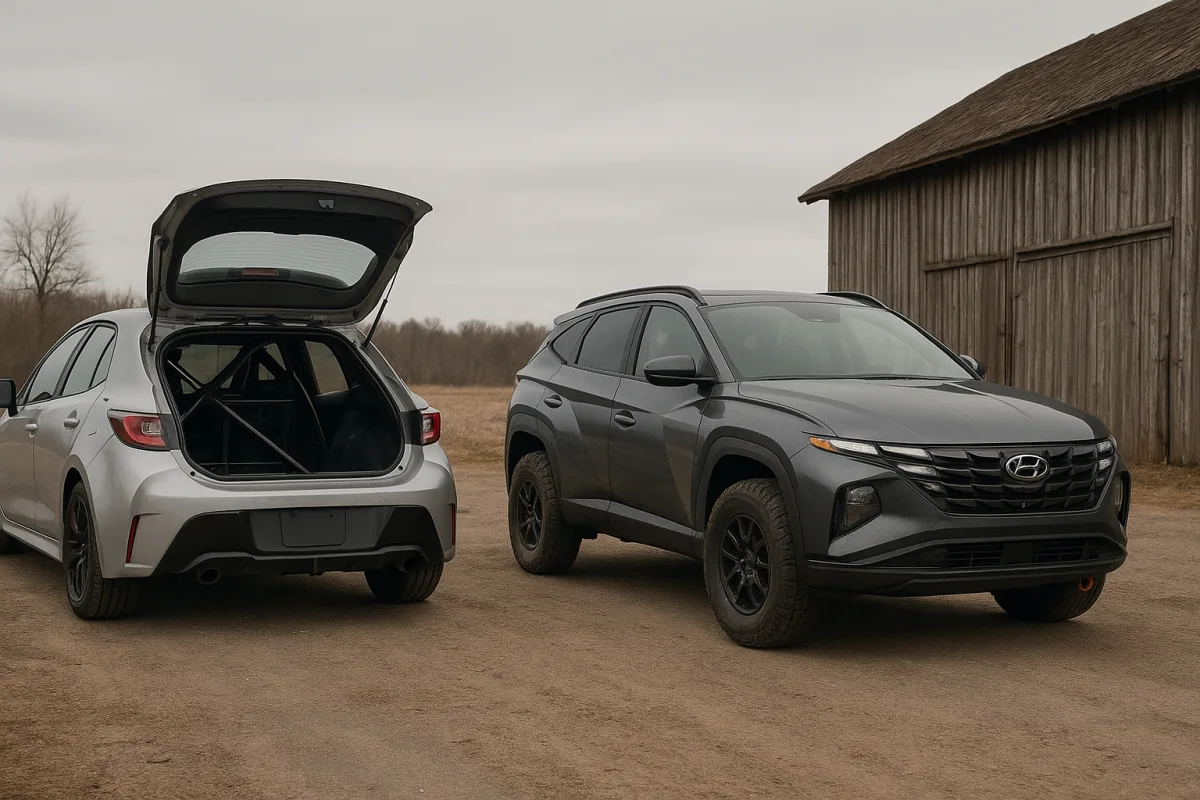
A rear hatch with no rear seat
The GRMN Corolla’s hatch opens onto cross-bracing, an intercooler-water tank, and no back seat. That is the whole comparison in one glance: Toyota has turned a practical hot hatch into a focused two-seat track special.
The Tucson Hybrid XRT Pro goes in the other direction. Hyundai has taken a family crossover and added standard all-wheel drive, all-terrain tires, recovery hooks, and more clearance, without abandoning the hybrid powertrain.[3]
These are not close substitutes, even if both arrive as 2027 models with four doors and all-wheel drive. One is built around braking zones and corner exits. The other is built around a muddy campsite, a child seat, and a long highway drive.
If we had to choose one for the largest number of owners, we would take the Tucson Hybrid XRT Pro. It has the broader job description, though Hyundai still has not announced its price or EPA ratings. The GRMN is the choice for a far narrower, happier purpose.
Head-to-head: GRMN Corolla versus Tucson Hybrid XRT Pro
| Criteria | 2027 Toyota GRMN Corolla | 2027 Hyundai Tucson Hybrid XRT Pro |
|---|---|---|
| Core mission | Limited-run two-seat track-oriented hot hatch | Hybrid compact SUV with light off-road hardware |
| Powertrain | 1.6-liter turbocharged three-cylinder, 300 hp, 302 lb-ft, six-speed manual, AWD[[5]](https://global.toyota/en/newsroom/toyota/44385626.html "GR Premiers GRMN Corolla | Toyota |
| Driving character | Sharp turn-in, heavier steering, stronger braking, Cup 2 tires | Intended for low-traction roads, daily commuting, and family use |
| Rough-road ability | Gravel mode and AWD, but low body, road-focused tires, and no recovery hardware | 8.3 inches of clearance, all-terrain tires, recovery hooks, X-Trek+ terrain system[3] |
| Passenger and cargo role | Two seats, rear-seat delete, cargo area occupied partly by bracing and water tank[7] | Five-seat crossover layout, 41.9 inches of rear legroom, wide-opening rear doors |
| Fuel economy | No EPA estimate published | Hyundai target of up to 42 mpg on select hybrid trims, pending EPA certification[3] |
| Ownership unknowns | Limited parts and tire costs could be high, with no published long-term ownership data | Price, EPA ratings, and long-term durability data have not been published |
| Technology and subscriptions | Conventional cabin controls, digital gauge cluster, no announced subscription details | Android Automotive-based infotainment, OTA updates, voice assistant, connected-service details not yet published |
| Price and availability | $64,360 MSRP, excluding destination and dealer fees, 730 units globally[1] | Pricing unannounced, hybrid expected in early second quarter of 2027 |
| Our pick | The special-occasion car | The one-car household choice |
1. What each one is trying to do
Toyota starts with the regular GR Corolla’s rally-flavored recipe: a turbo three-cylinder, manual gearbox, all-wheel drive, and a compact four-door body. The GRMN pushes it toward circuit work by removing 66 pounds of rear seating and fitting bracing.[7]
The GRMN badge refers to Toyota’s motorsport-led development, and this model gets Nürburgring- and Fuji-tuned suspension changes. Shorter front bump stops and longer rear bump stops are intended to keep the car composed over curbs and midcorner surface changes.[5]
Hyundai’s Tucson XRT Pro has a less romantic brief, but a more recognizable one for most owners. It is a compact crossover intended to deal with slippery access roads, snow, rutted campgrounds, and ordinary weekday transportation.
Its XRT Pro package includes 18-inch all-terrain tires, front recovery hooks, standard all-wheel drive, and Hyundai’s X-Trek+ terrain setting. Hyundai quotes up to 8.3 inches of ground clearance, which is useful on rough roads but not serious rock-crawling territory.[3]
The Toyota is the better answer if weekends revolve around track days or a favorite mountain road. The Hyundai is the better answer if your car needs to carry passengers, luggage, dogs, and dirty gear before it gets to the interesting road.
2. Powertrain and driving experience
The GRMN retains the 1.6-liter turbocharged three-cylinder’s 300 horsepower, but torque rises by 7 lb-ft to 302 lb-ft. Toyota also gives it a GRMN-specific six-speed manual transmission with revised ratios and no automatic option.[5]
Road & Track found the GRMN’s longer first gear and shorter third gear made better use of the engine on track. Fourth reaches 105 mph, and the revised shifter linkage and smaller knob were reported to improve shift action.[5]
The all-wheel-drive system remains adjustable. Track mode can send as much as 70 percent of power rearward, while Gravel mode splits torque evenly, though Road & Track found the car still tended to push its front tires when power was applied hard.[5]
The Tucson hybrid makes 233 horsepower and 280 lb-ft from its 1.6-liter turbo four-cylinder and electric motor. It uses a six-speed automatic tailored to the hybrid system, not a continuously variable transmission.[3]
Those outputs are respectable for a compact hybrid SUV, but Hyundai has not presented the XRT Pro as a rival to the GRMN on pavement. Its all-terrain tires and taller ride height will almost certainly trade some steering response for grip on loose surfaces.
The GRMN is more approachable than its numbers suggest. The Fast Lane Car described it as friendly and easy to correct at the limit, even for drivers without deep track experience, while praising its small footprint and immediate responses.
That friendliness does not make it comfortable or cheap to run. Michelin Pilot Sport Cup 2 tires, slotted brake rotors, a carbon-fiber hood, and limited-production trim will cost more to replace than normal GR Corolla parts.
3. Capability away from smooth pavement
Toyota’s Gravel mode gives the GRMN a rally-adjacent party trick, and the standard GR Corolla’s AWD system has always made sense on loose surfaces. But the GRMN’s priorities are visible in its 245-section Michelin Cup 2 tires and lowered, track-minded stance.
You can take it down a well-maintained gravel road, but that is different from heading into the woods with confidence. There are no recovery hooks, no all-terrain tires, no published ground-clearance claim, and no spare rear seating for the people you brought.
The Tucson XRT Pro is the vehicle for that job. Its recovery hooks give you a proper extraction point, its terrain system is meant for low-grip driving, and its all-terrain tires should tolerate loose stone and shallow mud better than performance summer rubber.[3]
Keep expectations realistic. An 8.3-inch clearance figure and crossover proportions make it suitable for forest roads and snowy driveways, not deep water, severe ruts, or technical trails where a true body-on-frame four-wheel-drive vehicle belongs.
Hyundai says the Tucson lineup can tow up to 3,000 pounds, though it has not broken out a separate rating for the Hybrid XRT Pro. Verify the final owner’s manual and trim-specific tow rating before buying a trailer around that number.[3]
4. Space, comfort, and living with them
The GRMN Corolla is a two-seater, full stop. Toyota removed the rear bench, and the rear structure now contains bracing plus the intercooler spray system, which holds roughly a gallon of water for 150 seconds of cooling assistance.[7]
That system is clever on a hot track day because it can reduce intake temperatures, but it is dead weight to an owner who never uses sustained boost. The rear-seat deletion also means the GRMN loses the ordinary GR Corolla’s strongest ownership advantage.
Road & Track praised the GRMN’s driving position, pedal placement, and brake performance, but found its new bucket seats thinner and less comfortable than those in the standard GR Corolla. That is an acceptable compromise only if the track work is real.[5]
The Tucson is much easier to picture after 60,000 miles. Hyundai says its rear doors now open to 83 degrees, and it quotes 41.9 inches of rear legroom, both of which help when loading adults, child seats, or a reluctant dog.[3]
Its column-mounted shifter also frees console space, while the hybrid’s Stay Mode can run climate control, audio, and device charging for up to 30 minutes with the gas engine off. That is the sort of feature you may use at a trailhead or soccer field.[3]
No long-term reliability, repair-cost, or maintenance data exist yet for either specific 2027 model. A limited GRMN deserves careful inspection for track use, tire wear, brake wear, and amateur modifications, while the Tucson’s new hybrid hardware needs time in owners’ hands.
5. Price, availability, and the technology bill
Toyota’s official GRMN Corolla MSRP is $64,360 before destination and dealer fees.[1] Road & Track quoted $65,655, which is the more realistic figure to keep in mind once the vehicle’s delivery charge is included, before tax, registration, insurance, or any dealer markup.
Only 730 GRMN Corollas will be produced worldwide.[1] That rarity may support collector interest, but it also means you should expect limited allocation, little room for negotiation, and the possibility that dealer markups erase any argument based on value.
A standard GR Corolla starts at just over $40,000, according to The Fast Lane Car. Its rear seats, less extreme tires, and lower entry price make it the Toyota we would buy unless you will genuinely use the GRMN’s chassis upgrades.
The Hyundai has no announced price, which prevents a clean value verdict. It is due after the gas-powered 2027 Tucson, with the hybrid expected early in the second quarter of 2027, so final equipment and pricing may change before dealer arrivals.
Hyundai targets up to 42 mpg for select Tucson hybrid configurations, but the EPA has not certified the lineup yet.[3] The XRT Pro’s all-terrain tires may also keep it from achieving the best figure, so wait for its specific window sticker.
The Tucson brings a larger technology load, including Android Automotive-based Pleos Connect infotainment, available 12.9- or 17.0-inch displays, over-the-air updates, and the Gleo AI voice assistant. That convenience also makes final connected-service terms worth reading closely.[3]
New York’s law barring subscriptions for certain pre-installed hardware features takes effect February 27, 2027. It may protect buyers from paying repeatedly for hardware-only functions, although connected navigation, Wi-Fi, telematics, and software-dependent driver assistance remain exempt.
A useful benchmark from Hyundai’s N division
Hyundai’s current Elantra N is relevant because it shows what the company can do when affordability and durable track use are priorities. savagegeese reported a 20,000-mile ownership experience with track use and few reliability concerns.
The channel also found the Elantra N TCR edition’s larger brakes gave more thermal capacity, but said most of its expensive changes added little on public roads. That is a warning for GRMN shoppers tempted by hardware they will rarely exploit.
The GRMN is much more comprehensively revised than the Elantra N TCR, with suspension, tire, aero, brake, transmission, and structural changes. Still, the same rule applies: pay for track hardware only if your calendar includes track time.
Who each option suits
The 2027 Toyota GRMN Corolla suits the owner who already has transportation for passengers and cargo, wants a manual, and plans to attend track days. You get a rare, unusually focused hot hatch with serious chassis work and a compact, confidence-building character.
It falls down as an only car. The missing rear seats, limited cargo flexibility, aggressive tires, expensive MSRP, likely dealer markups, and small production run make it hard to justify as ordinary transportation, however good it feels through a fast corner.
The 2027 Hyundai Tucson Hybrid XRT Pro suits the owner who needs one vehicle to cover commuting, family hauling, bad weather, trailheads, and light off-pavement travel. Its hybrid torque, recovery hardware, clearance, and cabin room fit that life well.
It falls down for drivers seeking a genuinely sporty vehicle or a serious off-roader. Hyundai has not published final pricing, EPA ratings, or real-world ownership evidence, and the XRT Pro’s off-road equipment will not turn a Tucson into a rock crawler.
We would buy the Tucson Hybrid XRT Pro for a one-car garage, after checking its final price, EPA label, warranty terms, and tire replacement cost. We would buy the GRMN only if the second parking space is already occupied by something practical.
Frequently Asked Questions
What are the key differences between the 2027 Toyota GRMN Corolla and Hyundai Tucson Hybrid?
The 2027 Toyota GRMN Corolla is a limited-run, two-seat, track-focused hot hatch with a 300-hp turbo three-cylinder engine, six-speed manual, and sharp handling. In contrast, the 2027 Hyundai Tucson Hybrid XRT Pro is a five-seat compact SUV with a hybrid powertrain, all-terrain tires, recovery hooks, and 8.3 inches of ground clearance designed for daily driving and light off-road use. The Corolla prioritizes performance and track capability, while the Tucson emphasizes versatility and practicality.
Is the 2027 Toyota GRMN Corolla suitable for daily driving?
The GRMN Corolla is not well suited for daily driving due to its two-seat layout, rear-seat deletion, and $64,360 MSRP, which limit its practicality. It is best used as a second car or a committed track-day vehicle rather than a primary family or commuter car.
What hybrid technology updates does the 2027 Hyundai Tucson XRT Pro have?
The Tucson Hybrid XRT Pro features a 1.6-liter turbocharged four-cylinder hybrid powertrain paired with a six-speed automatic transmission and all-wheel drive. It includes Hyundai’s X-Trek+ terrain system, all-terrain tires, and recovery hooks to enhance capability on slippery or rough roads while maintaining hybrid efficiency.
How does the 2027 Toyota GRMN Corolla perform on the track?
The GRMN Corolla is tuned for sharp turn-in, heavier steering, stronger braking, and uses sticky Cup 2 tires. Suspension is Nürburgring- and Fuji-tuned with revised bump stops to keep the car composed over curbs and midcorner surface changes, making it a focused and capable track car.
What is the fuel economy of the 2027 Hyundai Tucson Hybrid XRT Pro?
Hyundai targets up to 42 mpg for select Tucson hybrid trims, but this figure is pending EPA certification and may not apply to the all-terrain-tired XRT Pro. Official EPA ratings for the XRT Pro have not yet been published.
How we researched this
This article was assembled from 2 video sources across 2 channels, 3 published articles, 7 cited references.
Nothing here is based on hands-on testing. Where a figure or finding appears, it belongs to the source cited beside it, and the writing says so rather than implying otherwise. Every source is listed below so you can check it.
Sources
Elantra N TCR | End of the Road, savagegeese
New vs Brand New - 2027 Toyota GRMN VS GR Corolla…Is It Really Worth $23K more?, The Fast Lane Car
The 2027 Toyota GRMN Corolla Is Almost Worth the Squeeze, Road & Track
Hyundai's New Tucson Finally Gets A Hybrid Off-Road Trim, Motor1
New York Just Banned Subscriptions For Features Your Car Already Has, Jalopnik
2027 Hyundai Tucson Reviews, Ratings, Prices - Consumer Reports
Peak Performance: Toyota Introduces the 2026 GRMN Corolla - Toyota USA Newsroom
Watch Hybrid and Performance Updates for 2027 Toyota GRMN Corolla and Hyundai Tucson on Youtube
Also from the sources
Related Articles
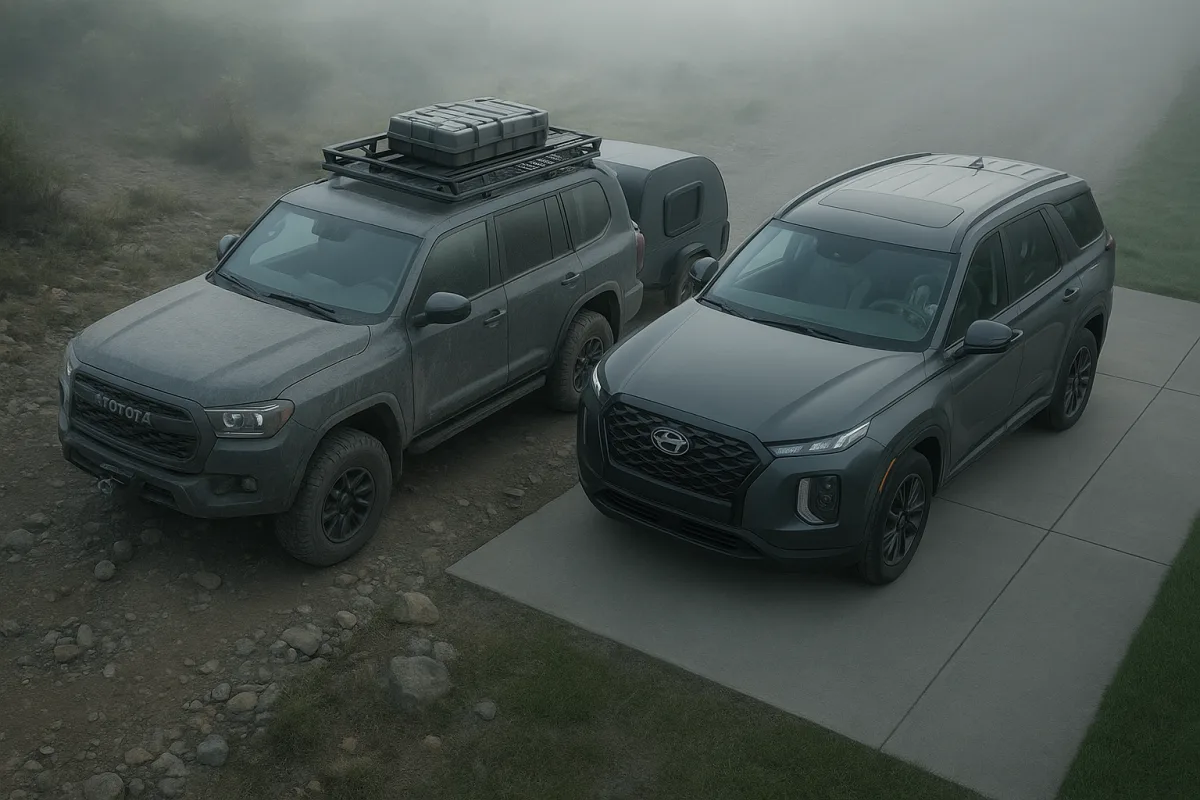
2027 Toyota Land Cruiser vs Hyundai Palisade XRT Pro SUV
Compare the 2027 Toyota Land Cruiser and Hyundai Palisade XRT Pro for off-road capability, towing, price, and family SUV features.
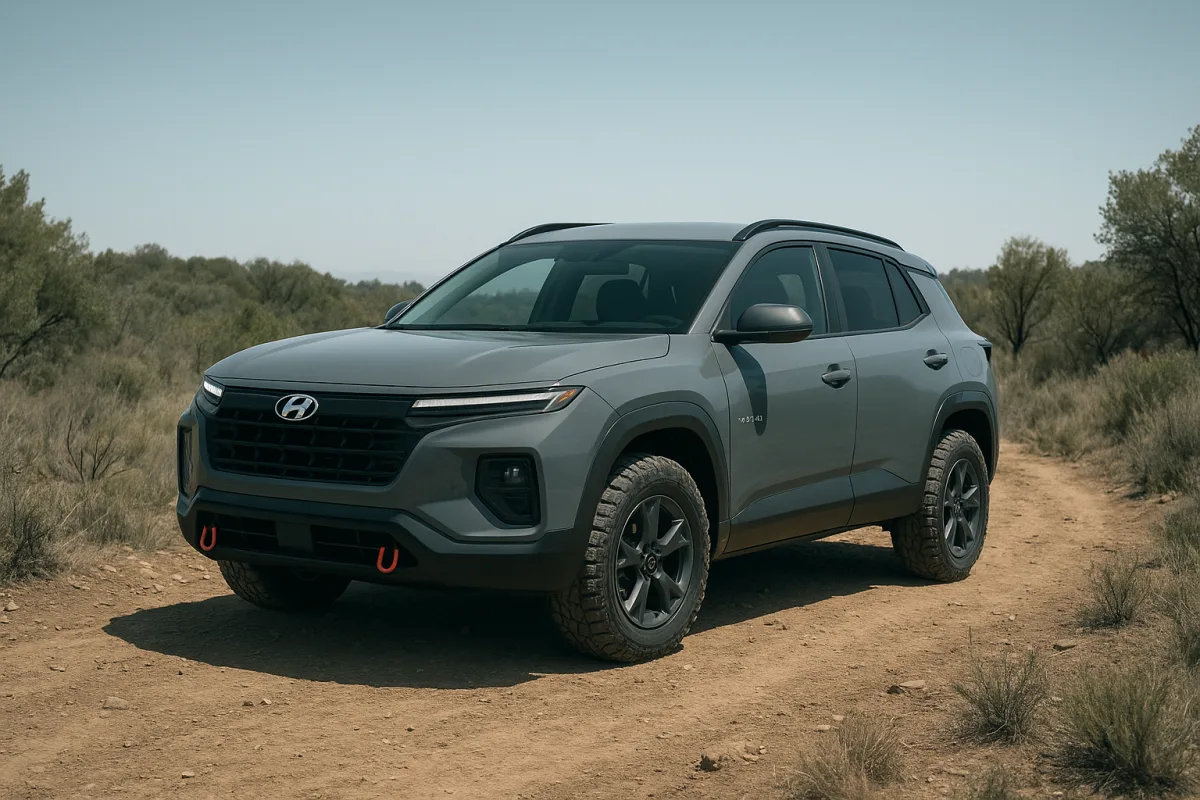
2027 Hyundai Tucson Redesign and Hybrid Powertrain Details
Explore the 2027 Hyundai Tucson redesign, hybrid powertrain, fuel economy, towing, and new features in this detailed overview.

Jeep Wrangler Rubicon vs Family SUVs
Compare Jeep Wrangler Rubicon with Hyundai Palisade and Honda Pilot for off-road capability, clearance, maintenance, and real-world use.
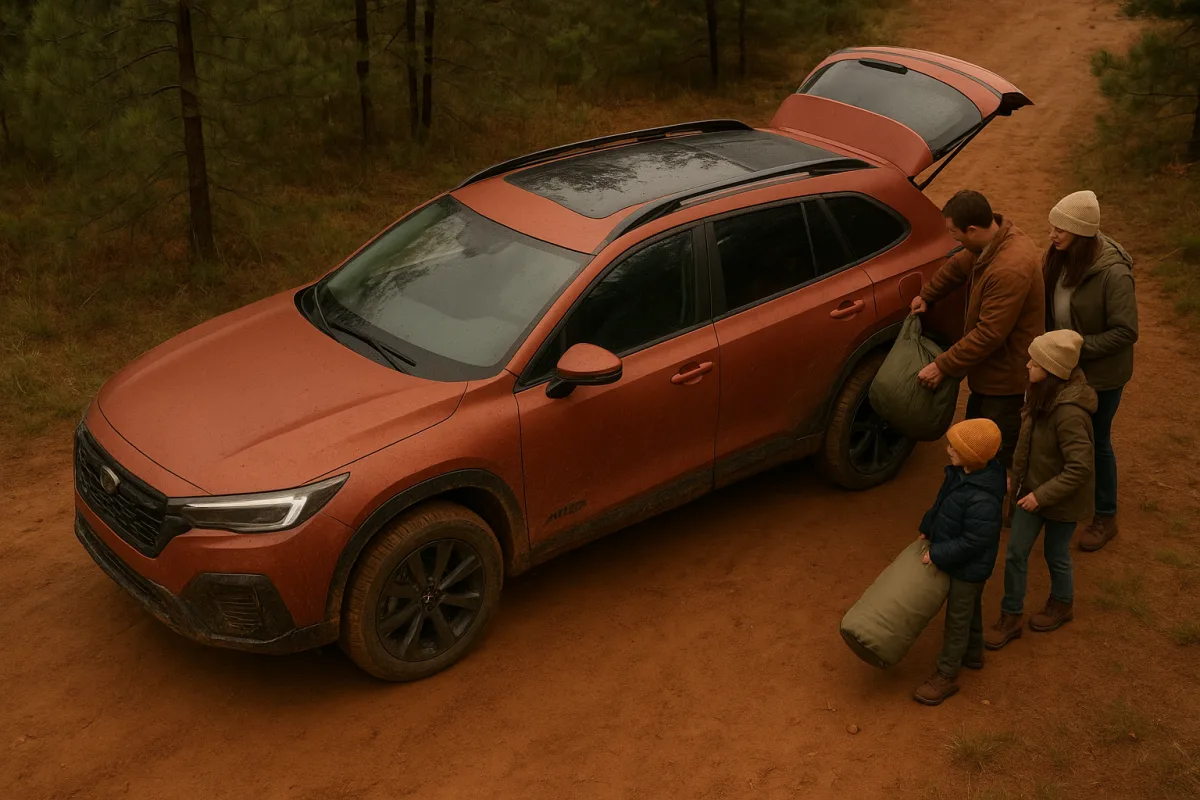
New Hybrid Off-Road SUVs: 2026-2027 Models and Features
Explore new hybrid off-road SUVs for 2026-2027, including fuel economy, AWD features, and suitability for family and light off-road use.