
2027 Hyundai Elantra Design and Market Impact Overview
Explore the 2027 Hyundai Elantra design changes, size, styling, and market impact including hybrid powertrain details and interior space improvements.
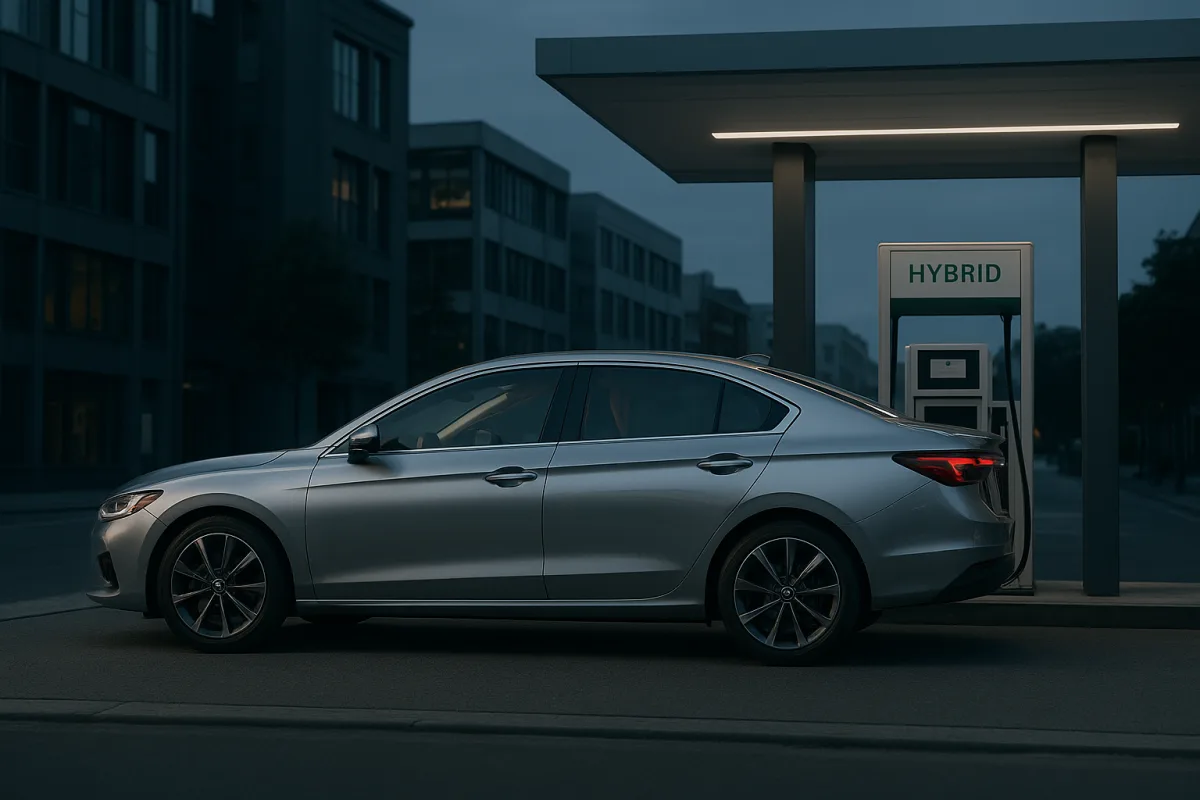
The 108.3-inch wheelbase is the point of the new Elantra
The 2027 Hyundai Elantra is 187.6 inches long, 73.0 inches wide, and rides on a 108.3-inch wheelbase.[6] Those figures explain nearly everything about its new design, its cabin promise, and Hyundai’s market strategy.
A wheelbase is the distance between the centers of the front and rear wheels. It is the hard dimension that determines where the passenger compartment can sit between the axles, and how much room engineers have to redistribute.
Add length behind the rear axle and you mainly gain trunk volume. Add length ahead of the front axle and you mainly change crash structure and styling proportions. Add it between the wheels, and rear-seat occupants have a chance.
That is the important change here. The new Elantra is not merely wearing wider rear fenders and sharper lights. Hyundai has stretched the basic package to make a compact sedan feel closer to a midsize one.
Motor1 reports that the new Elantra’s 108.3-inch wheelbase and 187.6-inch length put it closer to the midsize category than its predecessor. Hyundai says it offers interior room comparable with the Toyota Camry, though final published U.S. passenger-volume figures are not yet available.[6]
Hyundai has not released official 2027 passenger-space or cargo-space figures in cubic feet. Until it does, treat all claims of “Sonata space” or “Camry space” as impressions, not a measurement you can compare on a spec sheet.
What a longer wheelbase changes for you
Rear-seat legroom depends on more than wheelbase. Seat-track travel, front-seat thickness, rear cushion shape, battery placement, roofline, and the angle of the front seatbacks all decide whether the extra inches become usable space.
Still, wheelbase creates the opportunity. Hyundai can move the rear seat rearward, free up toe room beneath the front seats, or provide greater adjustment range for tall front occupants without putting every rear passenger’s knees against a seatback.
The Fast Lane Car reports that Hyundai added roughly three inches in length, with much of the increase directed toward the rear seat. The channel quoted 39 inches of rear legroom, a figure more associated with midsize sedans, but Hyundai has not yet published a U.S. specification sheet to confirm it.
Roman Mica of The Fast Lane Car sat behind his own driving position and found ample knee room. He also bumped his head entering, a reminder that a sweeping roof and generous legroom can coexist with only average access or head clearance.
That tradeoff is visible in the body. The Elantra’s roofline flows rearward into a short deck, while the side body carries swollen rear haunches. Hyundai calls the overall approach its Art of Steel design language, and the fenders are doing real visual work.
A long wheelbase can make a sedan look planted, especially when the wheels sit nearer the corners. The new Elantra uses that proportion to look more expensive than a conventional compact three-box sedan, even before the lighting and surface detailing start.
TheStraightPipes’ Jacob described the rear haunches as inspired by Hyundai’s Vision 74 concept. The effect is a squared-off, muscular rear quarter that makes the car appear rear-wheel drive, despite every announced U.S. powertrain driving the front wheels.
Why the styling looks so aggressive
The 2027 Elantra has split lighting, with daytime running lights placed high and the main lamps positioned lower in the front fascia. This arrangement once looked unusual, but it has become common across SUVs, sedans, and luxury cars.
Hyundai calls the light signature Edge H lighting. The T-shaped elements give the front and rear a recognizable nighttime identity, which matters when many sedans now have similarly narrow grilles and similar rooflines.
The new car abandons much of the outgoing model’s sharp triangular surfacing. The old Elantra was memorable but divisive, with creases that could look busy in sunlight. This one has fewer interruptions and a cleaner broad-shouldered stance.
That does not mean it has become restrained. The grille openings, low front lamps, pronounced beltline, and large rear diffuser treatment all communicate performance that the standard powertrains do not fully deliver.
Jacob at TheStraightPipes called the car nearly too aggressive for its available engines. That is fair. The body suggests an Elantra N or an all-wheel-drive sport sedan, while the regular models remain efficiency-led front-wheel-drive commuter cars.
We like the basic proportions, especially the long cabin and rear fenders, because they make the Elantra look less like an economy car. We would skip exterior options that add oversized wheels until Hyundai publishes tire sizes and replacement costs.
Large wheels tend to mean lower-profile tires, greater pothole vulnerability, and higher replacement bills. A five-spoke 18-inch wheel may look right in a studio, but a 16- or 17-inch setup with more sidewall is often better after several winters.
The powertrains are designed around running cost
Hyundai has confirmed two U.S. powertrains: a 2.0-liter gasoline four-cylinder with 149 horsepower and a 1.6-liter hybrid rated at 157 horsepower combined.[6] Both remain front-wheel drive.
TheStraightPipes and The Fast Lane Car initially quoted 147 horsepower for the gas engine and 155 horsepower for the hybrid. Later published 2027 specifications list 149 and 157 horsepower, respectively.[6]
The gas model uses Hyundai’s IVT, its name for a continuously variable automatic transmission. A CVT varies its ratio continuously, holding the engine near an efficient rpm instead of stepping through fixed gears.
That can work well in city traffic, where a conventional automatic may shift repeatedly. It can feel less natural when you demand acceleration, because engine speed may rise and stay high while road speed catches up.
Hyundai pairs the hybrid with a six-speed dual-clutch transmission instead. A dual-clutch gearbox uses two computer-controlled clutches, one preparing the next ratio while the other drives the car, allowing fast and efficient changes between gears.
The hybrid system adds an electric motor and battery to the gasoline engine. At low loads, electric torque helps launch the car and fill in gaps, so Hyundai can use less gas without leaving the car feeling severely underpowered.
Hyundai targets up to 53 mpg for the hybrid and 35 mpg for the 2.0-liter gas model, according to the early reveal material. Those are manufacturer targets, not EPA window-sticker ratings, and final U.S. certification has not been published.[6]
The difference can be substantial over time. At 15,000 miles annually, a 35-mpg car uses about 429 gallons, while a 53-mpg car uses about 283 gallons. Your savings depend entirely on local gas prices and the hybrid’s eventual sticker premium.
A reported mixed-driving result of roughly 30.8 mpg for the 2.0-liter model falls below Hyundai’s 35-mpg target, which is unsurprising because real-world mixed driving includes cold starts, traffic, hills, short trips, and driver behavior.
We would not buy the gas model on the assumption that it will always return its best published figure. If most of your miles are highway runs at steady speed, its lower purchase price may still outweigh hybrid fuel savings.
The cabin is where Hyundai has aimed upmarket
The Fast Lane Car found the new cabin noticeably more substantial than the outgoing car, with soft-touch trim on frequently touched surfaces, upholstered accents, physical climate controls, and physical buttons for common functions.
That last point matters at 60,000 miles. Screens age, software changes, and touch-sensitive shortcuts can distract you while moving. A dedicated knob or button for volume, defrost, seat heating, or temperature remains easier to use and easier to live with.
Hyundai’s new Playos Connect infotainment system is based on Android Automotive. TheStraightPipes found it quick to respond in a preproduction Limited-trim vehicle, with both wired and wireless Apple CarPlay and Android Auto available.
The system also supports downloadable apps, including streaming services. That may appeal to rideshare drivers or families waiting in the car, though embedded-app usefulness depends on data plans, software support, and whether Hyundai retains the apps over time.
TheStraightPipes also reported two wireless charging pads, USB-C ports, heated and ventilated seats, and a Bang and Olufsen audio system on the upper-trim display car. Do not assume those features will be standard on U.S. Elantras.
The Fast Lane Car saw a 14.6-inch center display in a non-U.S. vehicle and said a 12.9-inch screen would be standard. Hyundai has not finalized the American trim walk, so screen sizes and equipment could differ when the cars reach dealers.
The market case is bigger than one sedan
Hyundai is expanding the Elantra as the Sonata leaves Australia. Motor1 reports Hyundai sold only eight Sonatas there in October 2026, and 187 through October, while Toyota sold 10,401 Camrys during the same year-to-date period.
Australia will receive the larger next-generation i30 Sedan, its local name for the Elantra, as an all-hybrid model around mid-2027. Hyundai is effectively using one enlarged sedan to cover territory previously occupied by two.
America is a different case. Hyundai Motor North America said Americans bought about 1.7 million sedans in 2025, representing nearly 12.5 percent of industry sales, while sedans account for more than 23 percent of Hyundai’s own U.S. volume.
That explains the Elantra’s growth. Hyundai is not betting that crossovers disappear. It is giving sedan buyers a more spacious car so they do not feel compelled to move into a larger, costlier SUV.
The 2027 Elantra may be a standout because it makes that case visually. It looks dramatic, promises rear-seat room beyond the usual compact class, and offers a high-efficiency hybrid without forcing buyers into a hatchback or crossover.
What to wait for before signing
Hyundai has not announced U.S. pricing for the 2027 Elantra. For context only, the 2026 Elantra SE started at $22,825, while the 2026 Hybrid Limited started at $30,000.[1][2]
Those are MSRP figures, not out-the-door prices. Sales tax, registration, dealer documentation fees, financing charges, insurance, accessories, and any dealer markup can change what you actually pay by thousands of dollars.
Hyundai also has not published the 2027 maintenance schedule, warranty details, tire sizes by trim, or parts pricing. Those are the figures that will tell you whether the bigger body and more sophisticated electronics cost more to keep.
Published Elantra maintenance estimates vary widely, from roughly $450 to $1,535 annually, with one 10-year estimate at about $6,338.[4][5][10] None is validated by a meaningful pool of 2027 owners, so use them only as broad planning ranges.
No recalls, owner complaints, established failure patterns, or resale data exist yet for the 2027 model.[7] Previous Elantras have generally scored well for reliability, but Hyundai sedans have often depreciated faster than comparable Honda Civics and Toyota Corollas.[8][9]
Our pick would be the hybrid, provided Hyundai keeps its price increase contained and confirms its equipment. It best fits the enlarged Elantra’s mission: a roomy sedan that lowers fuel use without asking you to buy and park a larger vehicle.
Frequently Asked Questions
What are the key design changes in the 2027 Hyundai Elantra?
The 2027 Elantra features a longer wheelbase and overall length that push it toward midsize sedan dimensions while remaining in the compact price class. Its styling adopts Hyundai’s Art of Steel design language, with broader shoulders, muscular rear haunches, and a cleaner, less busy surface treatment. The front end has split lighting with T-shaped Edge H daytime running lights for a distinctive look.
How does the 2027 Hyundai Elantra's size compare to previous models?
The 2027 Elantra has grown to a 108.3-inch wheelbase and an overall length of 187.6 inches, making it significantly longer than previous models. These dimensions bring it closer to midsize sedans like the Toyota Camry, although official interior volume figures have not yet been published.
What impact does the longer wheelbase have on the 2027 Elantra's interior space?
The longer wheelbase primarily benefits rear-seat legroom, potentially offering around 39 inches of rear legroom, a figure more typical of midsize sedans. This extra space allows for more comfortable seating behind the driver, though final U.S. passenger-space measurements are not yet available.
What styling features make the 2027 Hyundai Elantra look aggressive?
The Elantra’s aggressive appearance comes from its split lighting setup with high-placed daytime running lights and lower main lamps, large grille openings, a pronounced beltline, and a sizable rear diffuser. The broad-shouldered stance and muscular rear fenders contribute to a planted, performance-inspired look despite the standard front-wheel-drive powertrains.
What powertrain options are available for the 2027 Hyundai Elantra?
Two powertrains are confirmed for the U.S. market: a 2.0-liter gasoline four-cylinder engine producing 149 horsepower and a 1.6-liter hybrid system rated at 157 horsepower combined. The hybrid targets up to 53 mpg, but independent long-term fuel economy data is not yet available.
How we researched this
This article was assembled from 2 video sources across 2 channels, 1 published article, 10 cited references.
Nothing here is based on hands-on testing. Where a figure or finding appears, it belongs to the source cited beside it, and the writing says so rather than implying otherwise. Every source is listed below so you can check it.
Sources
WE GOT A MUSCLE ELANTRA AFTER GTA 6!, TheStraightPipes
Hyundai Just Dropped the BEST Looking Car of the Year: Meet the NEW 2027 Hyundai Elantra!, The Fast Lane Car
Hyundai Sonata Dead In Australia, But America Still Wants Sedans, Motor1
Hyundai Elantra Price: MSRP, Discounts and What to Pay | Steer Me Right
2027 Hyundai Elantra Review: Expert Insights, Pricing, and Trims
Is the Hyundai Elantra High Maintenance? Cost & Schedule | CarWhere
Hyundai Elantra Maintenance & Repair Cost, Average Per Year | VinExposed
2027 Hyundai Elantra Common Problems & Recalls, Free VIN Check | CleanVins
Watch 2027 Hyundai Elantra: Design and Market Impact on Youtube
Also from the sources
Related Articles
2027 Hyundai Tucson Redesign and Hybrid Powertrain Details
Explore the 2027 Hyundai Tucson redesign, hybrid powertrain, fuel economy, towing, and new features in this detailed overview.
2027 Electric and Hybrid SUVs: Trends, Costs, and Ownership
Explore 2027 electric and hybrid SUV trends, ownership costs, and maintenance insights to help you choose the right SUV for your needs.
Hybrid Large SUVs: GM’s Plans and What Buyers Should Know
Explore GM’s hybrid large SUVs plans, costs, and ownership insights for 2027. Learn what buyers need to know before choosing a hybrid large SUV.
2027 BMW 3 Series Review: Launch, Features & Performance
Explore the 2027 BMW 3 Series review covering launch details, design, M350 xDrive performance, and interior updates.