
Electric and Hybrid Vehicle Innovations from BMW, BYD, and Hyundai
Explore the latest electric and hybrid vehicle innovations from BMW, BYD, and Hyundai, including performance, technology, and future concepts.
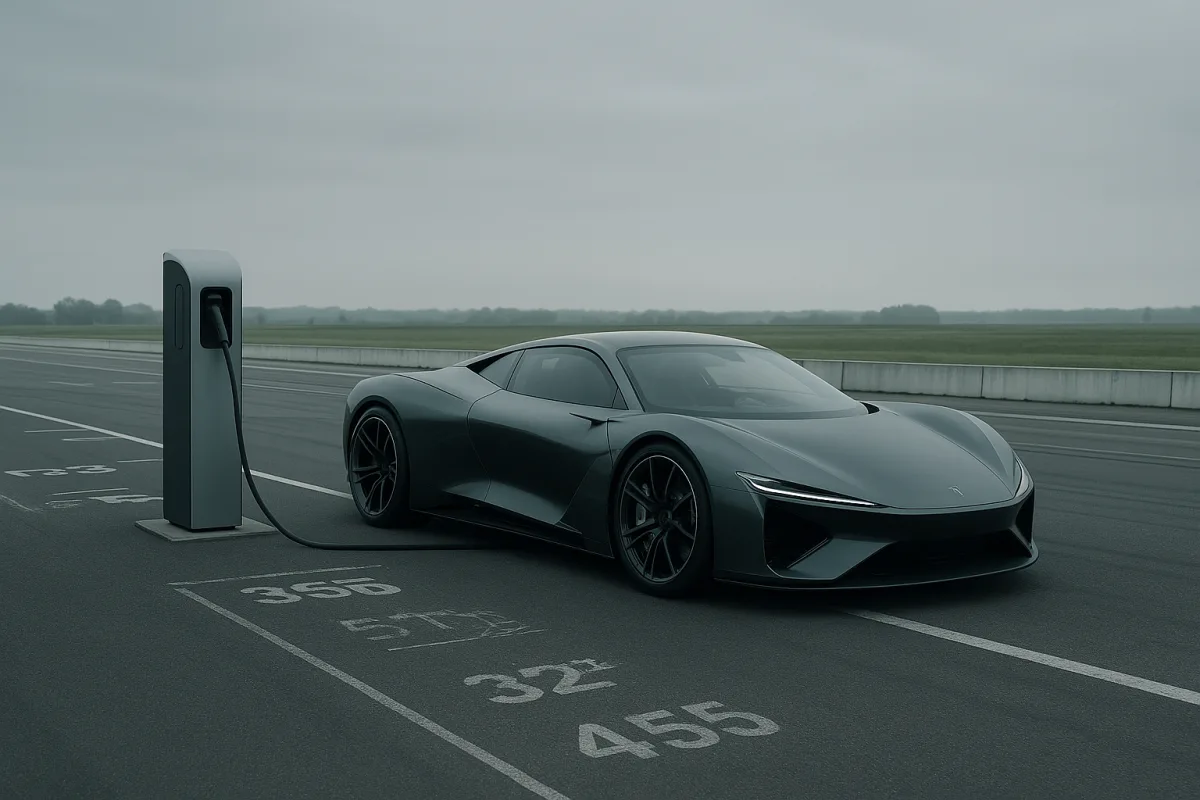
BYD crossed 500 km/h on November 1, 2026
Marc Basseng drove the Yangwang U9 Xtreme to 503.17 km/h, or 312.65 mph, on a closed highway outside Abu Dhabi on November 1, 2026. BYD says the run was reviewed by FIA officials and Guinness World Records, making it the first production car recorded above 500 km/h.[3]
That headline carries an important qualifier. The 312.65-mph figure was a one-way maximum, not an average of runs in both directions, so it is not directly comparable with every two-way production-car record.[5]
Still, the result is a real marker. BYD’s previous U9 Xtreme maximum was 496.22 km/h, or 308.33 mph, at Germany’s ATP Papenburg test facility in September 2025, so the Abu Dhabi effort gained nearly 7 km/h through setup development rather than a new vehicle program.[3]
The U9 Xtreme uses four electric motors, a 1,200-volt electrical system, and a claimed 2,956 hp. Its motors can spin to 30,000 rpm, while its specialized Blade battery is designed to sustain the high discharge rates needed when aerodynamic drag becomes the dominant problem.[3][5]
BYD built the car around the details that tend to end speed-record attempts, not around an acceleration number. The company cites revised suspension settings, rear-wing adjustment, tire-pressure work, battery-temperature management, and purpose-developed Giti semi-slick tires.[3]
Those tires are central to the story. At more than 300 mph, a slight carcass deformation, heat buildup, or debris strike can become catastrophic, which is why the test route was inspected and the car ran on bespoke high-speed rubber.[5]
The crash is part of the record, not a footnote
A U9 Xtreme also crashed during high-speed development testing in November, reportedly at roughly 420 to 450 km/h. Footage showed severe body and chassis damage, but the experienced driver escaped without serious injury.[14][15]
BYD resumed testing and later recorded 457.89 km/h, according to accounts of the program. There is no published full technical investigation of the accident, so any claim about its precise cause or its effect on the production schedule remains thin.[14][15]
For a buyer, the crash does not erase the verified 312.65-mph run. It does underline the gap between an extreme prototype-development exercise and a car you could reasonably maintain, insure, or repair after a minor accident.
Only 30 U9 Xtremes are planned globally, and reported pricing is around $3 million per car.[4] That price buys the vehicle itself, not the transport, insurance, track support, servicing infrastructure, taxes, or the consequences of replacing a damaged 1,200-volt battery system.
The U9 Xtreme’s role is strategic. BYD, widely known for high-volume battery-electric and plug-in hybrid vehicles, has put a Chinese badge beside Bugatti and Koenigsegg in a field once dominated by small European makers with decades of internal-combustion development behind them.
Koenigsegg’s recent investment story shows what that older model costs to sustain. Motor1 reported that the Swedish maker’s new investment valued it at roughly €1.3 billion, or $1.4 billion, after 2025 revenue of €155 million, about $170.4 million.[5]
That is the wider trend: electric power lets a large, vertically integrated battery manufacturer attack a performance niche that once required a tiny specialist company, a rare engine program, and years of combustion-engine refinement. Money and engineering capacity are moving toward electrified performance from opposite directions.
BMW is bringing hypercar hardware toward the M3
BMW’s next M3 is expected for the 2027 model year with four electric motors and provisional output of about 625 kW, or 838 hp. BMW has also indicated a 100-plus-kWh Gen6 battery, 800-volt architecture, and charging capability above 400 kW.[1][2]
The significant figure is not the horsepower alone. A four-motor M3 can control torque at each wheel, giving BMW far more authority over traction, rotation, and stability than a conventional rear-drive sedan or even a dual-motor all-wheel-drive EV.
BMW has also indicated an estimated 650 km, or 404 miles, of range. That remains a manufacturer target, and range, charging rate, curb weight, final battery capacity, and performance modes can all change before production.[1][2]
No independent performance testing or long-term durability data exists for the electric M3 yet. BMW has not announced U.S. pricing, service intervals, battery-replacement costs, or a published repair strategy for the production battery pack.
That uncertainty matters if you keep cars. Four motors, high-voltage inverters, active thermal management, and torque-vectoring software may make an electric M3 spectacular when new, but they also create expensive failure paths after warranty coverage ends.
BMW’s new iX3 gives a clearer view of the company’s immediate direction. The electric SUV uses an 800-volt system, can accept up to 400 kW of DC charging, and is available with an EPA range rating as high as 434 miles on optional summer tires, or 383 miles on standard all-season tires, according to Ideal.[10]
That is a direct answer to the everyday EV objections: insufficient range, slow highway charging, and poor charging-network access. The U.S.-spec iX3 also has a native NACS port, which reduces the need for an adapter at Tesla-compatible fast chargers.
Yet the ownership picture is less settled than the launch figures. Auto Bild’s used-EV reporting and BMW specialist guides point to battery condition, charging performance, and repair access as the variables that shape a high-mileage iX3’s value more than routine items such as brake pads.[11][13]
Published five-year, 60,000-mile maintenance estimates for the iX3 range from roughly $3,200 to $5,450, although those estimates are not BMW service quotes and will vary sharply by location and repair needs.[12] Routine maintenance may be lower than on a gas SUV, but a battery, cooling-system, or power-electronics repair can overwhelm those savings.
Some owner and specialist reports describe reduced DC fast-charging performance after 20,000 to 50,000 miles as battery condition changes.[13] Evidence is limited and varies by charging habits, climate, software version, and individual vehicle, but it is a reason to test charging behavior before buying used.
Depreciation is the other cost that a monthly payment conceals. Estimates cited for the iX3 suggest a five-year loss of about 57.2 percent, roughly $36,000 on a $62,850 example, though that model is sensitive to incentives, new-EV price cuts, and local demand.[11][12]
We would wait for the second model year of the electric M3 if the goal is a long-term car. The first cars will establish whether BMW’s battery packs remain fast-charging, repairable, and desirable once the 838-hp launch figures have stopped dominating the conversation.
Hyundai’s quieter bet is hybrids, not halo cars
Hyundai’s N Vision 74 concept arrived in July 2022 as a low, angular hydrogen-electric sports car inspired by the Hyundai Pony Coupe. It combined hydrogen fuel-cell hardware, electric motors, and styling that made it one of the few recent alternative-fuel concepts people wanted to see unchanged.[7][8]
By late 2026, however, production plans were shelved. Hyundai Design Center head Simon Loasby told The Drive that the company had developed production-clay models and interior work, but could not make the business case work on the projected volume.[7]
That is the honest answer most concept-car announcements avoid. A sports car may build a brand, draw crowds, and generate strong online response, yet still fail the arithmetic once tooling, certification, component supply, service support, and expected sales are counted.
Hydrogen made the N Vision 74 even harder to justify. A fuel-cell coupe needs a buyer willing to accept an unfamiliar refueling network, specialized service requirements, and technology that cannot share enough cost with Hyundai’s mass-market battery-electric lineup.
The project was not entirely wasted. Hyundai has reused parts of the N Vision 74’s design language in the 2027 Elantra, including the flatter roof and side-profile themes, according to Loasby.[8] Design can migrate cheaply. A low-volume hydrogen powertrain cannot.
Hyundai’s reported business results point toward the product line that is actually paying for future experimentation. The company reported a 5.5 percent operating-profit increase in its 2026 third-quarter results, with hybrid sales among the contributors.[9]
Its Georgia Metaplant is also set to produce the Kia Sportage Hybrid and is targeting annual capacity of 500,000 vehicles. Hyundai has not published a detailed replacement plan for the N Vision 74 or a comprehensive post-2026 EV and hybrid product schedule.[9]
That absence is revealing. Hyundai is investing where it can spread batteries, motors, hybrid transmissions, factories, and service training across large numbers of vehicles, not where it must support a handful of hydrogen coupes.
Nissan’s current product planning points the same way. Nissan North America planning chief Ponz Pandikuthira told The Drive that a possible rear-wheel-drive IDx, IDx Nismo, and Silvia family could use hybrids, with a manual transmission still under consideration.
The details are preliminary, but the direction is clear. Automakers are trying to preserve compact, engaging cars by adding electrification beneath familiar formats, not by asking buyers to finance a clean-sheet halo project with no shared economics.
What this means if you plan to keep your next electrified car
The electric performance market is now separating into two worlds. BYD is proving that battery voltage, motor speed, thermal control, and software can beat historic combustion benchmarks, while BMW is trying to package related electrical architecture in vehicles that will face school runs and five-year depreciation.
Hyundai shows the constraint on both approaches. A striking concept can be technically complete and emotionally successful, then stop when projected volume cannot carry its cost. Hybrid crossovers, however, can keep factories busy and fund future experiments.
For your own project, start with the boring questions. Can the battery pack be diagnosed at module level, can it be repaired without replacing the whole assembly, who will service it outside the dealer network, and how quickly does it charge after several years?
Also examine tire availability. The U9 Xtreme’s record depended on custom Giti tires, and the same principle scales down: heavy, high-torque EVs consume expensive tires quickly, while unusual wheel sizes can turn a routine replacement into a delay and a large bill.
We would buy the mature hybrid or the later, proven EV before buying a first-year high-performance electric car. BMW’s M3 promises remarkable hardware, but Hyundai’s N Vision 74 and BYD’s extreme U9 program both show that engineering achievement and long-term ownership are separate questions.
Frequently Asked Questions
What are the latest electric and hybrid vehicle innovations from BMW, BYD, and Hyundai?
BMW plans a 2027 electric M3 with four motors producing around 838 hp, an 800-volt architecture, a Gen6 battery over 100 kWh, and 400+ kW charging capability. BYD’s Yangwang U9 Xtreme is a hypercar with four motors delivering nearly 3,000 hp and a 1,200-volt system, designed for extreme speed. Hyundai has shelved its hydrogen-powered N Vision 74 sports car concept but continues to invest in hybrids, including ramping up production of the Kia Sportage Hybrid in the U.S.
How does BYD's Yangwang U9 Xtreme set new speed records in electric vehicles?
The U9 Xtreme reached a verified one-way top speed of 312.65 mph (503.17 km/h) on a closed highway in Abu Dhabi, confirmed by FIA and Guinness World Records. It uses four electric motors spinning up to 30,000 rpm, a 1,200-volt electrical system, and a specialized Blade battery designed for high discharge rates. The car also features revised suspension, aerodynamic tuning, battery temperature management, and bespoke high-speed tires to handle the extreme conditions.
What technology is BMW using in its upcoming electric M3?
BMW’s upcoming electric M3 features a four-motor powertrain delivering approximately 838 horsepower, an 800-volt Gen6 battery with over 100 kWh capacity, and supports charging rates exceeding 400 kW. It offers multiple driving modes and an estimated range of about 404 miles. However, this powertrain and battery system have not yet been independently tested for long-term durability.
Why did Hyundai shelve the N Vision 74 hydrogen sports car?
Hyundai shelved production plans for the N Vision 74 due to an unfavorable business case as of late 2026. While the hydrogen sports car concept generated attention, Hyundai’s current strategy focuses more on hybrids, which continue to contribute to profitability and volume, including plans to produce the Kia Sportage Hybrid at scale.
What should buyers consider about battery durability and charging in new EVs?
Buyers should prioritize battery repairability and how charging performance holds up after significant mileage, as fast charging speeds often decline after 20,000 to 50,000 miles. Depreciation is also a concern, with electric vehicles typically losing value faster than gasoline cars. Considering these factors is important for long-term ownership beyond the warranty period.
How we researched this
This article was assembled from 2 video sources, 3 published articles, 16 cited references.
Nothing here is based on hands-on testing. Where a figure or finding appears, it belongs to the source cited beside it, and the writing says so rather than implying otherwise. Every source is listed below so you can check it.
Sources
Why 100,000 People Just Bought the “Ugly” New BMW iX3, Ideal
Nissan Wants to Hear From You on the IDx and Silvia, Its Planning Chief Is Reading the Comments, The Drive
Hyundai’s N Vision 74 Was One Of The Coolest Car Designs In Recent Memory. Now It's Shelved, InsideEVs
Koenigsegg Is Now Worth $1.4 Billion After New Investment, Motor1
2027 BMW M3: Everything We Know (Electric, Hybrid, or Both?)
The fastest gets faster: YANGWANG U9 Xtreme tops 500km/h to set new global speed record in Abu Dhabi
Yangwang U9 Xtreme (U9X): price, acceleration and top speed · Yangwang Insider
Yangwang U9 Xtreme breaks the 312mph barrier with battery packs and electric motors
Yangwang makes a play for luxury and speed in the desert with the new Altior and U9 Xtreme
The N Vision 74 Lost Its Business Case, but Not Its Shape, HyundaiHQ
BMW iX3 im Gebraucht-Test: Was taugt der Elektro-X3 gebraucht? - AUTO BILD
BYD’s 3,000 HP Hypercar Crashes at 360 km/h, Driver Survives
BYD Yangwang U9 Xtreme hypercar crashes at around 450 km/h, the driver was unharmed, tafs uz
Watch Electric and Hybrid Vehicle Innovations from BMW, BYD, and Hyundai on Youtube
Also from the sources
Related Articles
Electric and Hybrid Vehicle Market Trends and Innovations
Explore electric and hybrid vehicle market trends, innovations, and practical ownership insights including small EVs, charging, and financing.
GM AI and EV Technology Advancements Explained
Explore GM's AI and EV technology advancements, including faster vehicle development and new battery innovations for future electric cars.
BMW Electric Vehicle Battery Innovations and Challenges
Explore BMW electric vehicle battery innovations, including cell-to-pack design, Woodruff plant, iX5 range, and Alpina prototype challenges.
Electric Vehicle Market and Warranty Trends in 2026
Explore 2026 trends in the electric vehicle market, charging infrastructure, and warranty coverage to make informed EV ownership decisions.