
Toyota GR86 and GR Corolla Ownership and Future Insights
Explore Toyota GR86 and GR Corolla ownership reflections, future engine updates, value retention, and maintenance considerations in this detailed guide.
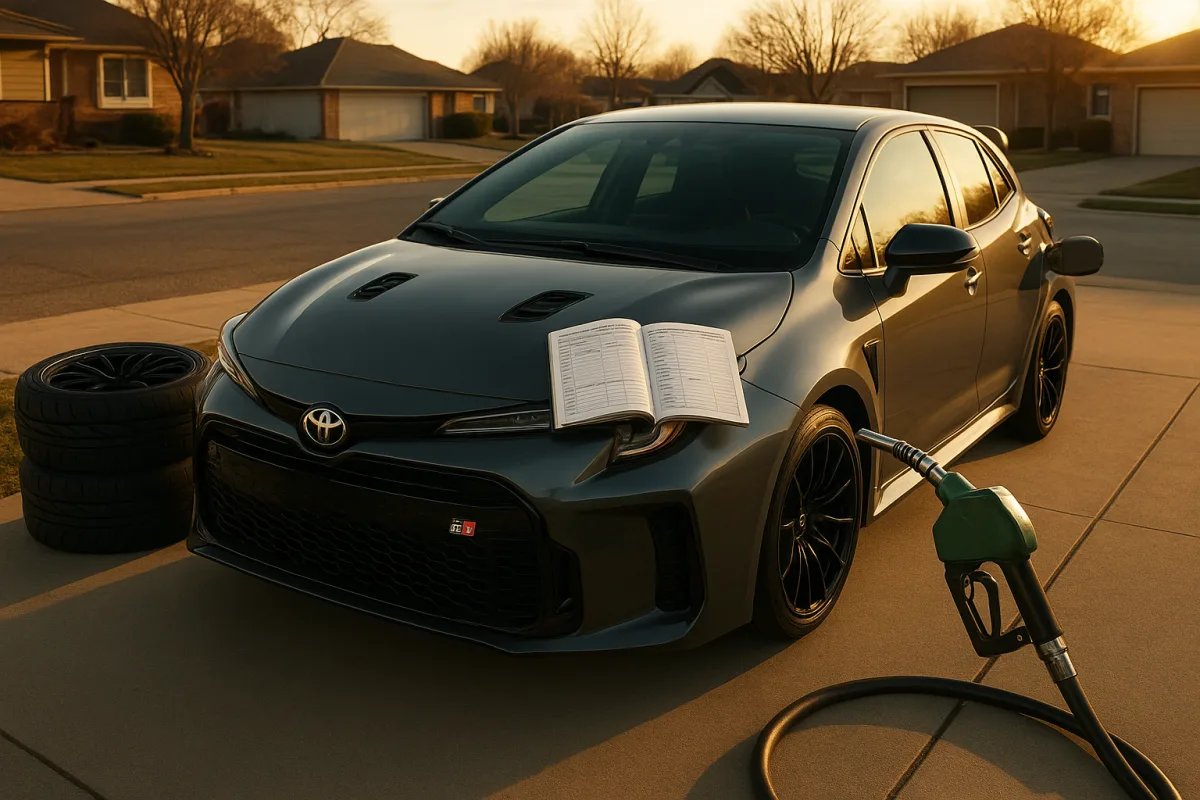
Toyota put a new engine in a GR86 race car
At Okayama International Circuit in November 2026, Toyota entered a GR86 Future FR Concept in the Super Taikyu endurance series with a 2.0-liter naturally aspirated inline-four called the G20E. The prototype produced approximately 220 hp, according to CarsBase.com. [1]
That figure is lower than the current GR86’s 228-hp 2.4-liter Subaru FA24 boxer engine, but horsepower is not the point of this particular test. Toyota is evaluating an engine layout, cooling package, suspension arrangement, and race durability together.
Ideal, the enthusiast channel that first framed the test as a possible Toyota-Subaru split, reports that the concept uses double-wishbone suspension front and rear. That is a substantial change from treating the G20E as an engine swap.
A boxer engine’s cylinders sit horizontally, helping keep its mass low in the chassis. An inline-four is taller, so Toyota must earn back any handling benefit through engine position, suspension geometry, and the rest of the car.
Toyota has also tested a turbocharged G20E variant in other development work. SlashGear reports that future turbo applications have been projected at more than 400 hp, with some development speculation reaching 600 hp, but neither figure is an official production rating. [2]
For the GR86, the naturally aspirated test engine makes more sense than those projected turbo versions. A light rear-drive coupe needs immediate throttle response and usable revs more than a dyno number that overwhelms its rear tires.
The evidence for a production Toyota-powered GR86 remains thin: Toyota has confirmed the racing prototype, but it has not confirmed a next-generation GR86, a production G20E installation, or the end of Subaru’s role. [1]
Why Toyota is exploring independence now
Toyota and Subaru have shared the 86 and BRZ formula because neither company could easily justify funding a low-volume rear-drive coupe alone. Subaru supplied the flat-four architecture, while Toyota gave the project scale, distribution, and Gazoo Racing credibility.
That partnership still makes commercial sense, yet Toyota now has more reason to develop engines inside its GR program. The three-cylinder G16E-GTS in the GR Corolla and GR Yaris established a performance-engine group with its own testing and motorsports agenda.
A shared G20E family could spread development cost across several models. Toyota could tune one version for a responsive coupe, another for a higher-output sports car, and potentially use the same basic architecture in projects rumored around Celica or MR2 territory.
That is the encouraging interpretation. The risk for an owner is that a new engine family can bring first-generation sensor, calibration, cooling, and parts-supply problems, while a known Subaru boxer comes with years of accumulated knowledge.
The current FA24 is not free of concerns. Ideal cites track-use discussion around oil-pressure drops in sustained right-hand corners and RTV sealant concerns near the oil pickup, issues that matter more to frequent track drivers than commuters.
If you own a current GR86, this development does not make your car obsolete. It does mean the next car could be fundamentally different, with different engine access, parts support, chassis behavior, and potential failure points.
We would not hold off on a well-priced current GR86 because of one endurance-racing prototype. We would, however, avoid spending heavily on irreversible FA24 modifications if your plan depends on future factory parts or a predictable resale market.
The GR Corolla has moved from event car to ownership proposition
The GR Corolla launched in 2022 with a 300-hp, turbocharged 1.6-liter three-cylinder engine, a six-speed manual, and GR-FOUR all-wheel drive. It arrived when manual, all-wheel-drive hot hatches were becoming scarce in the United States.
The Fast Lane Car recalls that early buyers commonly paid $5,000, $10,000, and even $15,000 over sticker. That was the tax for getting one of the first cars, not a durable measure of its real value.
Four years later, the better data point is depreciation. GizmoDriver estimates that a 2023 GR Corolla Core AWD retained about 84 percent of its $36,995 MSRP after three years, or roughly $31,100. [3]
The same publication estimates a 2024 Core AWD retained about 90 percent of its $37,595 MSRP after two years, at approximately $33,900. [3] Those figures explain why used examples still feel expensive beside ordinary Corolla hatchbacks.
The 2026 GR Corolla’s listed MSRP is $42,520 for the AWD four-door hatchback with the 8A trim, according to iSeeCars. [4] That is a long way from an economy-car purchase, even before tax, registration, insurance, and financing.
Kelley Blue Book forecasts $16,548 in five-year depreciation for the 2026 GR Corolla, with a projected residual value of $24,567. [5] Depreciation forecasts vary with mileage, condition, accident history, and the hot-hatch market when you sell.
The car has become easier to assess because Toyota kept refining it. The Fast Lane Car notes revised cooling, added structure adhesive, a torque increase to 295 lb-ft across the range, and a quieter cabin than early examples.
Those changes improve the case for later cars, although The Fast Lane Car found the difference subtle in ordinary driving. The Corolla-based interior remains the weak point, particularly at upper-trim prices where the cabin still looks and feels mainstream.
Running costs are where the GR Corolla stops being a bargain
The GR Corolla returns EPA-style figures of 21 mpg city, 24 mpg combined, and 28 mpg highway in The Fast Lane Car’s account. It also requires premium gas, and the channel expects most owners to struggle to reach 300 miles per tank.
That changes the ownership equation. A smaller engine does not guarantee inexpensive running, because boost, all-wheel drive, performance tires, premium fuel, and enthusiastic driving all add cost where a regular Corolla owner expects savings.
Toyota’s listed 2026 offers have included payments as low as $646 per month to lease a GR Corolla and $735 per month to finance one. The offers require Toyota Financial Services credit approval and can include employment or enrollment documentation. [6]
Toyota also lists $500 military and college-graduate rebates for qualifying buyers. [6] Those offers reduce an upfront hurdle, but they do not include insurance, fuel, tires, track-day consumables, taxes, registration, or repair costs after warranty coverage.
Reliability evidence is less reassuring than the Toyota badge may lead you to assume. Autoflaws lists 26 NHTSA complaints covering 2023 through 2025 GR Corollas, including 12 powertrain complaints, six forward-collision complaints, five engine complaints, and three electrical complaints. [7]
Two of those complaints involved reported fires, and Autoflaws identifies two recalls for 2024 models plus one for 2025 models. [7] We found no recall descriptions or enough owner-survey data to establish a comprehensive long-term reliability rate.
Gary the Car Nut, in a February 2026 ownership-focused review, cited clutch-pedal assembly failures, track-use overheating, highway road noise, allocation trouble, and daily-driver compromises. Those are areas to inspect and discuss, not proof that every GR Corolla will fail.
Buy the version you can maintain, not the rarest one
The Fast Lane Car’s advice to take the entry-level GR Corolla remains persuasive. The Core has the same fundamental engine, six-speed manual, all-wheel-drive system, hatchback body, and four-season ability as pricier versions.
The GR-FOUR system can send up to 70 percent of available power rearward, according to The Fast Lane Car. Its rear axle is also overdriven by 1 percent, a detail intended to make the car feel pushed from behind instead of pulled through corners.
The Premium Plus adds visual drama and equipment, but it does not repair the basic Corolla cabin or reduce operating costs. Carbon-fiber roof panels and richer trim are hard to justify if your money must also cover tires and premium gas.
For a used car, we would seek an unmodified 2023 or 2024 Core with complete recall documentation, service records, clean clutch engagement, and no evidence of repeated track overheating. Strong resale makes clean examples expensive, so patience matters.
Skip cars advertised around 345 to 350 wheel horsepower unless the seller can document the tune, installation, maintenance, and cooling setup. The Fast Lane Car says basic bolt-ons can reach that range, but reports identify head gaskets as a concern beyond roughly 35 psi.
The GR Corolla remains appealing because it is a rare new-era performance car with manual gears, all-wheel drive, four doors, and a hatch. Four years after launch, though, its best argument is not hype, it is that a carefully bought one can still be driven year-round and sold without financial disaster.
Frequently Asked Questions
What is the future of the Toyota GR86 engine?
Toyota is testing a new 2.0-liter naturally aspirated inline-four engine called the G20E in a GR86 race car prototype. This engine produces about 220 hp but is not confirmed for production use. Toyota has not announced a next-generation GR86 or a production model with this engine, so the current Subaru-supplied boxer engine remains standard.
How well does the GR Corolla retain its value?
The GR Corolla shows strong value retention. For example, a 2023 Core AWD model retained about 84 percent of its original MSRP after three years, and the 2024 Core AWD retained about 90 percent after two years. This strong resale value keeps used examples relatively expensive compared to standard Corolla hatchbacks.
What should I consider before buying a used GR Corolla?
Before buying a used GR Corolla, check that all recalls have been completed and inspect for signs of track use, modifications, clutch operation, and cooling system condition. It is advisable to buy the lowest trim that meets your needs and avoid high-end trims to save on costs for tires, fuel, insurance, and maintenance.
Are there known maintenance issues with the GR Corolla?
Yes, there have been complaints including clutch pedal assembly failures, overheating during track use, and excessive highway noise. There have also been multiple recalls for 2024 and 2025 models. Keeping the car’s tune conservative is recommended to avoid stress-related issues like head-gasket concerns at high boost levels.
Is the Toyota GR86 still a good buy with upcoming changes?
The current GR86 remains a solid choice despite Toyota’s engine development efforts. The new engine and chassis changes are still in prototype stages with no confirmed production plans. Owners should avoid heavy irreversible modifications to the current FA24 engine if resale or factory support is a priority.
How we researched this
This article was assembled from 2 video sources across 2 channels, 9 cited references.
Nothing here is based on hands-on testing. Where a figure or finding appears, it belongs to the source cited beside it, and the writing says so rather than implying otherwise. Every source is listed below so you can check it.
Sources
Four Years Later, Was the Toyota GR Corolla Worth the Hype?, The Fast Lane Car
Toyota G20E: Everything We Know About The 2.0 Liter Turbo Engine
Toyota GR Corolla depreciation: 84% kept after 3 years | GizmoDriver
2026 Toyota GR Corolla Pricing, MPG, Comparisons, Specs - iSeeCars.com
Watch Toyota GR86 and GR Corolla Future and Ownership Reflections on Youtube
Also from the sources
Related Articles
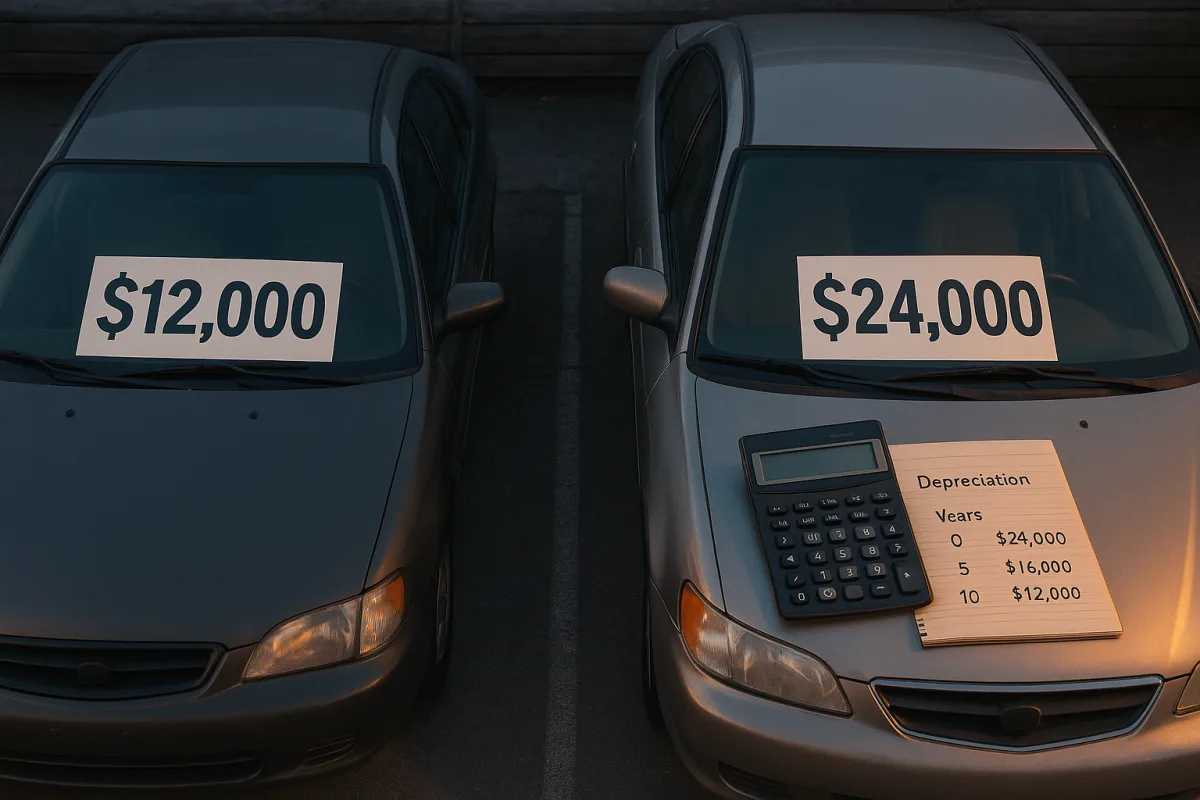
Car Ownership Costs and Residual Value Explained
Learn how car ownership costs relate to residual value and depreciation to make smarter buying and selling decisions.
Electric Vehicle Pricing and Ownership Costs Explained
Explore electric vehicle pricing, ownership costs, tax credit impacts, and key maintenance tips to make informed EV buying decisions.
Electric and Hybrid SUV Comparison
Compare electric and hybrid SUVs with a detailed look at Tesla Model Y and Toyota RAV4 PHEV performance, ownership, maintenance, and driving experience.
Porsche 911 Used Value, Performance, and Racing Heritage
Explore Porsche 911 used value, performance differences, ownership costs, and its rich racing heritage for informed buying decisions.